

Choosing the right recruiting platform is more challenging than it was even just a few years ago.
According to HR tech analyst Josh Berin, the average large company was already using more than 80 employee-facing systems by 2023. And in 2025, an iCIMS blog noted most talent acquisition teams alone were juggling an average of seven to 12 different recruiting tools. That’s a lot for any team to keep track of. Flash forward to 2026, and recruiting software selection is hampered by a growing number of disparate categories, a larger number of AI claims to sanity-check, and greater pricing complexity.
The good news? Finding the right recruiting software for your team is mostly a function of understanding your primary bottlenecks. The features that separate useful platforms from those just using AI as a marketing label are the ones to focus on; namely, database depth and freshness, search intelligence, outreach automation, and Applicant Tracking System (ATS) integration quality.
In this article, we’ll break down the best recruiting platforms in 2026 to help you cut through the noise and find the tool that actually moves the needle for your team. Here’s a quick TL;DR of the platforms we’re covering below:
- Juicebox
- SeekOut
- hireEZ
- Gem
- LinkedIn Recruiter
- Greenhouse
- Ashby
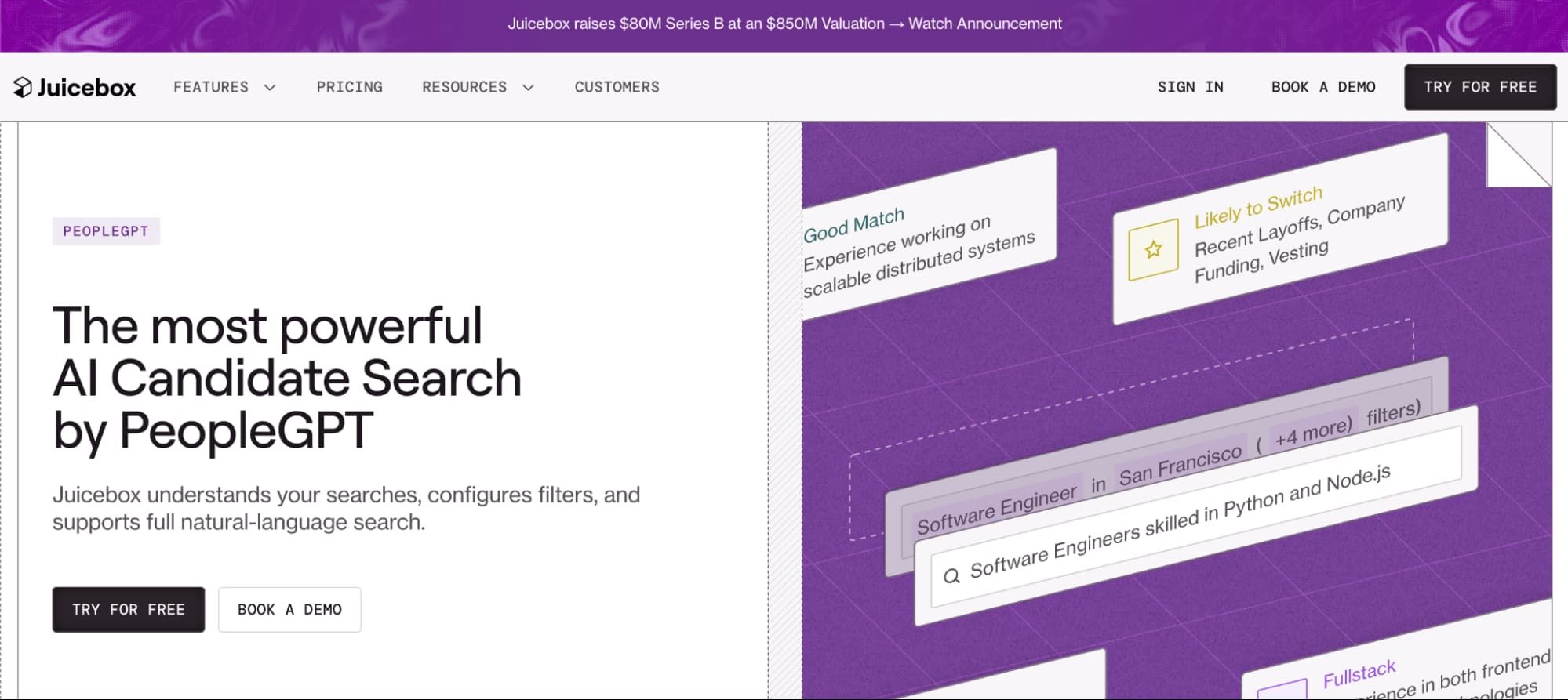
An AI-native sourcing platform, Juicebox is built for proactive teams running outbound-first hiring.
Juicebox’s talent database combs 800-million-plus profiles from more than 30 sources, including platforms like LinkedIn and GitHub, but also conference speakers, patent filings, and academic publications, pulling together a short-list of top candidates in seconds. Instead of obliging recruiters and hiring managers to rely on Boolean search operators, Juicebox lets them search for the right candidate in plain language.
Beyond search, the platform packs features to cover your entire top-of-funnel workflow, including:
- Talent Insights, a talent marketplace and intelligence system that benchmarks hiring patterns from your competitors and talent supply
- Verified contact data, including business and personal emails
- Multistep outreach that layers in personalization and feeds into automatic messaging flows
- Juicebox Agents, independent sourcing agents that find and connect with candidates (with human oversight) at each step in the outreach process
- ATS exports to platforms like Greenhouse, Ashby, Lever, and others in one click
Juicebox’s pricing is among the most transparent in its category, letting users choose from a free tier or self-serve paid plans; a notable feature in a market where many hide pricing information behind a conversation with the sales team.
Best for: Juicebox is best for in-house recruiting teams and staffing agencies whose main bottleneck is finding and engaging with qualified candidates at the top of the funnel.
SeekOut
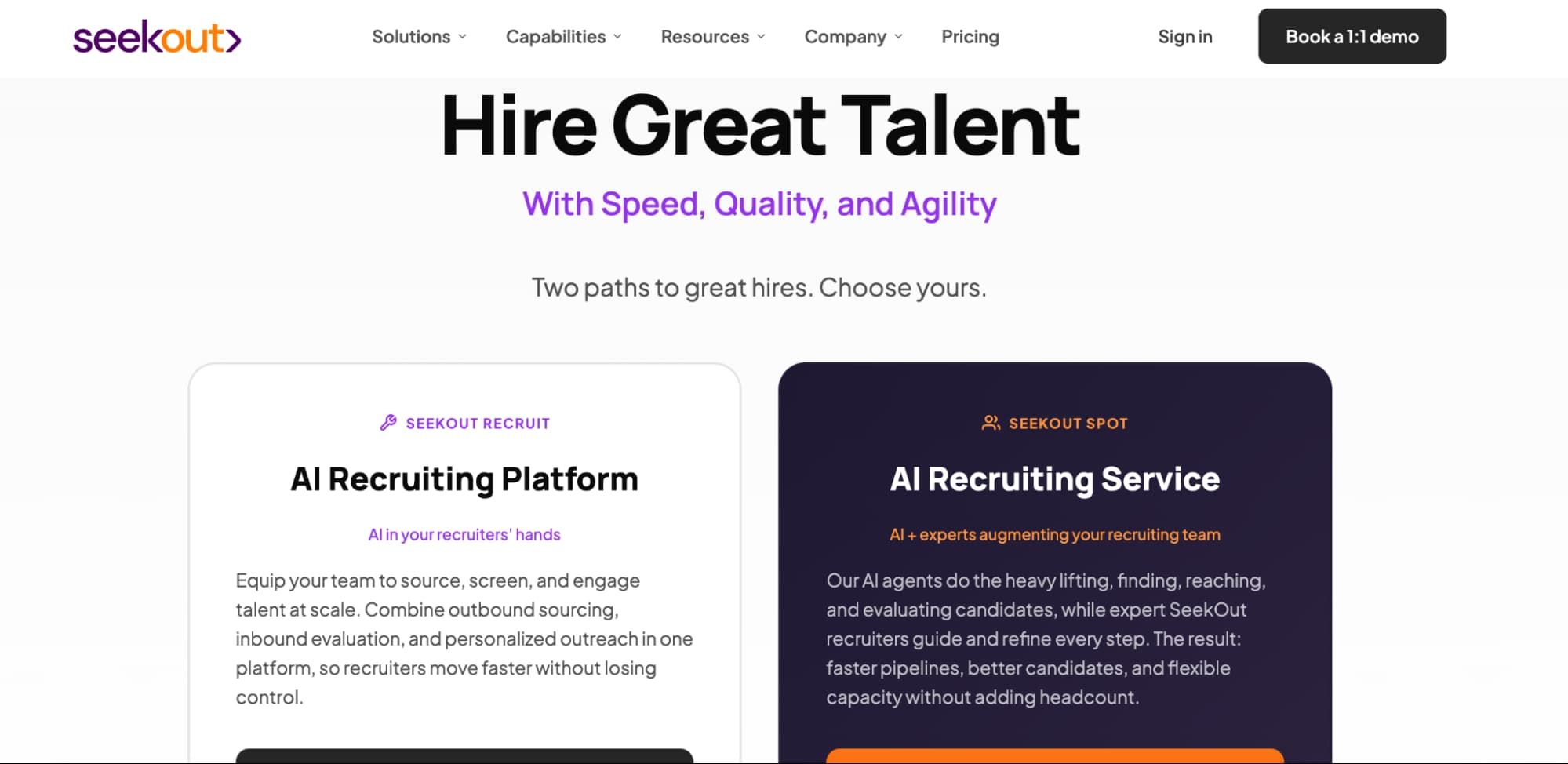
SeekOut, a talent intelligence platform, powers recruiting teams with access to a database of more than one billion profiles.
Pulling information from GitHub, patent databases, academic publications, and security clearance directories, SeekOut is a valuable asset for teams conducting the sorts of technical, research-based, or cleared-talent searches that platforms like LinkedIn struggle with.
Its DEI filter is a standout in its category, allowing teams to build diverse candidate rosters without manual parsing. The main tradeoff for recruiting teams is cost. SeekOut is enterprise-priced and quote-based, lacking a self-serve, in-product checkout flow.
Best for: SeekOut is best for teams that need access to powerful filtering options to fill highly niche or technical roles or whose hiring needs require accurately sourcing diverse candidates.
hireEZ
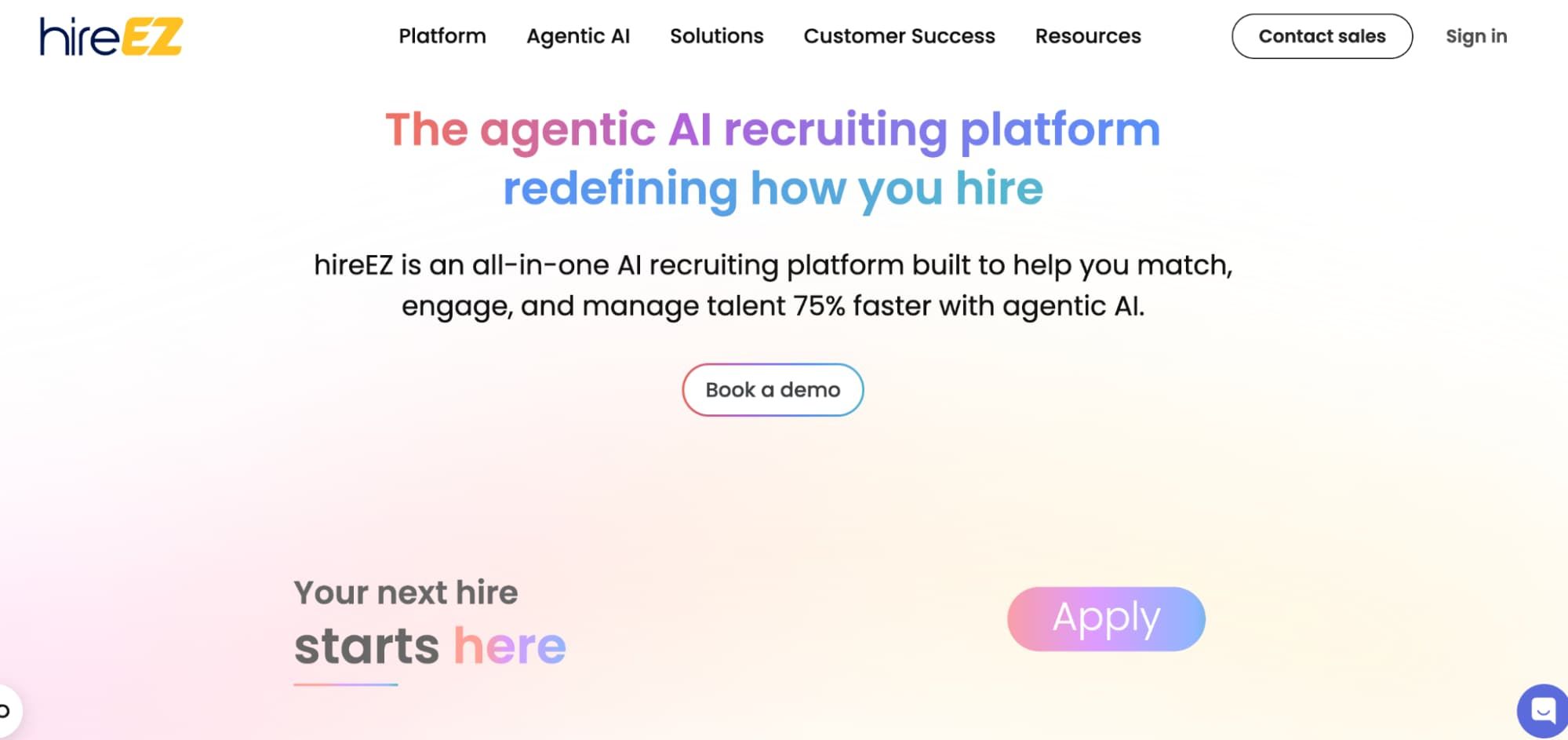
hireEZ is an outbound recruiting platform that combines far-reaching coverage and strong outreach automations in a tool for teams with high-volume sourcing needs.
It aggregates talent profiles from across the open web and makes it easy to customize conversation flows with baked-in analytics, A/B testing, and sequencing.
Pricing is quote-based and tiered based on the number of users and desired features. Like most recruiting software for enterprise sourcing, the entry point isn’t cheap and some of the more advanced features live exclusively on higher-tier plans.
Best for: hireEZ works best for recruiting teams conducting outbound across multiple channels and those needing strong automations in the sourcing layer itself.
Gem
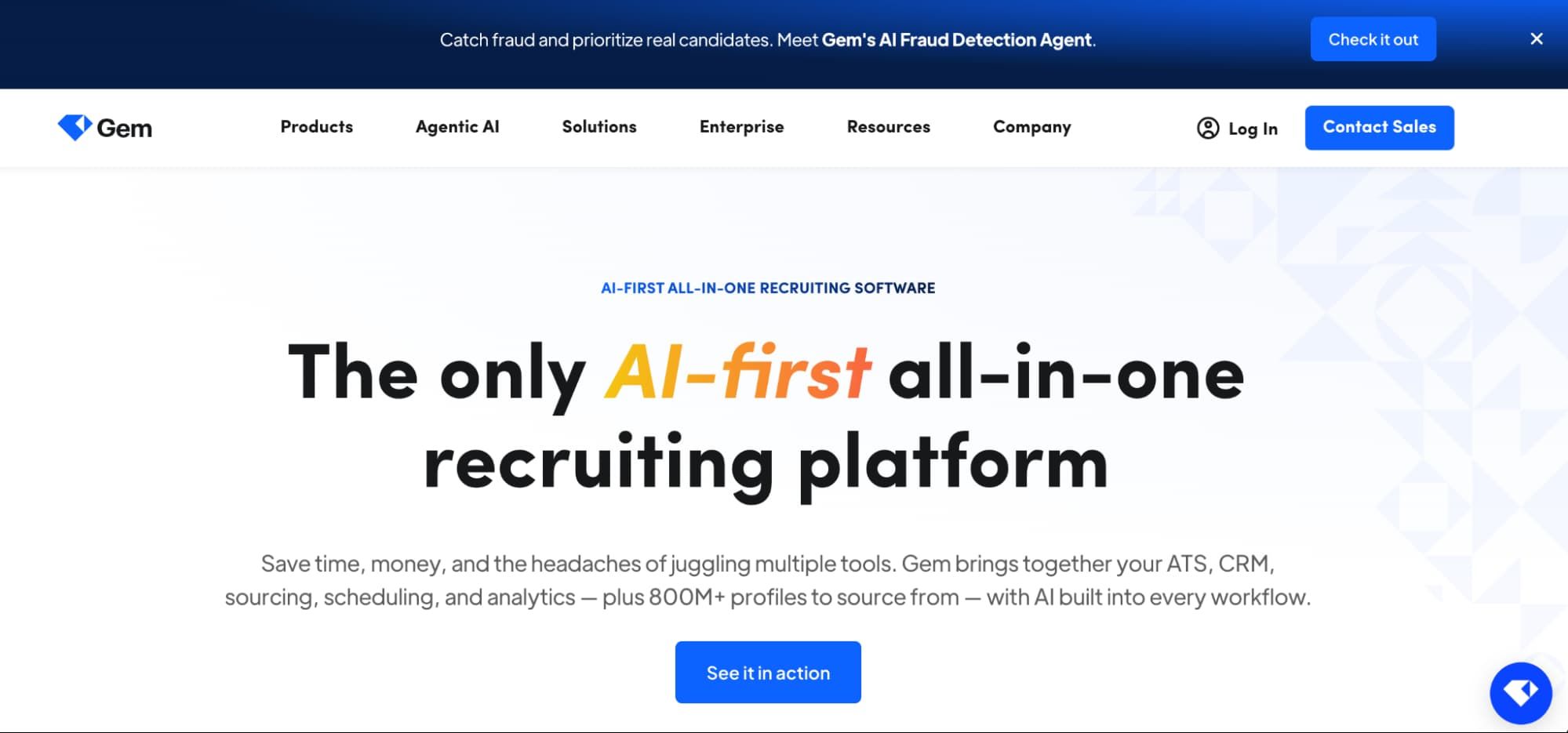
Gem is a recruiting Candidate Relationship Management (CRM) tool that combines pipeline management, outreach automation, and native analytics features. The platform integrates with most major ATS systems. Its standout features include powerful dashboards, intuitive user interfaces combining multiple data sources, and the handy Chrome extension for sourcing directly within LinkedIn.
Pricing is modular and based on three main tiers: one for startups with headcounts between 1 and 100 employees, a middle tier for companies between 101 and 1000 employees, and an enterprise tier for companies with over 1000 employees.
Best for: Gem works best for teams that already have sourcing figured out but need a CRM and analytics layer to manage relationships and report on hiring metrics.
LinkedIn Recruiter
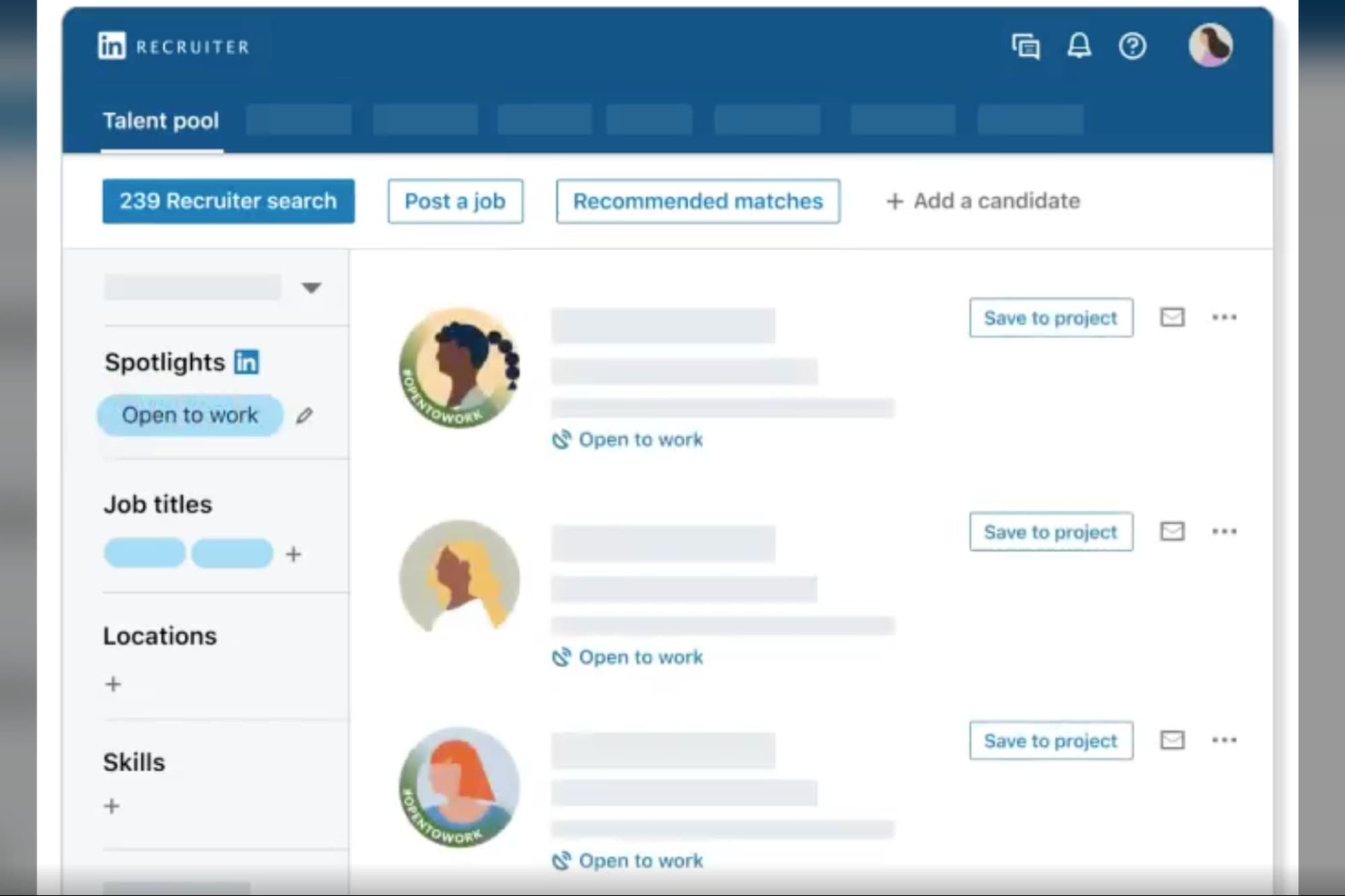
LinkedIn is synonymous with modern professional networking, and LinkedIn Recruiter is the primary tool for sourcing candidates inside its ecosystem of over one billion member profiles.
Perhaps its best-known feature is InMail messaging, but LinkedIn Recruiter also packs AI-powered candidate recommendations and powerful in-project pipeline management tools into a robust feature set. If you’re hiring for roles where candidates primarily live on LinkedIn, it remains hard to beat.
The two main drawbacks? Scope and cost. Recruiters can only see talent with profiles on LinkedIn, so some potential candidates without a strong presence on the platform can be invisible. The price tag is also the highest among the options listed here, and access to additional features requires conversations with sales, annual contracts, and quote-based pricing that can land in the range of five figures per seat.
Best for: LinkedIn Recruiter is best for teams that can absorb the high per-seat cost and source roles whose candidates are mainly found on the platform.
Greenhouse ATS
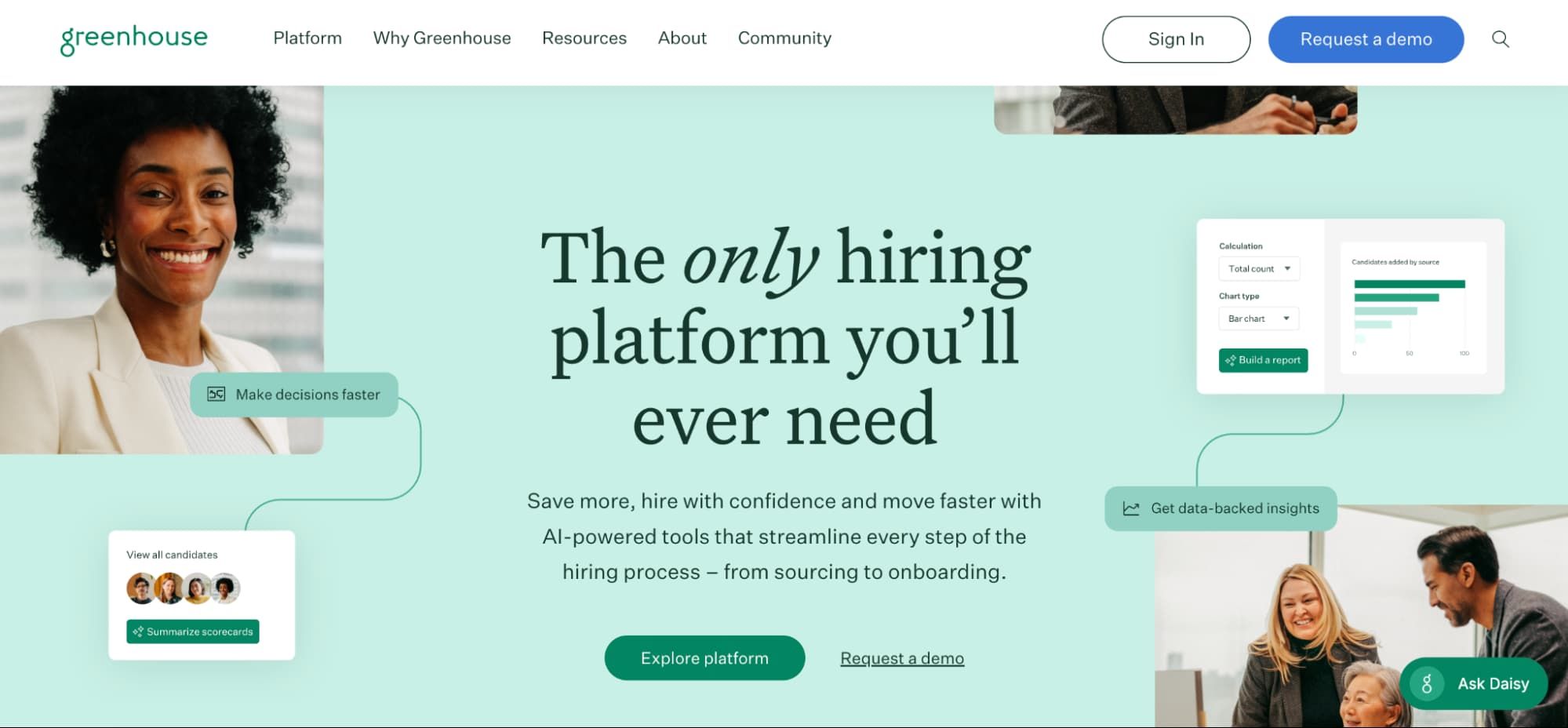
Greenhouse is a workflow and pipeline management Applicant Tracking System, best known for features like interview scorecards, compliance audit trails, and a large integration marketplace spanning sourcing tools, jobs boards, and assessment platforms. What it’s not, however, is a true sourcing platform. Most modern sourcing platforms—including those mentioned on this list—integrate into Greenhouse ATS, not the other way around.
Pricing is quote-based and best conforms to mid-market and enterprise expectations. Onboarding typically takes place over several weeks.
Best for: Established mid-size and enterprise teams that need structured hiring processes and controls for compliance.
Ashby
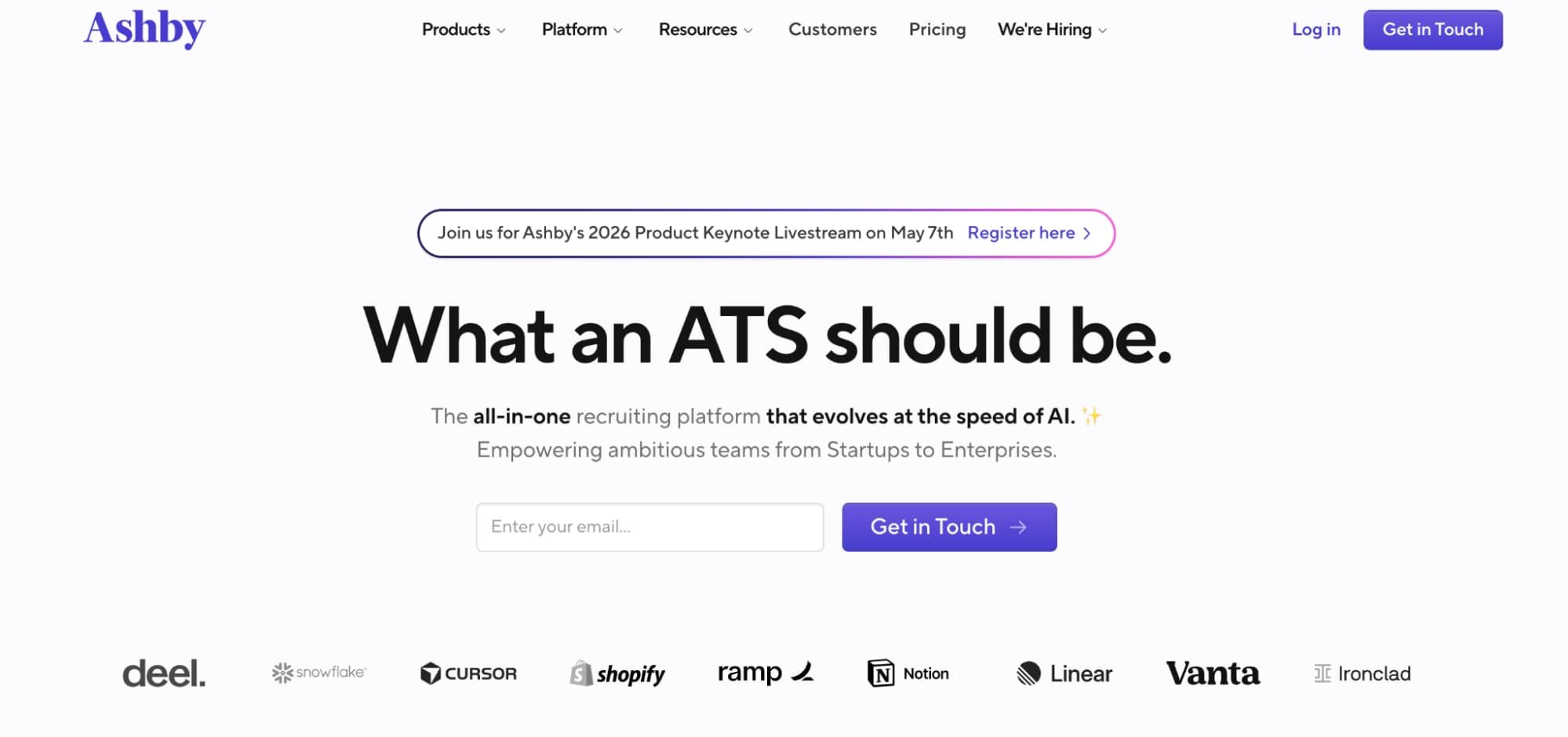
Ashby is an ATS tool with strong analytics and a robust automation layer. It’s best known for its reporting dashboards, scheduling automation, and crisp UI. Ashby is often favored by data-driven recruiting teams whose reporting needs outgrow the features on offer from tools like Lever or Greenhouse.
One differentiator that stands out: Ashby offers a tier for SMB needs with straightforward pricing details, which is a rarity in the larger ATS space.
Best for: High-growth teams that want an ATS with rigorous reporting and scheduling features without the lock-in associated with large enterprise contracts.
How to choose the best recruiting platform for your team in 2026
So, how do you select the right recruiting software for your team? The first step is to stop asking “which tool to buy” and instead focus on understanding where your pipeline is breaking down.
The truth is modern platforms pack a bevy of different features to address different problems, but it requires a confident diagnosis of the gaps in your recruiting workflows for them to help.
An overview to help teams take stock of their true needs:
| Type of problem | Category of tool needed | Example solutions |
|---|---|---|
| Too few candidates at the top of the funnel | Sourcing platform | Juicebox, SeekOut, hireEZ, LinkedIn Recruiter |
| Candidates are coming in, but the pipeline is messy | Recruiting CRM | Gem |
| Hiring process is inconsistent or non-compliant | Structured ATS | Greenhouse, Ashby |
| Leadership requires better hiring data | Analytics-forward ATS or CRM | Ashby, Gem |
With the bottleneck identified, you can move on to right-sizing a solution for your team. These questions help separate the strong vendors from the weak ones:
- Is pricing transparent, or do we need to contact sales to understand the investment? Sales-gated pricing isn’t inherently a red flag. But it usually means a longer procurement process and less flexibility for smaller teams.
- Which features are limited to higher tiers? Some platforms gate solutions like email sequencing, outreach credits, or advanced filters behind more expensive plans. Make sure to read the pricing page or your contract carefully to avoid feature cutoffs.
- How well does the tool integrate into our ATS? Sourcing tools that can’t connect profiles to Greenhouse ATS or Ashby will create friction for teams.
- How does the vendor help us prove ROI? The best platforms will come with reporting dashboards, industry benchmarks, or even implementation support out of the box. The weaker ones won’t.
Finally, a single-category purchase can leave capability gaps you’ll be scrambling to rectify later. What happens if you go with a structured ATS, but your sourcing workflow and candidate response rates still aren’t scaling? Or your sourcing is sound, but a lack of CRM has you manually updating candidate conversations in spreadsheets?
These are the sort of circumstances that lead to tool sprawl, or the addition of multiple, overlapping tools to patch your recruiting tech stack together. Consider getting started with a free trial or structured pilot to take tools for a test run before investing.
