1. Design and Display
Build and Feel
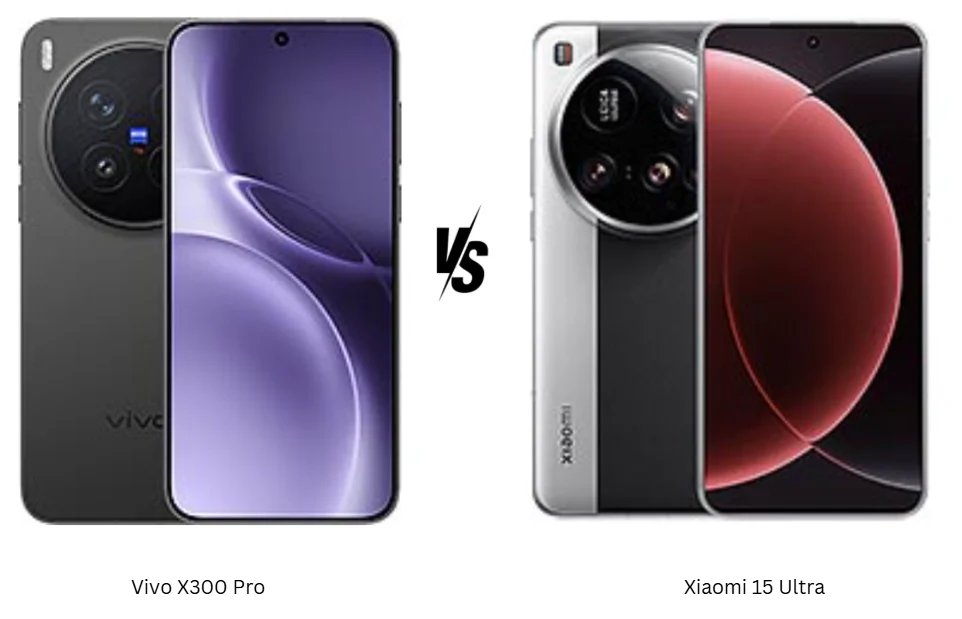
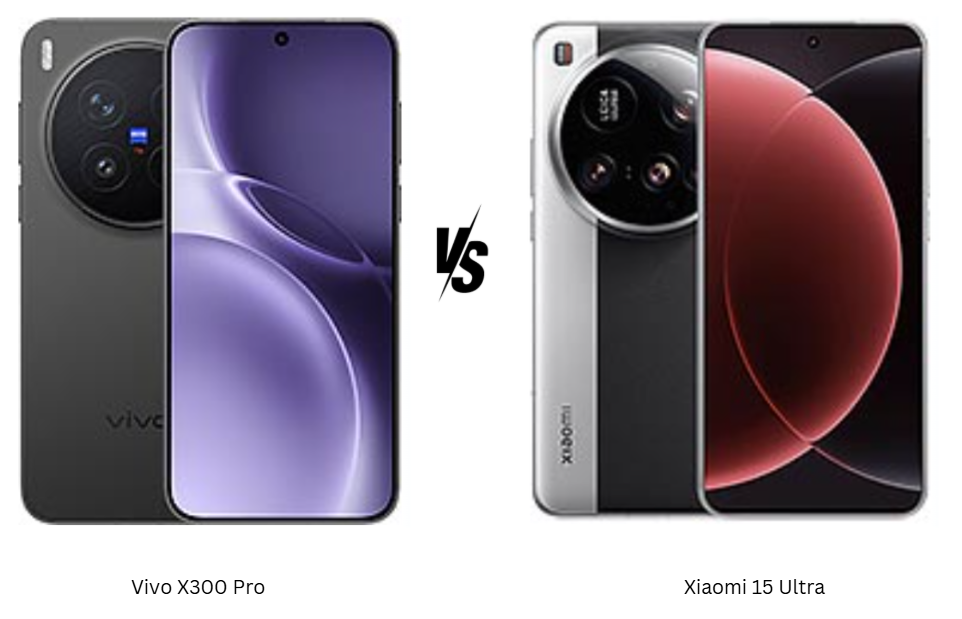
Both smartphones take a premium approach, but they express it differently. The Vivo X300 Pro leans toward a sleek, modern finish with a clean glass aesthetic, while the Xiaomi 15 Ultra offers a more rugged, photography-centric design with its reinforced materials and optional eco-leather back. Xiaomi’s build tends to feel more “pro-grade,” especially for users who prioritize grip and durability, whereas Vivo feels more polished and refined for everyday comfort. Both phones are fully water-resistant, adding reassurance for long-term use.
Display Quality
Vivo’s AMOLED panel focuses on extreme brightness and smooth HDR capabilities, giving it an edge for outdoor visibility and vivid content. Xiaomi counters with a sharper display that appeals to users who appreciate finer detail and crispness. Xiaomi’s color tuning looks slightly more cinematic, making it a stronger choice for movie-watching or creators who want a truer reference look. Vivo, however, shines in eye comfort due to higher-frequency PWM dimming.
Verdict
Xiaomi 15 Ultra offers a more durable feel and a sharper screen, while Vivo X300 Pro delivers superior brightness and smoother eye comfort. Vivo favors everyday users, while Xiaomi suits enthusiasts and creators.
2. Specifications
Performance
The Xiaomi 15 Ultra brings Qualcomm’s latest Snapdragon 8 Elite platform, delivering top-tier processing for heavy apps, high-end gaming, and creator workflows. Its GPU is particularly strong, making it ideal for users who push graphics. The Vivo X300 Pro’s Dimensity 9500 is also powerful, and its custom cores give it efficient, stable performance that feels more balanced. While Xiaomi offers raw power for demanding tasks, Vivo delivers consistent responsiveness that feels better tuned for daily multitasking and thermal control.
Battery and Charging
Vivo offers a larger global battery and cleaner power efficiency, allowing it to last longer during extended streaming or photography sessions. Xiaomi strikes back with faster wireless charging and strong endurance, especially in its China variant with the larger battery. Xiaomi’s charging ecosystem feels more versatile, but Vivo’s slower drain gives it a practical advantage for users who spend long hours away from a charger.
Verdict
Xiaomi wins for peak performance and charging versatility, while Vivo appeals to users wanting longer, steadier battery life and efficient operation.
3. Camera
Main and Secondary Lenses
Both phones are built for camera enthusiasts, but they lean in different directions. Xiaomi 15 Ultra pushes a true flagship-camera experience with its 1-inch-type main sensor, Leica tuning, and flexible telephoto system. Its color output feels more cinematic, and its periscope module delivers stronger zoom clarity at medium to long ranges. Vivo X300 Pro, however, counters with a higher-resolution periscope lens and Zeiss optics that excel in sharpness and consistent tones. Its video features, including advanced Log capture, make it appealing for mobile filmmakers who want more control.
Selfie Camera
Vivo’s 50MP autofocus selfie camera offers exceptionally crisp detail and stable focusing even in challenging lighting, giving it a more professional feel. Xiaomi’s 32MP unit performs well with natural tones and strong stabilization, but Vivo’s edge in resolution and AF gives it a more refined look for portraits and video calls.
Verdict
Xiaomi delivers the more versatile and cinematic rear-camera system overall, while Vivo leads in selfie performance and video-focused creative tools.
4. Pricing
The pricing gap between these two devices is significant. Vivo X300 Pro sits around $800, placing it firmly in the high-end category without entering ultra-premium pricing. This makes it attractive for buyers wanting flagship features without a steep investment.
In contrast, the Xiaomi 15 Ultra lands near $1500, reflecting its role as a no-compromise photography-centric flagship. Xiaomi’s price positions it closer to luxury-tier smartphones, which naturally narrows its target audience to enthusiasts and professionals seeking the best imaging hardware available.
Verdict
For value-driven users, the Vivo X300 Pro clearly provides a far better price-to-performance ratio. It offers top hardware, long software support, and premium capabilities at nearly half the cost. Xiaomi 15 Ultra is worth the premium only for users who truly need its advanced camera system and peak performance. Most mainstream buyers will find Vivo the more sensible purchase.
5. Conclusion
Xiaomi 15 Ultra stands out with its Leica camera system, 1-inch-type sensor, advanced zoom range, and two-way satellite connectivity, making it ideal for creators and outdoor explorers who want versatility and reliability. Its optional filter ring attachment adds a professional layer rarely found on smartphones.
Vivo X300 Pro differentiates itself with exceptional brightness, advanced video logging tools, high-resolution selfie capabilities, and strong battery efficiency. Features like optional satellite support and ultrasonic fingerprint scanning reinforce its premium identity.
Verdict
Both smartphones excel in different ways, but their target audiences are clearly distinct. The Xiaomi 15 Ultra is the better choice for photography enthusiasts and power users who want the absolute best imaging hardware and flagship performance.
Vivo X300 Pro provides a more balanced, value-driven experience with impressive display brightness, long endurance, and creator-friendly video tools, making it the more practical pick for most users.
Ultimately, Xiaomi wins on elite hardware, while Vivo wins on overall value and everyday usability.
Read More: