

The “cattalo” was a homely creature—stocky and shaggy, with a slight buffalo’s hump and a cow’s docile face. Charles “Buffalo” Jones invented the cow-buffalo hybrid in 1888. His intention? To create the hardiest free-range livestock the Great Plains had ever seen. But Jones could’ve never predicted what happened next.
In December 1925, Popular Science heralded Jones’s cattalo as a bold scientific attempt to invent a new meat supply: “Great herds of cattaloes, it is expected, will increase at no expense, as long as the northern plains remain unsettled, repeating the history of our prairie buffalo.” But the crossbreed was doomed from the start, its proliferation stymied by poor fertility rates that were not well understood at the time. In the century since, such biological hurdles haven’t stopped efforts to try to carry on what Jones started.
The cow-buffalo hybrid has a sad origin story
The cattalo didn’t emerge from a laboratory, or even from particularly sound science. Rather, it arose from a moment of crisis in the American West.
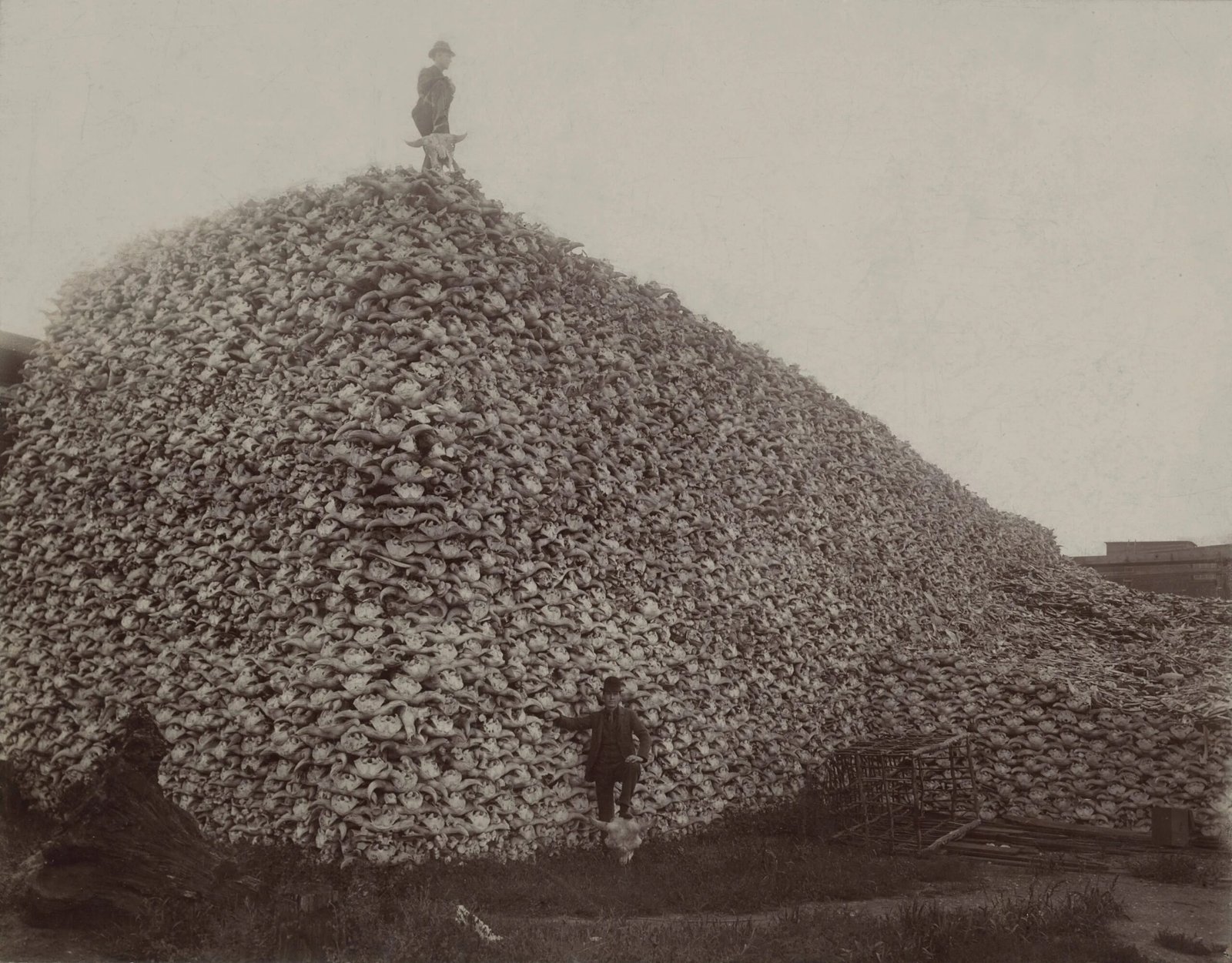
By the mid-1880s, the Great Plains had a ghostly aura. Just a decade earlier the grasslands teemed with buffalo, but when railroads like Santa Fe and Union Pacific cut tracks across Kansas and into Texas, hunters began shooting buffalo from train windows for sport, leaving carcasses to rot where they fell. Commercial hide hunters joined in, followed by the U.S. military, which slaughtered buffalo to starve Native Americans. By 1884, following a killing frenzy that lasted barely ten years, government auditors estimated that, of the 60 to 70 million buffalo that once roamed the plains, only a few hundred remained south of Canada. As national newspapers sounded alarms about extinction, the question became whether the most iconic animal of the American West would vanish before anyone bothered to save it.
As the buffalo disappeared, ranchers claimed vast swaths of land to raise cattle on open ranges for their meat, milk, and hides. Then came the great blizzard of 1886, which swept across the Plains, reaching as far south as Galveston, Texas. Unsuited for such harsh winters, cattle piled against barbed-wire drift fences—used to demarcate the open range—trying to escape the -40 degrees Fahrenheit temperatures and relentless snow, until they suffocated or froze. A second blizzard struck the following winter. Across the West, the “Big Die-Up” left hundreds of thousands of cattle carcasses strewn along fence lines.
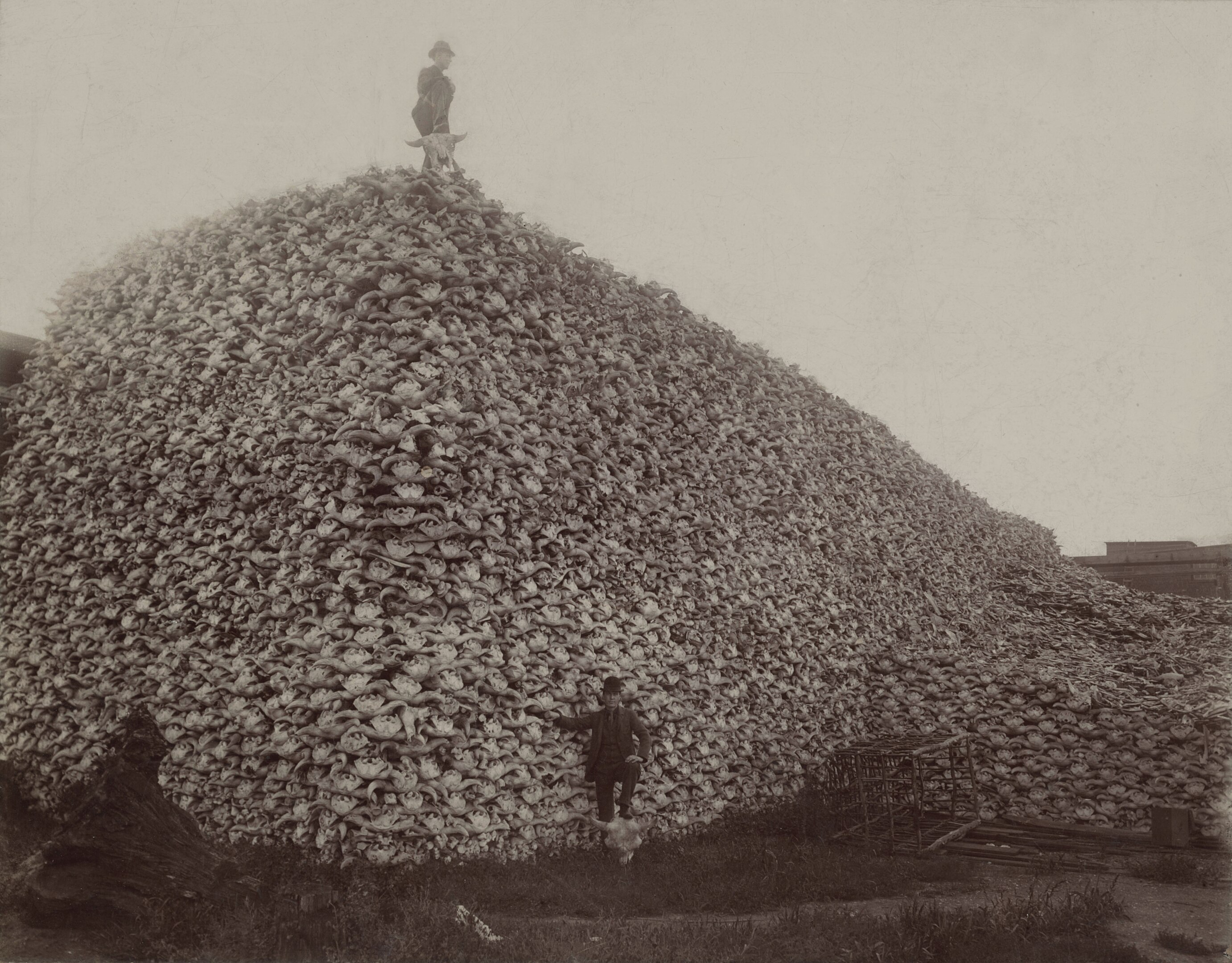
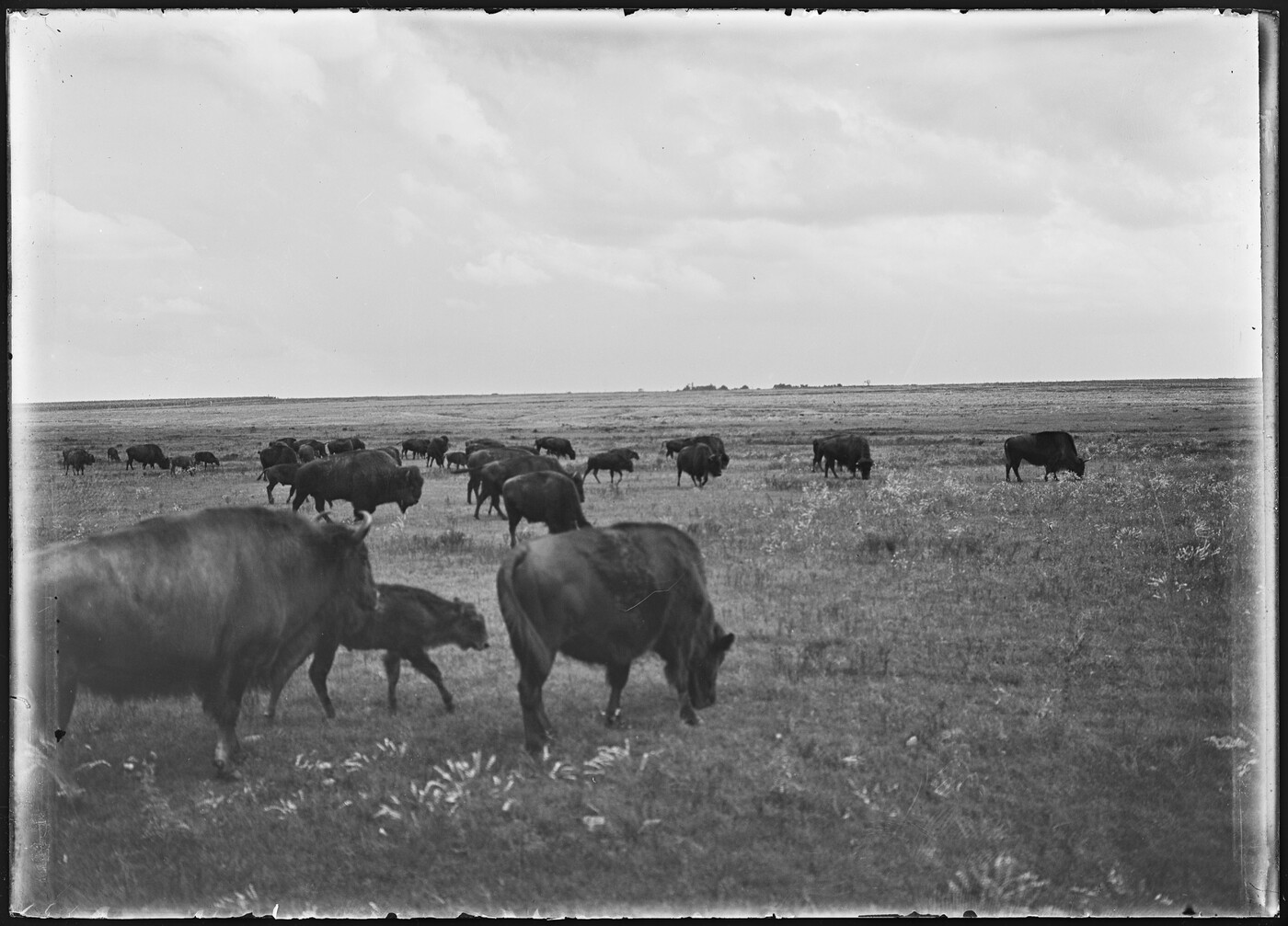
The years-long massacre of buffalo, also known as bison, followed by the blizzard carnage of cattle prompted Jones, a reformed buffalo hunter who once boasted of shooting buffalo by the thousands, to attempt to preserve one species while creating a new one. In 1886, Jones set out to wrangle as many remaining buffalo as he could. His ranch in Kansas—and later in other states—soon held the largest private herd of buffalo in the United States. By 1888, Jones had succeeded in crossbreeding buffalo with cattle, a hybrid he claimed could not only restore what Americans had nearly eradicated, but also replace what the region’s harsh winters had exposed as too vulnerable to survive. It was a creature engineered from guilt, ambition, and a scant supply of biological know-how.
A cowboy scientist and his cattalo dream
Charles Jesse “Buffalo” Jones led a colorful life of a pioneer and cowboy. He moved from Illinois to Kansas in the 1860s, during a time when the western frontier was booming, supercharged by the 1862 Homestead Act, which offered free land to families who settled west, and by the promise of railroads.
Although Jones gained distinction early on as a prolific buffalo hunter, his efforts to save them from extinction proved more profitable and enduring. The buffalo he raised on his farms in Kansas, Nebraska, and Texas made their way to parks and gardens in Europe, such as the London Zoological Gardens. He traveled to Africa to rope and capture wild animals like lions and cheetahs. President Theodore Roosevelt appointed Jones Park Warden of Yellowstone National Park, a post he held for several years. But his attempt to hybridize buffalo with cattle may have been his most colorful adventure.
Jones was also known as a con man who made and lost fortunes many times—his cattalo venture being no exception. “Buffalo Jones is enthusiastic over an enterprise in which he hopes to make a big fortune,” the Kansas City Star reported in 1897.

Despite limited success in growing his cattalo herd, Jones kept the dream alive for decades by making exaggerated claims about his successes and the animal’s benefits. He found sponsors that included the U.S. government, which in 1906 granted Jones land on the Grand Canyon Forest Reservation in northern Arizona to further his crossbreeding efforts.
By 1908, however, Jones had largely failed. Male cattalo offspring had a low survival rate, were infertile, and were often deformed. Females experienced low fertility and high abortion rates. Even after numerous attempts, his cattalo failed to consistently reproduce on their own.
Searching for the genetic sweet spot
Jones’s unbridled optimism compelled other ranchers to take up the cause in the early 1900s. By the time Popular Science published its cattalo report in 1925, the Canadian government was the largest sponsor of hybridization efforts. “The [Canadian] government has spent $2,000,000 in its project to stock the plains with buffaloes,” Popular Science wrote. “Its new scheme to set loose herds of cattaloes with valuable meat and hides will make up in a few years, it is thought, for this expense and will assure an ever-growing source of revenue.”
By the early 1940s, however, the “scheme” still wasn’t working, both in Canada and the States. Cattalo herds were not organically reproducing as planned. But in the late 1940s a Montana rancher, Jim Burnell, had a different idea—to experiment with the genetic mix.
In 1957, he produced his first fertile three-quarters buffalo bull, which, it was thought, would be the right ratio to ensure ongoing fertility. When Burnell got sidetracked in his crossbreeding efforts by a political career, a modern-day Buffalo Jones took up the cause in California a decade later. Using Burnell’s hybrid bull, D. C. “Bud” Basalo—a California meat broker, who also kept his own private herd of buffalo—crossbred a new hybrid in the early 1970s that was 3/8 buffalo and 5/8 cow. He named his new breed the “beefalo.” Interested ranchers gathered to form the American Beefalo Association in 1975 to promote beefalo worldwide.
Just as Buffalo Jones wooed investors and consumers by selling cattalo potential, beefalo promoters began making big promises. According to the American Beefalo Association, beefalo were not only leaner than beef, but also required less feed, exhibited greater disease resistance, and tolerated harsh winters and hot conditions better than traditional cattle. The optimal genetic balance was claimed to be 3/8 buffalo-to-5/8 cow, which offered enough buffalo DNA to confer ruggedness, but not so much that animals became unmanageable or infertile. Ranchers described beefalo as self-reliant, able to forage on coarse prairie grass, and yielding lean meat with lower cholesterol and fat levels than beef. Some went further, suggesting it was the future climate-resilient beef.
DNA forever entwined
But even in the 21st century, biological hurdles have stubbornly resisted marketing enthusiasm. Ranchers have struggled to maintain true ratios across generations. A 2024 genomic analysis by the U.S. Department of Agriculture added a surprising wrinkle: Researchers found that most of the cattle marketed as beefalo contained little to no detectable buffalo DNA. In other words, modern beefalo herds may be far more bovine than buffalo.
But if cattle genes have a way of nudging out buffalo across successive generations, the reverse may not be true. In a 2022 study of a sampling of buffalo taken from various U.S. National Parks researchers found genetic traces of cattle DNA in all they tested. Although Jones failed to create a stable hybrid, his legacy lives on in the DNA of modern North American buffalo, even those found living in the wild.
Genetic scrutiny has pushed beefalo ranchers toward formal DNA ancestry verification, which is now offered by genetic testing services such as Zoetis, Neogen, and the University of California–Davis Veterinary Genetics Lab. As a result, beefalo has evolved from a frontier-breeding experiment to a genetic-identity project: how much buffalo is needed to still call something beefalo, and who gets to decide?
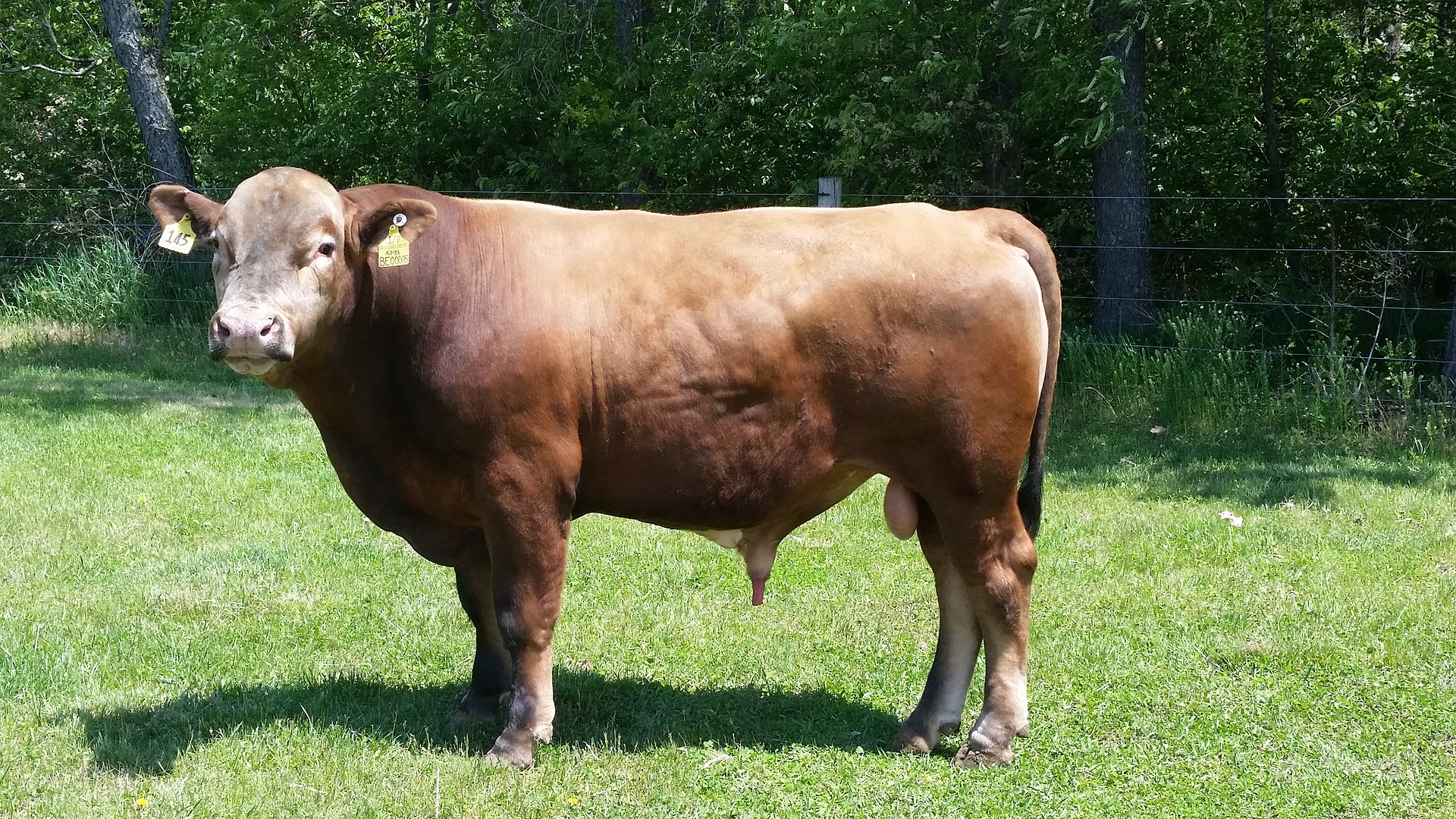
Despite these lingering questions, beefalo maintain a niche but persistent presence. It is not the national “new meat supply” that Popular Science once imagined, and the Great Plains are not teeming with hybrid herds. But beefalo represent the ever-present desire to engineer better livestock, an impulse that has not faded with time: From the whimsical-seeming yakalo (the yak and buffalo hybrid) and sheep-goat to serious efforts to genetically engineer cattle to withstand climate change-induced heat waves and disease.
Whatever shape the next frontier of hybridization takes, the dream that Charles “Buffalo” Jones started in the 1880s continues to evolve, but it’s still motivated by a mix of redemption, ambition, and overconfidence—by the belief that nature can be coaxed into giving back what we’ve taken and yielding something more perfect.
In A Century Later, Popular Science revisits our archives to see how past predictions and discoveries have held up 100 years later.
Related Stories from ‘A Century Later’ Series

2025 PopSci Outdoor Gift Guide
