1. Design and Display
Build and Feel
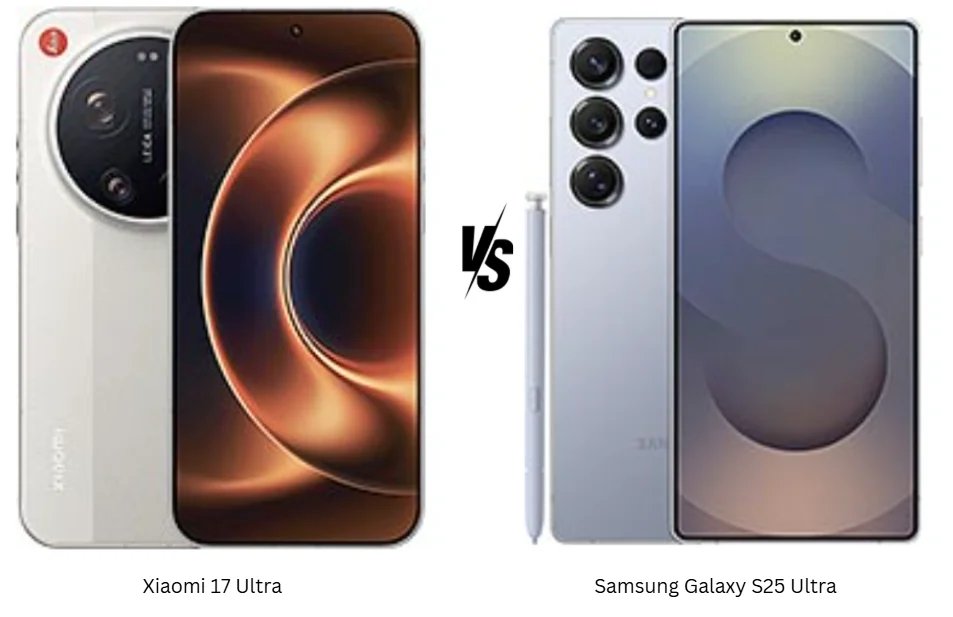
Xiaomi 17 Ultra feels purpose-built for creators, with a photography-centric design and rugged protection that makes it suitable for outdoor and travel use. The Galaxy S25 Ultra leans toward a cleaner, more professional look, giving it a refined premium character that feels better suited for business or productivity-focused users.
Display Quality
Xiaomi’s AMOLED panel delivers deep contrast and vivid HDR output, making movies, games, and creative visuals feel rich and immersive. Samsung’s Dynamic AMOLED offers sharper clarity and a more balanced tone, which feels better for reading, design work, and extended viewing. The anti-reflective coating also improves usability in bright environments.
Verdict
Xiaomi feels more entertainment-driven, while the Galaxy S25 Ultra delivers a sharper and more refined display for productivity and precision viewing.
2. Specifications
Performance
Both phones offer flagship-class processing power, but the Xiaomi 17 Ultra feels tuned for creative workloads and intensive multitasking. The Galaxy S25 Ultra focuses on stability and long-term consistency, making it better suited for users who value sustained performance and polished software optimization.
Battery and Charging
Xiaomi delivers stronger endurance and noticeably faster charging, which benefits heavy users who shoot, edit, and stream frequently. Samsung prioritizes efficiency and controlled charging speeds, creating a battery profile that feels safer and more balanced for long-term device health.
Verdict
Xiaomi wins for power users who want maximum uptime, while the Galaxy S25 Ultra feels better for efficiency-focused users who value stability over raw charge speed.
3. Camera
Main and Secondary Lenses
Xiaomi 17 Ultra offers a creator-focused camera system with Leica tuning and continuous optical zoom, giving it a more expressive and cinematic shooting style. The Galaxy S25 Ultra delivers consistent sharpness and reliable zoom performance, making it feel more practical for everyday photography and travel use.
Selfie Camera
Xiaomi’s high-resolution selfie camera produces detailed output that suits creators and vloggers. Samsung’s selfie camera leans toward natural colors and balanced HDR, making it feel more dependable for quick social content and portraits.
Verdict
Xiaomi suits photography enthusiasts who enjoy creative control, while the Galaxy S25 Ultra delivers a steadier, more consistent all-around camera experience.
4. Pricing
Xiaomi 17 Ultra is priced at around $1000 and offers stronger upfront value for buyers who want powerful hardware and creative flexibility at a lower cost. The Samsung Galaxy S25 Ultra comes in at about $1200, but the higher price feels justified through longer software support, ecosystem reliability, and productivity features that make it better suited for long-term users.
Overall, Xiaomi delivers higher feature value upfront, while Samsung feels better suited for long-term users who want reliability and ecosystem benefits.
Disclaimer:
Prices are approximate and may vary based on country, region, and applicable taxes.
5. Conclusion
Xiaomi 17 Ultra stands out with Leica tuning, continuous zoom, rugged durability, and ultra-fast charging, making it feel like a creator-focused flagship. The Galaxy S25 Ultra differentiates itself with stylus support, DeX desktop features, UWB, and extended software life, giving it a more productivity-oriented identity.
Verdict
If only one can be chosen, the Samsung Galaxy S25 Ultra is the safer all-around pick. It offers a more consistent camera experience, refined software, stronger ecosystem value, and long-term reliability that feels better suited for most premium users.
Xiaomi 17 Ultra is great for creative enthusiasts, but the Galaxy S25 Ultra delivers a more balanced flagship experience that holds up better over the years of use.
Read More: