

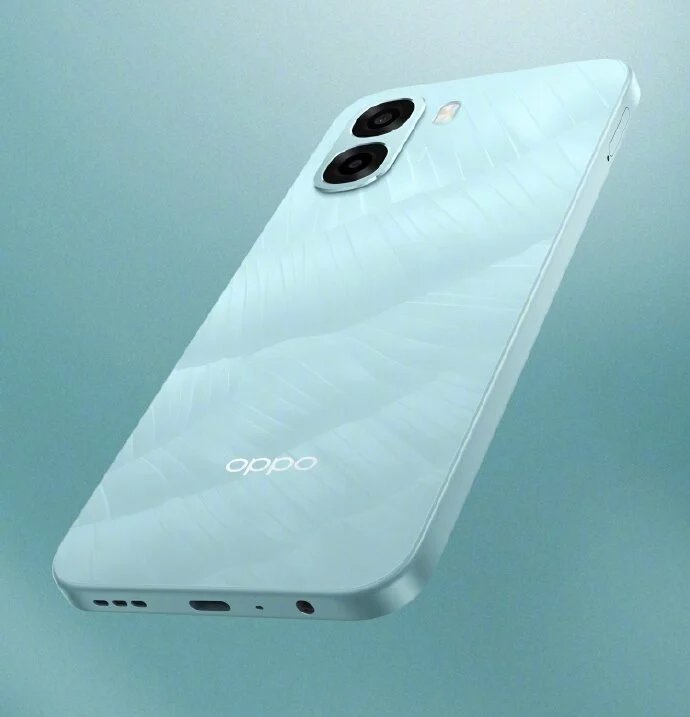
Oppo has confirmed that two new smartphones, the Oppo A6v and Oppo A6i+, will launch in China on February 2 at 10 AM local time. Pre-orders for both models will open at the same time. The announcement was shared through official Weibo teasers, which also confirmed the color options for each device.


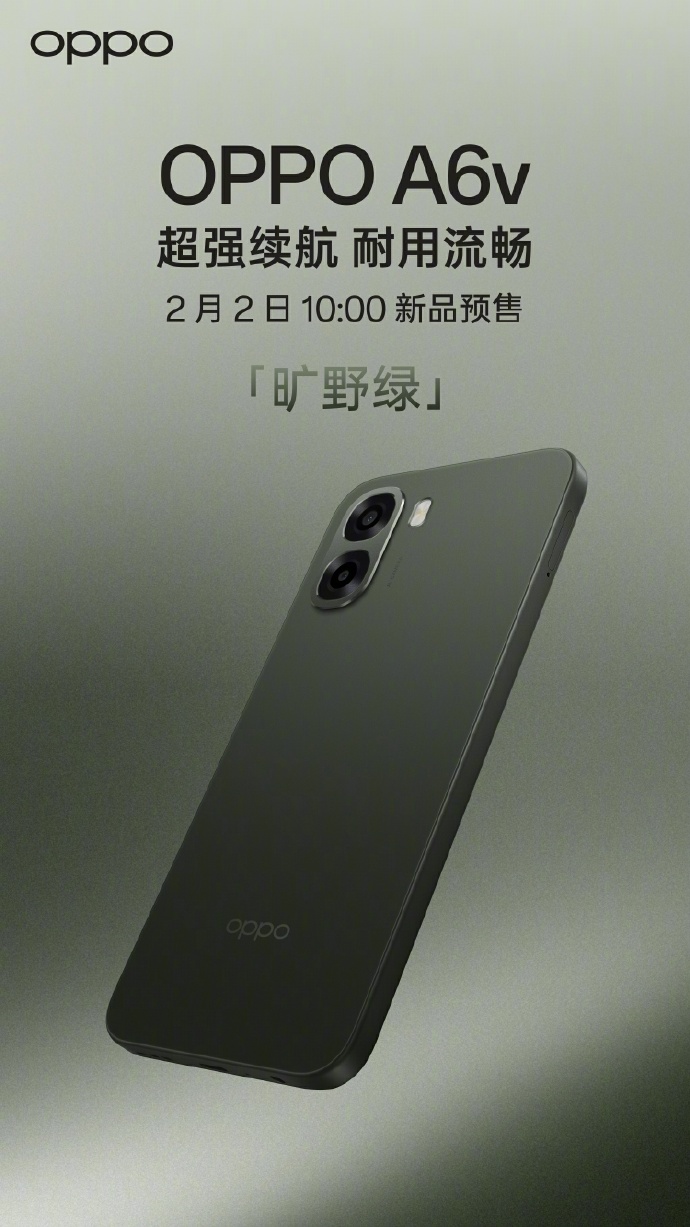
The Oppo A6v will be available in Glacier Blue, Titanium Rock Purple, and Wild Green. Oppo positions the A6v as a compact phone with a flat display that is easy to hold and carry. The Glacier Blue finish reflects soft light tones, Titanium Rock Purple has a darker and calmer look inspired by stone textures, and Wild Green takes cues from natural landscapes.
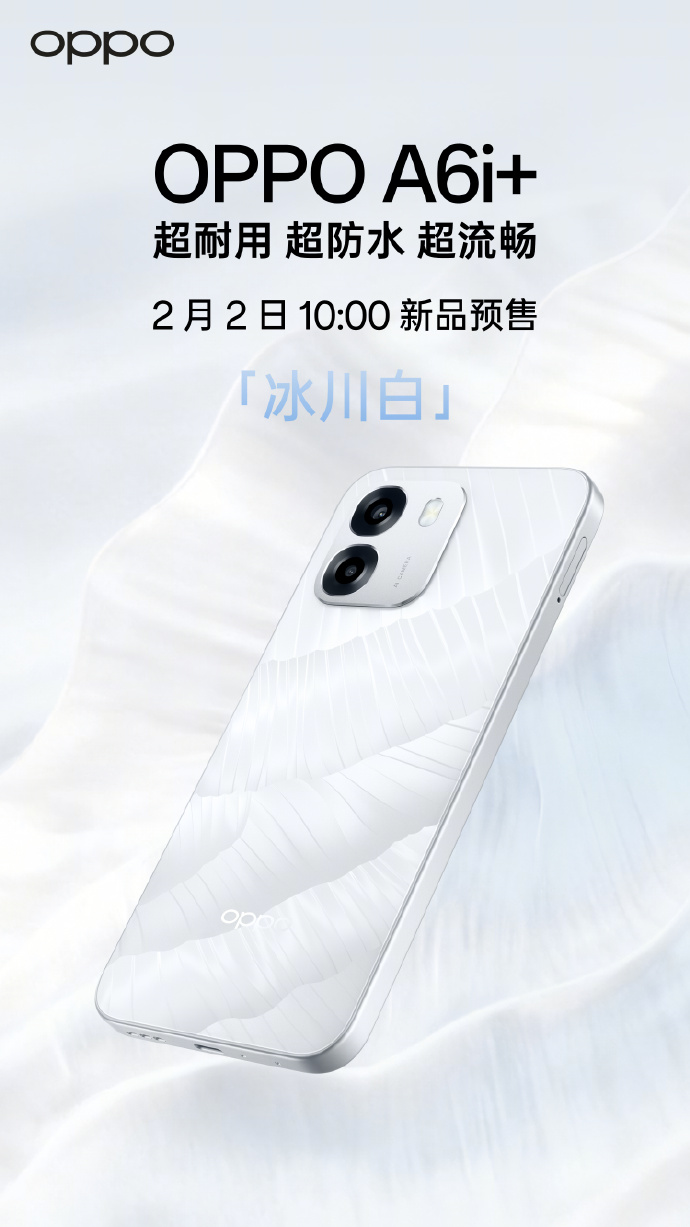

The Oppo A6i+ is aimed at users who prefer a larger display. It will launch in Glacier White and Chestnut Brown. Glacier White has a clean and bright finish inspired by ice reflections, while Chestnut Brown features a soft matte texture with a darker tone. Oppo highlights the A6i+ as a phone built around an immersive big-screen experience.
Oppo has not yet shared the full specifications for either model. Based on their position in the lineup, they are expected to sit alongside existing A6 series devices such as the Oppo A6L. The details of the Oppo A6L are listed below to offer a reference point for what the upcoming Oppo A6V and Oppo A6i+ may bring.
Oppo A6L features
The Oppo A6L sits higher in the range. It comes with a 6.8-inch flat OLED display with FHD resolution, a 120Hz refresh rate, and up to 1,600 nits peak brightness. It runs on the Snapdragon 7 Gen 3 chipset with 12GB LPDDR4x RAM and 256GB UFS 3.1 storage. The phone has a 7,000mAh battery with 80W fast charging and runs ColorOS 15 based on Android 15. Camera specs include a 50MP OIS-enabled main camera, a 2MP secondary sensor, and a 32MP front camera. It also offers dual speakers, 5G, Wi-Fi, Bluetooth, GPS, NFC, USB, an in-display fingerprint sensor, IP68 and IP69 ratings, military-grade durability, a thickness of 7.86mm, and a weight of around 204 grams.
More details about the Oppo A6v and A6i+ are expected at launch.
(Source: 1, 2)
