

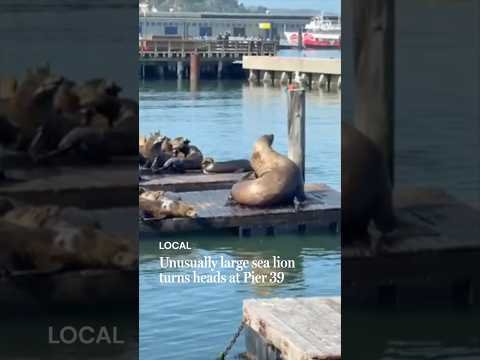
The average male Steller sea lion (Eumetopias jubatus) is about 10-feet-long and weighs around 1,200 pounds. But Chonkers is no average sea lion. At an estimated 2,000 pounds , the absurdly humongous, Redditor-nicknamed marine mammal has captivated onlookers and imposed himself on his fellow sunbathers ever since he arrived at San Francisco’s Pier 39 in early April.
Sea lions routinely visit the Bay Area for its vast sources of fish, as well as the chance to simply hang out together. These gatherings are part of what makes them who they are. Sea lions are thigmotactic, the scientific term for animals who buddy up and cuddle with one another or stay in contact with hard surfaces for security and warmth. However, Chonkers isn’t a California sea lion (Zalophus californianus) like the majority of his pier-mates—his species is usually seen near Washington State or Alaska. He still shares their affinity for closeness, although his heftiness has somewhat complicated the situation.

Unusually large sea lion turns heads at Pier 39
Viral videos circulating online illustrate the problem. In them, Chonkers can be seen launching himself onto a float already inundated with sea lions. The resultant crash—which reportedly sounds like a snapping oak tree—nearly sank a float and slid multiple sea lions off into the waves.
“We didn’t build those floats for 2,000-pound animals,” Pier 39 marina harbormaster Sheila Chandor told The Wall Street Journal on April 26.
Luckily, there are no reports of damage to marina property or the lounging ocean predators. Upwards of 2,000 sea lions at a time take a breather in the marina depending on the time of year, and Chonkers isn’t the first Steller to visit. However, the detours usually only last a few days—not weeks.
No matter how long Chonkers chooses to hang around the marina, he symbolizes a larger ecological story. Around the world, incidents between large marine mammals have increased, as humans encroach more and more on their habitats. In July 2022, authorities in Norway euthanized a walrus nicknamed Freya after she was deemed a danger to the public.
Steller sea lion populations along the Pacific coast have dropped dramatically since the 1970s, mostly likely due to overfishing. That said, overall numbers appear to have stabilized in recent years, and in some areas the population is increasing. After spending over 15 years classified as endangered on the IUCN Red List, Stellar sea lions are considered nearly threatened.

2025 PopSci Best of What’s New
