

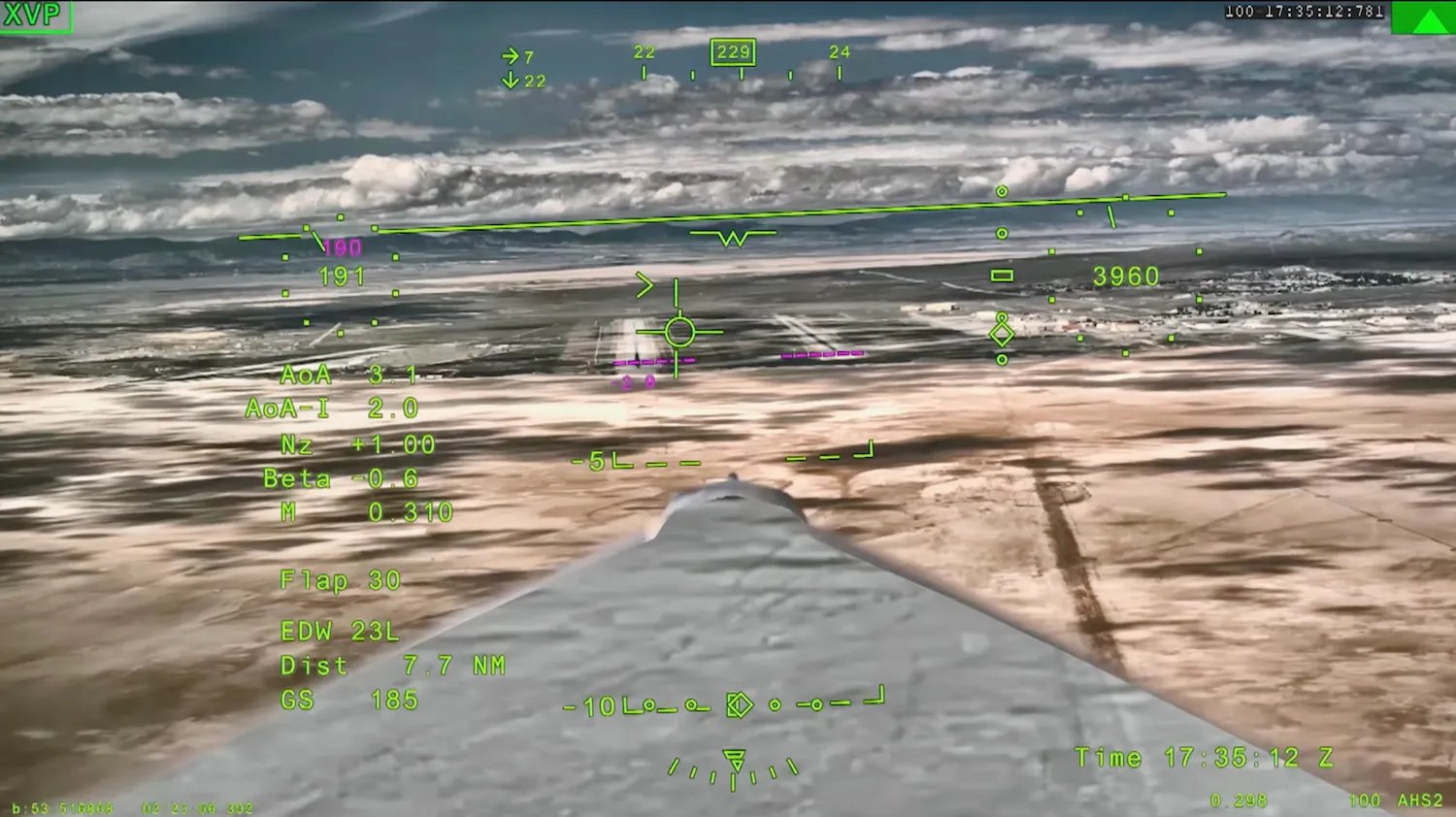
It’s been over a decade since engineers officially got to work on the X-59 Quiet SuperSonic Technology (QueSST). Designed in collaboration with NASA, Lockheed Martin’s state-of-the-art aircraft is built to fly very high and very fast, all without leaving a telltale sonic boom in its wake. Lockheed finally revealed the X-59 to the public in January 2025 a few years behind schedule, and completed its first subsonic test flight that October.
They’ve been making up for lost time ever since. The X-59 has flown on nine more occasions, most recently on April 14 when it accomplished some of its biggest feats to date while cruising over the Mojave Desert in California. This time around, however, Lockheed was ready to show off the aircraft in action. From the opening maneuvers, it’s clear that a ride in the plane isn’t for the faint of heart.
The dizzying ascensions and precise axial turns look uncomfortable even from the distance of a computer screen, but there’s no denying that the X-59 is making major progress. It didn’t quite achieve supersonic speed since it only reached around 0.95 Mach speed (about 730 miles per hour), but the major milestone likely isn’t too far away at this point.
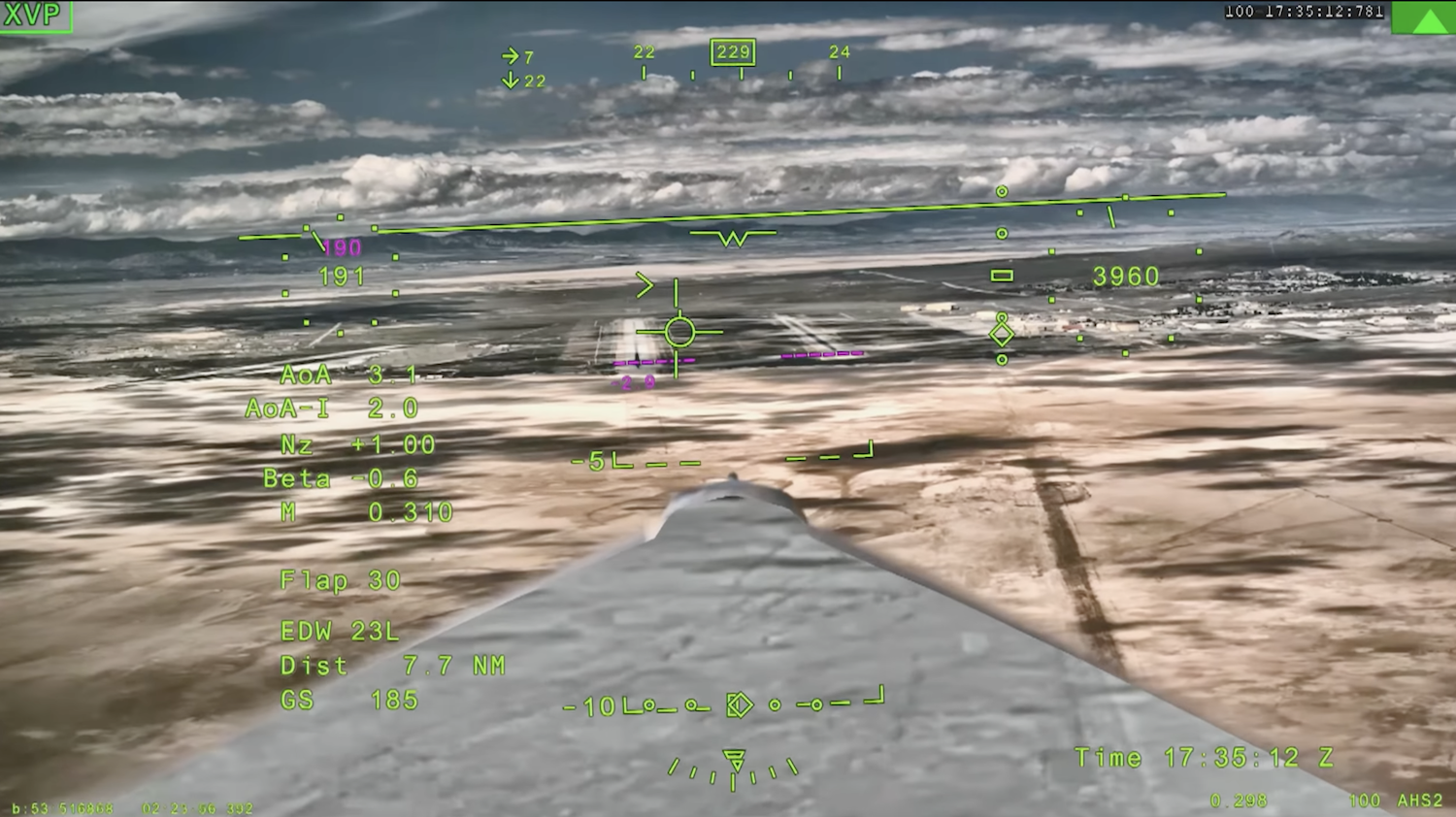
“Moving forward, the X-59 will continue to test its performance at high and fast test points as well as low and slow test points,” Lockheed said in its recent update. “From there, the joint Lockheed Martin and NASA team will move quickly into supersonic speeds and eventually the aircraft’s design points of roughly 55,000 feet and Mach 1.4, where it will create the first ever quiet supersonic thump.”
If all goes as planned, the X-59 will eventually top out at around Mach 1.5 (about 990 mph) and maintain a cruising speed of Mach 1.42 (940 mph) at an altitude of 55,000 feet. The resultant supersonic “thump” is currently projected to have a perceived loudness (PLdB) equivalent to a car door slamming—about 16 times quieter than the notorious sonic booms generated by the Concorde aircraft. While Lockheed and NASA have spent years hyping X-59 as the way to reintroduce supersonic commercial air travel, there is no denying that the military certainly has other plans for the next-generation plane. Don’t just expect those ideas to be revealed anytime soon.

2025 PopSci Best of What’s New
