

Google’s Gemini has quickly become a leading force in artificial intelligence, especially on Android, where it’s the default and very capable AI chatbot, but with the newly announced improvements, Gemini is forever etching itself into the core of Android.
Chrome on Android gets the Gemini smarts
Statistically, you’re more likely to use Google Chrome than not, given its dominant 64% market share on mobile, but Google isn’t resting on old laurels. It’s in fact improving constantly, and the recent upgrade adds Gemini to Chrome on Android (this is probably one of the reasons why Chrome on Android recently made some buzz online by silently downloading a 4 GB-ish LLM model on your device).
The features listed below will be launching to select devices with at least 4 GB of RAM running Android 12 or higher in the US in late June.
Auto-browse in the US
The highlight feature of this update allows Chrome to browse the web and execute complex tasks on your behalf. Powered by Gemini Intelligence, this feature allows Chrome to “handle tedious tasks”. Some examples include reserving tickets for an event or a social function or updating the contents of a shopping cart.
Easier access to Gemini
Of course, with Gemini on Chrome, the browser will help you research, compare, and summarize content for you. When browsing the web, a new Gemini button will be available on the toolbar, and by clicking it, Gemini will appear at the bottom of the screen. You will be able to ask questions about the page you’re viewing, summarize long text articles and pages, as well as break down complex topics to more byte-sized nuggets of information.
None of that is revolutionary––Gemini on your phone can already do this––but you now have to open Gemini and potentially switch apps, which isn’t always very convenient. With Gemini in Chrome, you never leave the browser.
Additionally, you will be able to use Gemini in Chrome to automatically execute mundane everyday tasks for you. Google mentions some examples we’ve all done in the past: adding events to your calendar, listing food ingredients from a webpage to a Google Keep note, or cross-checking some specific piece of information from your personal Gmail account.
Image generation made easy
Google’s Nano Banana is one of the more accessible and capable image generators right now, and soon, you will be able to create images straight in Chrome. You will be able to create images based on the web content you’re viewing right now, like making an infographic to better understand a complex topic or seeing how a particular Zillow listing might look like when furnished differently.
Gemini Intelligence: Proactive agentic framework on your phone
Gemini Intelligence is an AI-powered agent framework that will be able to execute complex multi-step automations on your behalf. This next-level functionality has been trained on popular food and rideshare apps, says Google, so I’d expect Gemini Intelligence to initially be best at ordering food or booking a ride for you, browse stores and websites for you, find relevant bookings, and so much more.
It will also be able to completely autofill forms with all the relevant data it can pull from your personal resources and data.
What about data privacy?
I know, AI agents doing tasks for you in the background sounds like a bag of cats, but Google promises it has taken the necessary precautions to prevent any potential user horror stories from happening.
That’s why users will have granular control over all Gemini Intelligence components; all of these will be opt-in, too. This means that you will be able to only enable the autofill module and nothing else, but you have to explicitly do that of your volition. You will also be able to disable Gemini automation for specific apps, too.
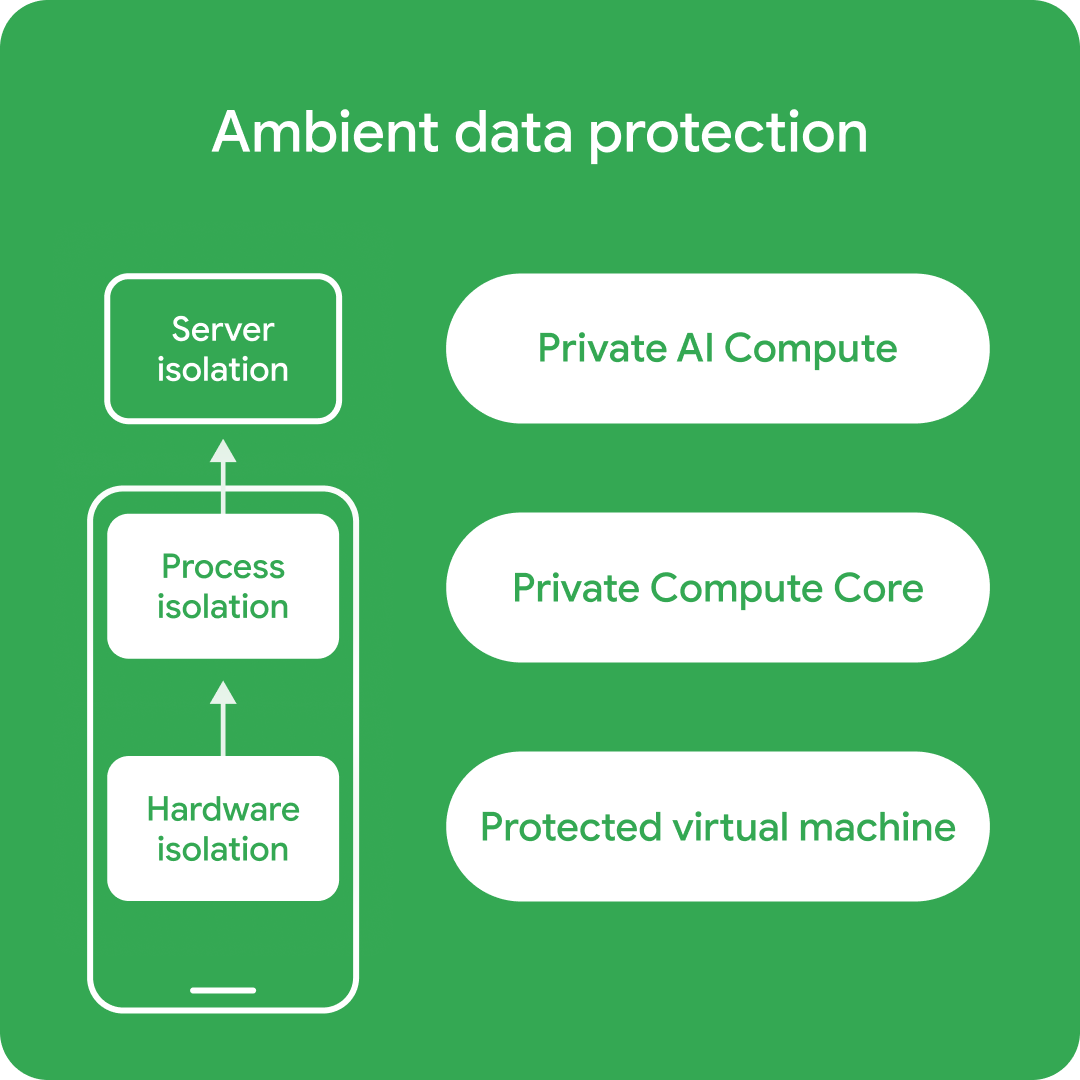
Gemini Intelligence will keep your data safe. | Image by Google
Additionally, Gemini will start automating a task only when you explicitly tell it to and will be informing you about the current progress in a live notification. You will be able to stop the process at any point. When starting an automation, a pop-up notification will appear, asking you for your one-time or permanent permission to execute tasks, similarly to when an app asks for location or gallery access.
