

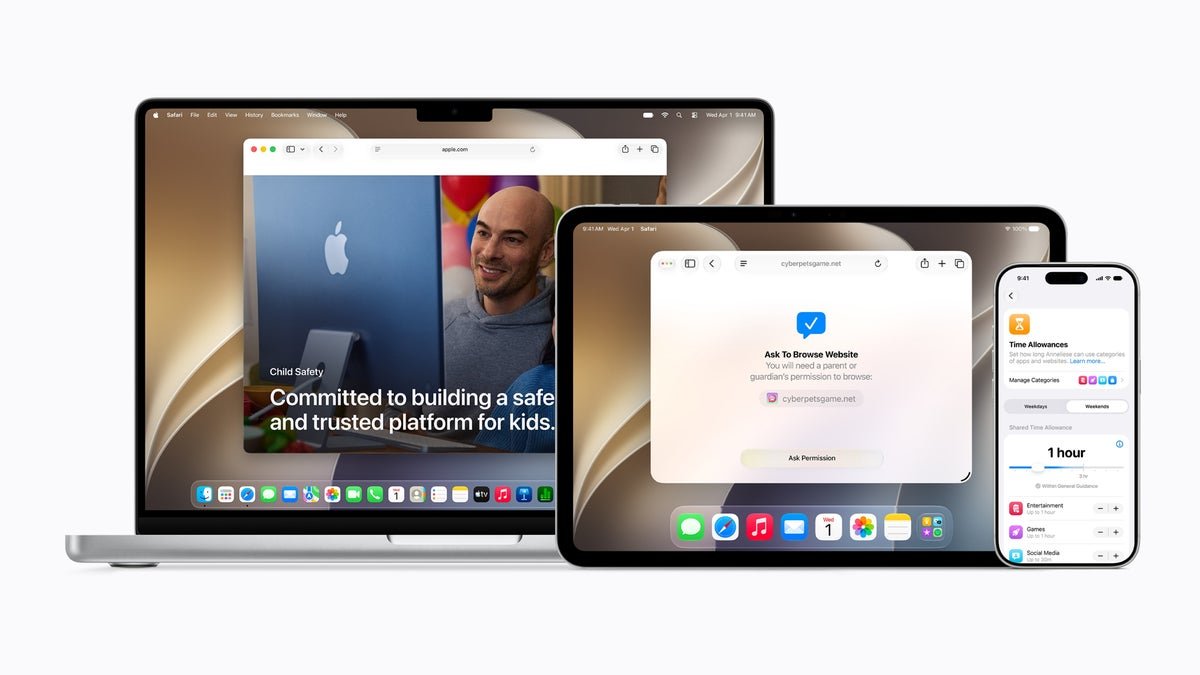
It starts with a child account
The whole system hangs on setting up a child account, which Apple now walks parents through during device setup. Once it is active, age-appropriate protections switch on across the system, like limiting adult websites, restricting media, and setting age-based limits in the App Store.
A child account is required for kids under 13 and available for anyone up to 18.
Our approach to helping families create safer digital experiences is grounded in the belief that every child is unique.
— Sumbul Desai, M.D., Apple’s VP of Health and Fitness
Choosing which apps your kid can open
After the account is set, parents pick exactly which apps show up on the device. You can start with a small set of essentials, a curated bundle, or hand-pick each one, then add more over time as you see fit.This pairs with Ask to Buy, the existing tool that makes kids request approval before downloading anything from the App Store, free or paid, or making an in-app purchase.
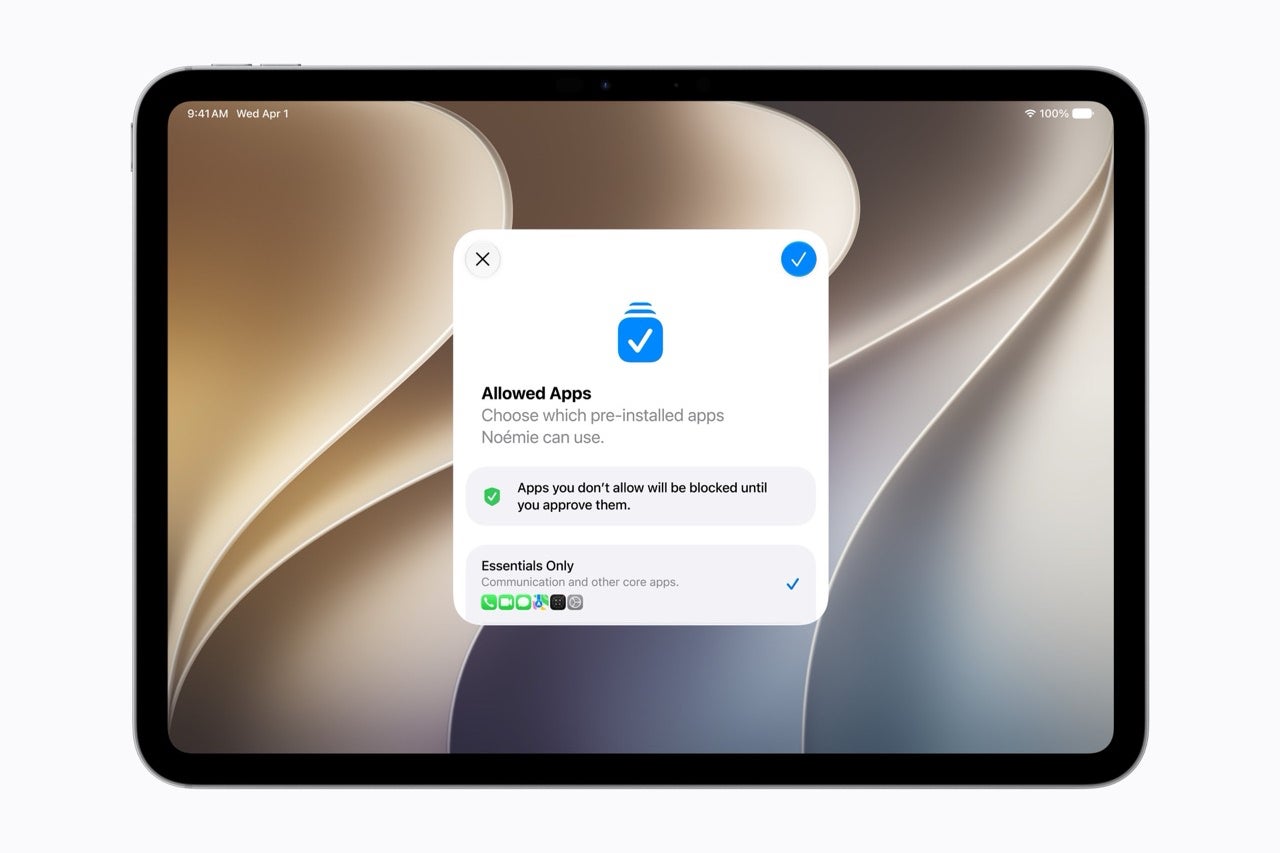
Parents can start a kid off with just essential apps and approve more over time. | Image by Apple
A new Ask to Browse for the web
The fresh addition here is Ask to Browse. It makes kids request permission before opening a new website in Safari, and it works across iPhone, iPad, and Mac.
This is one spot where Apple actually pulls ahead. Google’s Family Link can lock a child’s Chrome to approved sites, but its web filtering outside Google’s own services has long been the weaker part of the package. Wiring approval straight into Safari at the system level is a cleaner answer to the same problem.
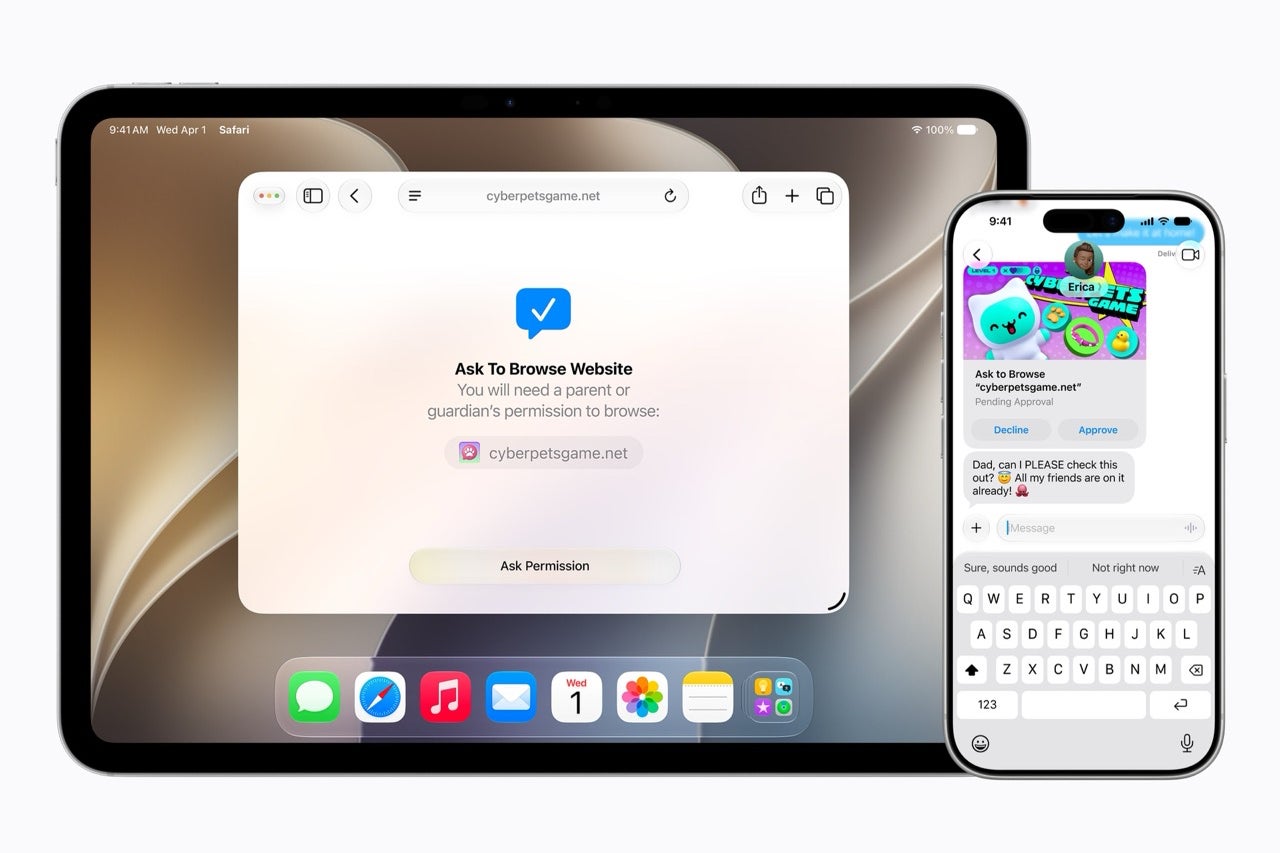
Ask to Browse makes kids request approval before opening a new site in Safari. | Image by Apple
Managing who your kid can talk to
Parents can manage who their children reach over Messages, FaceTime, and Phone, and can require approval before a kid connects with anyone new. Communication Safety, already on by default for users under 18, blurs sensitive images, and it will now step in to block violent content too.
New ways to manage screen time
Time Allowances let parents cap how long kids spend in app categories like Entertainment, Games, and Social Media, with adjustable starting suggestions based on expert research. Daily Schedules control which apps work at which times, so a kid can stay focused during school hours.
Screen Time itself has been redesigned into an at-a-glance view of average usage and top apps, with quick taps to limit or extend access in the moment.
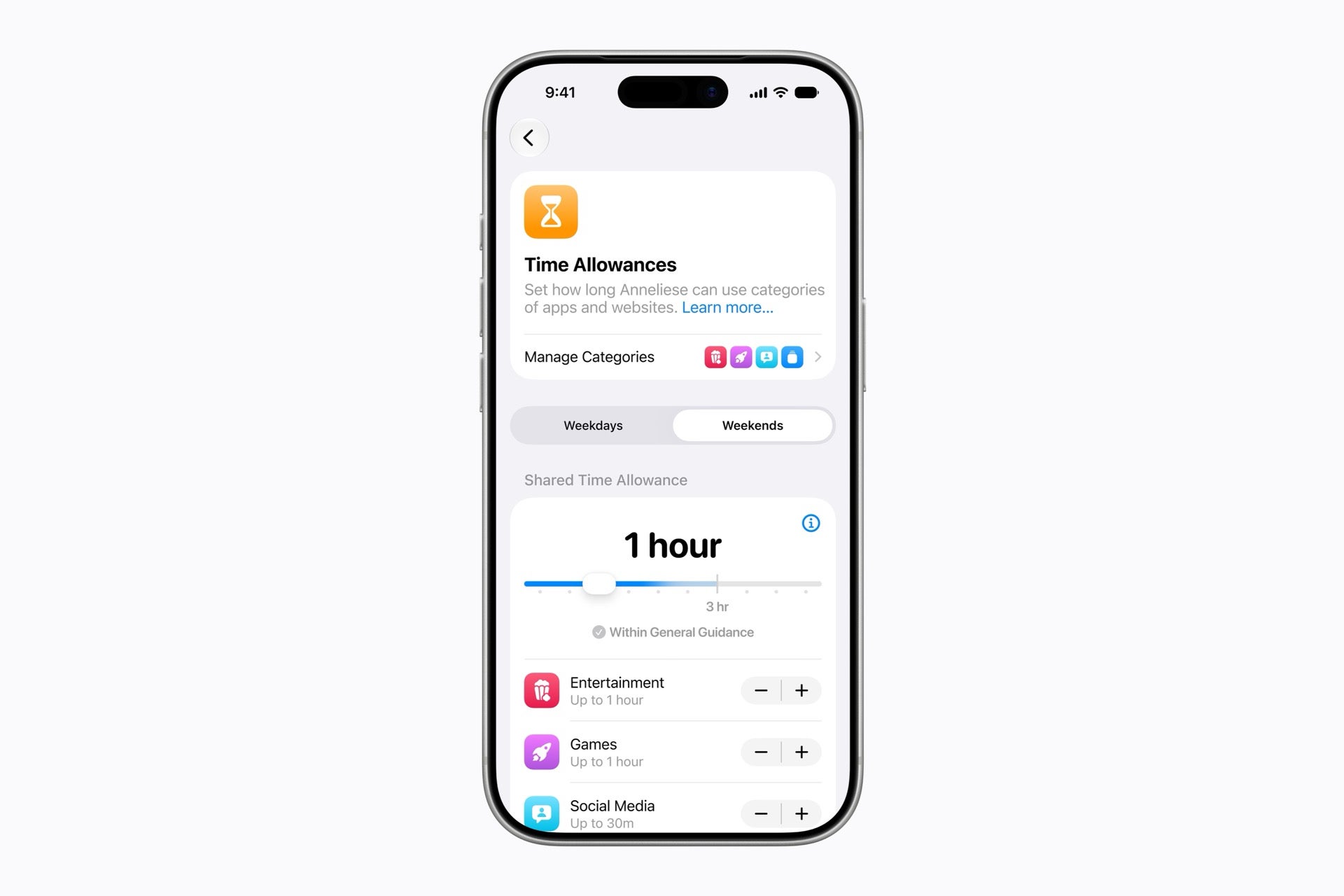
Time Allowances cap how long kids spend in app categories, with expert-based starting points. | Image by Apple
How this matches up against Android
The honest framing is that most of this is Apple catching up. Google’s Family Link has offered the same core controls for years, much of it free and built into Android. Apple is now matching it, with the Safari-level web approval as its own edge.
There is also a gap worth flagging, and parents spotted it fast. On the r/apple subreddit, one user pointed out that all of this assumes the kid has their own Apple device. It does nothing for the parent who hands their own iPhone to a five-year-old for ten minutes at a restaurant. There is still no second-user mode or guest profile with controls on iPhone or iPad, the kind of multi-user setup Android tablets have offered for years. If you share one device with your kid, these protections do not really reach you.
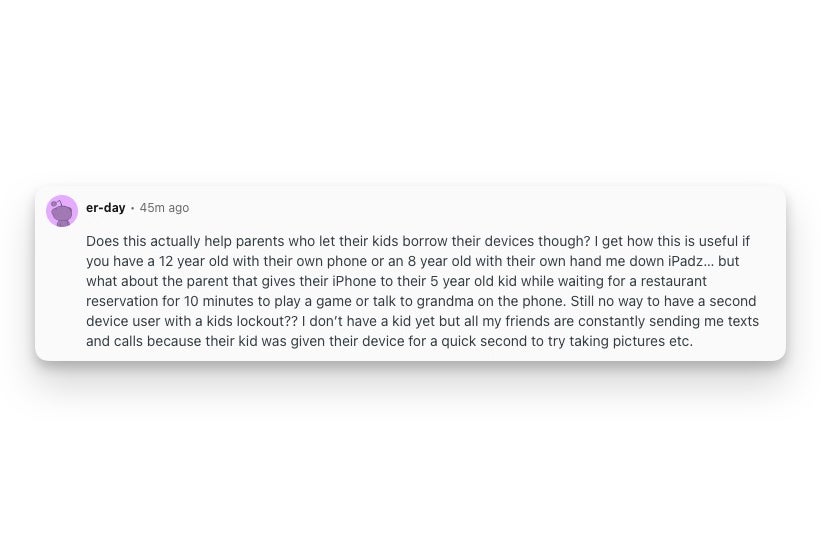
A user on r/apple points out that the new controls do not cover a shared device handed to a young kid. | Image by er-day via Reddit
When you can get it
The new features arrive after you install the Screen Time update in iOS 27, iPadOS 27, and macOS 27 this fall. Howeverm, Apple notes the features are subject to change before release.
Want more plain-English breakdowns of the stuff Apple and Google actually ship, plus the behind-the-scenes of how I cover it? Come find me on X at @jojothetechie and on Threads at @jojothetechie.
