

Close Menu

    Subscribe to Updates

    Get the latest creative news from FooBar about art, design and business.

    What's Hot

    Reid Hoffman Wants Silicon Valley to ‘Stand Up’ Against the Trump Administration

    January 13, 2026

    Smartphone Camera Scores Explained: Are DxOMark Rankings Really Reliable?

    January 13, 2026

    Samsung Pushes Galaxy Watch 8 (2025) to Its Lowest Price in New Year Clearance, While Apple Watches Stay Full Price

    January 13, 2026
    Facebook X (Twitter) Instagram
    Wednesday, January 14
    Facebook X (Twitter) Instagram YouTube Mastodon Tumblr Bluesky LinkedIn Threads
    ToolcomeToolcome
    • Technology & Startups

      Reid Hoffman Wants Silicon Valley to ‘Stand Up’ Against the Trump Administration

      January 13, 2026

      Urevo SpaceWalk 5L Walking Pad Review: Compact and Affordable

      January 13, 2026

      Board Review: Tabletop Video Games With Physical Pieces

      January 13, 2026

      Atonemo Streamplayer Review: Make Old Speakers New Again

      January 13, 2026

      What to Do If ICE Invades Your Neighborhood

      January 13, 2026
    • Science & Education

      Hubble Nets Menagerie of Young Stellar Objects

      January 13, 2026

      Ötzi the Iceman mummy carried a high-risk strain of HPV, research finds

      January 13, 2026

      Can you eat too much protein?

      January 13, 2026

      NASA’s Webb Delivers Unprecedented Look Into Heart of Circinus Galaxy

      January 13, 2026

      Backcountry is blowing out hiking bags, backpacks, and luggage for up to 65% off during this clearance sale

      January 13, 2026
    • Mobile Phones

      Smartphone Camera Scores Explained: Are DxOMark Rankings Really Reliable?

      January 13, 2026

      Motorola expands Android 16 beta program to 8 more devices

      January 13, 2026

      Motorola Introduces Moto Pen Ultra for Foldables and Moto Tag 2 Item Tracker

      January 13, 2026

      OnePlus Nord CE 5 Update Adds Video Editing Tools and January Security Patch

      January 13, 2026

      Vivo rolls out OriginOS 6 (Android 16) update to Vivo V40

      January 13, 2026
    • Gadgets

      Star Wars Outlaws developer Massive Entertainment and Ubisoft Stockholm face layoffs

      January 13, 2026

      Insta360 releases AI-powered follow-up to its Link webcams

      January 13, 2026

      Proton’s Lumo AI chatbot now has an encrypted space for your projects

      January 13, 2026

      The best streaming devices for 2026

      January 13, 2026

      UK regulator Ofcom opens a formal investigation into X over CSAM scandal

      January 13, 2026
    • Gaming

      Samsung Pushes Galaxy Watch 8 (2025) to Its Lowest Price in New Year Clearance, While Apple Watches Stay Full Price

      January 13, 2026

      ASUS ROG Xbox Ally (2025 Ryzen Z2 A) Just Hit Its Lowest Price Ever With 3 Months of Game Pass Included

      January 13, 2026

      Samsung Goes All-In on Galaxy S25 Ultra Clearance at a Record Low as the New S26 Launch Approaches

      January 13, 2026

      This Great Switch 2 Handheld Controller Is On Sale For New Best Price At Amazon

      January 13, 2026

      Google Pixel 9a Drops to All-Time Low to Compete With Samsung Galaxy S25 Deals, Now the Cheapest Gemini-Powered Smartphone

      January 13, 2026
    • Cars

      Beyond Speed: A Deep Dive into the 6 Safety Features That Could Save Your Supercar in 2026

      January 13, 2026

      A Commercial Truck Caused a Hit-and-Run: Who Pays for the Damage?

      January 13, 2026

      Risk and reward: what driving teaches about smart decisions

      January 13, 2026

      How It’s Played Online on GameZone

      January 12, 2026

      How Dubai Became the Supercar Capital of the World

      January 12, 2026
    • PC Accessories

      A Kilowatt PSU Is So 2025, The Seasonic Prime PX-2200 Is The Future

      January 12, 2026

      CES 2026: The Good, Bad And Ugly

      January 12, 2026

      Hands-On With Samsung Galaxy Z TriFold: An Impressive New Take On Foldables

      January 11, 2026

      Edifier’s Funky Portable ES300 Wireless Speaker

      January 9, 2026

      Testing All The Features of AMD’s FSR Redstone

      January 9, 2026
    ToolcomeToolcome
    Home»Science & Education»A toxicologist explains when you can safely cut the moldy part off food, and when it’s best to toss it
    Science & Education

    A toxicologist explains when you can safely cut the moldy part off food, and when it’s best to toss it

    November 1, 2025No Comments7 Mins Read1 Views
    Facebook Twitter Pinterest LinkedIn Telegram Tumblr Email
    Share
    Facebook Twitter LinkedIn Pinterest Email


    When you open the refrigerator and find a wedge of cheese flecked with green mold, or a package of chicken that smells faintly sour, it can be tempting to gamble with your stomach rather than waste food.

    But the line between harmless fermentation and dangerous spoilage is sharp. Consuming spoiled foods exposes the body to a range of microbial toxins and biochemical by-products, many of which can interfere with essential biological processes. The health effects can vary from mild gastrointestinal discomfort to severe conditions such as liver cancer.

    I am a toxicologist and researcher specializing in how foreign chemicals such as those released during food spoilage affect the body. Many spoiled foods contain specific microorganisms that produce toxins. Because individual sensitivity to these chemicals varies, and the amount present in spoiled foods can also vary widely, there are no absolute guidelines on what is safe to eat. However, it’s always a good idea to know your enemies so you can take steps to avoid them.


    You may like

    Nuts and grains

    In plant-based foods such as grains and nuts, fungi are the main culprits behind spoilage, forming fuzzy patches of mold in shades of green, yellow, black or white that usually give off a musty smell. Colorful though they may be, many of these molds produce toxic chemicals called mycotoxins.

    Two common fungi found on grains and nuts such as corn, sorghum, rice and peanuts are Aspergillus flavus and A. parasiticus. They can produce mycotoxins known as aflatoxins, which form molecules called epoxides that can trigger mutations when they bind to DNA. Repeated exposure to aflatoxins can damage the liver and has been linked to liver cancer, especially for people who already have other risk factors for it, such as hepatitis B infection.

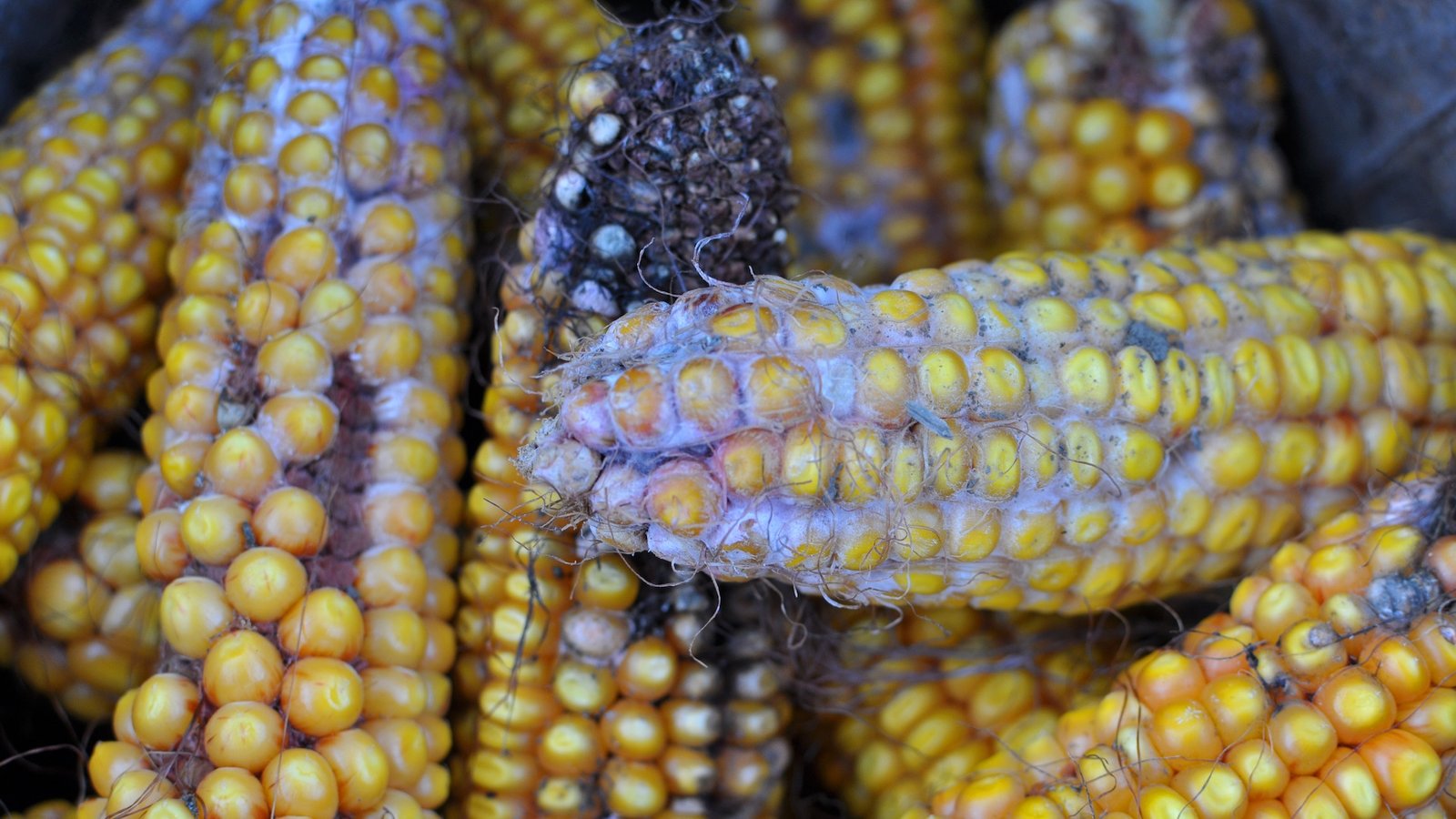
    a close-up of mold on corn

    Fusarium molds can grow on corn and other grains. (Image credit: Orest Lyzhechka via Getty Images)

    Fusarium is another group of fungal pathogens that can grow as mold on grains such as wheat, barley and corn, especially at high humidity. Infected grains may appear discolored or have a pinkish or reddish hue, and they might emit a musty odor. Fusarium fungi produce mycotoxins called trichothecenes, which can damage cells and irritate the digestive tract. They also make another toxin, fumonisin B1, which disrupts how cells build and maintain their outer membranes. Over time, these effects can harm the liver and kidneys.

    If grains or nuts look moldy, discolored or shriveled, or if they have an unusual smell, it’s best to err on the side of caution and throw them out. Aflotoxins, especially, are known to be potent cancer-causing agents, so they have no safe level of exposure.

    Get the world’s most fascinating discoveries delivered straight to your inbox.

    Fruits

    Fruits can also harbor mycotoxins. When they become bruised or overripe, or are stored in damp conditions, mold can easily take hold and begin producing these harmful substances.

    One biggie is a blue mold called Penicillium expansum, which is best known for infecting apples but also attacks pears, cherries, peaches and other fruit. This fungus produces patulin, a toxin that interferes with key enzymes in cells to hobble normal cell functions and generate unstable molecules called reactive oxygen species that can harm DNA, proteins and fats. In large amounts, patulin can injure major organs such as the kidneys, liver, digestive tract and immune system.

    P. expansum’s blue and green cousins, Penicillium italicum and Penicillium digitatum, are frequent flyers on oranges, lemons and other citrus fruits. It’s not clear whether they produce dangerous toxins, but they taste awful.


    You may like

    a close-up of a moldy orange

    It’s best to just throw out moldy fruits, rather than trying to salvage the “good bits.” (Image credit: James Scott via Wikimedia Commons, CC BY-SA)

    It is tempting to just cut off the moldy parts of a fruit and eat the rest. However, molds can send out microscopic, rootlike structures called hyphae that penetrate deeply into food, potentially releasing toxins even in seemingly unaffected bits. Especially for soft fruits, where hyphae can grow more easily, it’s safest to toss moldy specimens. Do it at your own risk, but for hard fruits I do sometimes just cut off the moldy bits.

    Cheese

    Cheese showcases the benefits of controlled microbial growth. In fact, mold is a crucial component in many of the cheeses you know and love. Blue cheeses such as Roquefort and Stilton get their distinctive, tangy flavor from chemicals produced by a fungus called Penicillium roqueforti. And the soft, white rind on cheeses such as Brie or Camembert contributes to their flavor and texture.

    On the other hand, unwanted molds look fuzzy or powdery and may take on unusual colors. Greenish-black or reddish molds, sometimes caused by Aspergillus species, can be toxic and should be discarded. Also, species such as Penicillium commune produce cyclopiazonic acid, a mycotoxin that disrupts calcium flow across cell membranes, potentially impairing muscle and nerve function. At high enough levels, it may cause tremors or other nervous system symptoms. Fortunately, such cases are rare, and spoiled dairy products usually give themselves away by their sharp, sour, rank odor.

    a worker examines wheels of cheese on a shelf

    Mold is a crucial component of blue cheeses, adding a distinctive, tangy taste. (Image credit: Peter Cade via Getty Images)

    As a general rule, discard soft cheeses such as ricotta, cream cheese and cottage cheese at the first sign of mold. Because these cheeses contain more moisture, the mold’s filaments can spread easily.

    Hard cheeses, including cheddar, Parmesan and Swiss, are less porous. So cutting away at least one inch around the moldy spot is more of a safe bet — just take care not to touch the mold with your knife.

    Meat

    While molds are the primary concern for plant and dairy spoilage, bacteria are the main agents of meat decomposition. Telltale signs of meat spoilage include a slimy texture, discoloration that’s often greenish or brownish and a sour or putrid odor.

    Some harmful bacteria do not produce noticeable changes in smell, appearance or texture, making it difficult to assess the safety of meat based on sensory cues alone. That stink, though, is caused by chemicals such as cadaverine and putrescine that are formed as meat decomposes, and they can cause nausea, vomiting and abdominal cramps, as well as headaches, flushing or drops in blood pressure.

    Spoiled meats are rife with bacterial dangers. Escherichia coli, a common contaminant of beef, produces shiga toxin, which chokes off some cells’ ability to make proteins and can cause a dangerous kidney disease called hemolytic uremic syndrome. Poultry often carries the bacterium Campylobacter jejuni, which produces a toxin that invades gastrointestinal cells, often leading to diarrhea, abdominal cramps and fever. It can also provoke the body’s immune system to attack its own nerves, potentially sparking a rare condition called Guillain-Barré syndrome, which can lead to temporary paralysis.

    Salmonella, found in eggs and undercooked chicken, is one of the most common types of food poisoning, causing diarrhea, nausea and abdominal cramps. It releases toxins into the lining of the small and large intestines that drive extensive inflammation. Clostridium perfringens also attacks the gut, but its toxins work by damaging cell membranes. And Clostridium botulinum, which can lurk in improperly stored or canned meats, produces botulinum toxin, one of the most potent biological poisons — lethal even in tiny amounts.

    It is impossible for meat to be totally free of bacteria, but the longer it sits in your refrigerator — or worse, on your counter or in your grocery bag — the more those bacteria multiply. And you can’t cook the yuck away. Most bacteria die at meat-safe temperatures — between 145 and 165 degrees Fahrenheit (63-74 C) — but many bacterial toxins are heat stable and survive cooking.

    This edited article is republished from The Conversation under a Creative Commons license. Read the original article.

    Share. Facebook Twitter Pinterest LinkedIn Tumblr Email
    mehedihasan9992
    • Website

    Related Posts

    Hubble Nets Menagerie of Young Stellar Objects

    January 13, 2026

    Ötzi the Iceman mummy carried a high-risk strain of HPV, research finds

    January 13, 2026

    Can you eat too much protein?

    January 13, 2026

    NASA’s Webb Delivers Unprecedented Look Into Heart of Circinus Galaxy

    January 13, 2026

    Backcountry is blowing out hiking bags, backpacks, and luggage for up to 65% off during this clearance sale

    January 13, 2026

    Ethereal ice structures swirl alongside Chicago during extreme cold snap fueled by polar vortex — Earth from space

    January 13, 2026
    Leave A Reply Cancel Reply

    Top Posts

    Steam and Valve’s online games are down

    December 24, 2025129 Views

    773,000-year-old fossils found in Casablanca may be earliest common ancestor of modern humans and Neanderthals

    January 8, 202695 Views

    Get three months of Apple Music for only $1 right now

    December 5, 202542 Views
    Don't Miss

    Reid Hoffman Wants Silicon Valley to ‘Stand Up’ Against the Trump Administration

    January 13, 2026

    Reid Hoffman doesn’t do much in half measures. He cofounded LinkedIn, of course, and helped…

    Smartphone Camera Scores Explained: Are DxOMark Rankings Really Reliable?

    January 13, 2026

    Samsung Pushes Galaxy Watch 8 (2025) to Its Lowest Price in New Year Clearance, While Apple Watches Stay Full Price

    January 13, 2026

    Hubble Nets Menagerie of Young Stellar Objects

    January 13, 2026
    Stay In Touch
    • Facebook
    • YouTube
    • TikTok
    • WhatsApp
    • Twitter
    • Instagram
    Latest Reviews
    8.9

    Review: Dell’s New Tablet PC Can Survive -20f And Drops

    January 15, 2021

    Review: Kia EV6 2022 The Best Electric Vehicle Ever?

    January 14, 2021
    72

    Review: Animation Software Business Share, Market Size and Growth

    January 14, 2021
    Most Popular

    Steam and Valve’s online games are down

    December 24, 2025129 Views

    773,000-year-old fossils found in Casablanca may be earliest common ancestor of modern humans and Neanderthals

    January 8, 202695 Views

    Get three months of Apple Music for only $1 right now

    December 5, 202542 Views
    Our Picks

    Reid Hoffman Wants Silicon Valley to ‘Stand Up’ Against the Trump Administration

    January 13, 2026

    Smartphone Camera Scores Explained: Are DxOMark Rankings Really Reliable?

    January 13, 2026

    Samsung Pushes Galaxy Watch 8 (2025) to Its Lowest Price in New Year Clearance, While Apple Watches Stay Full Price

    January 13, 2026

    Subscribe to Updates

    Get the latest creative news from FooBar about art, design and business.

    Toolcome
    Facebook X (Twitter) Instagram YouTube Mastodon Bluesky
    • Home
    • Technology
    • Gaming
    • Mobile Phones
    • Cars
    • PC Accessories
    © 2026 Tolcome.

    Type above and press Enter to search. Press Esc to cancel.