

Intel’s First Mobile Processor Built On 18A Delivers Improved Performance and Power Efficiency at Scale
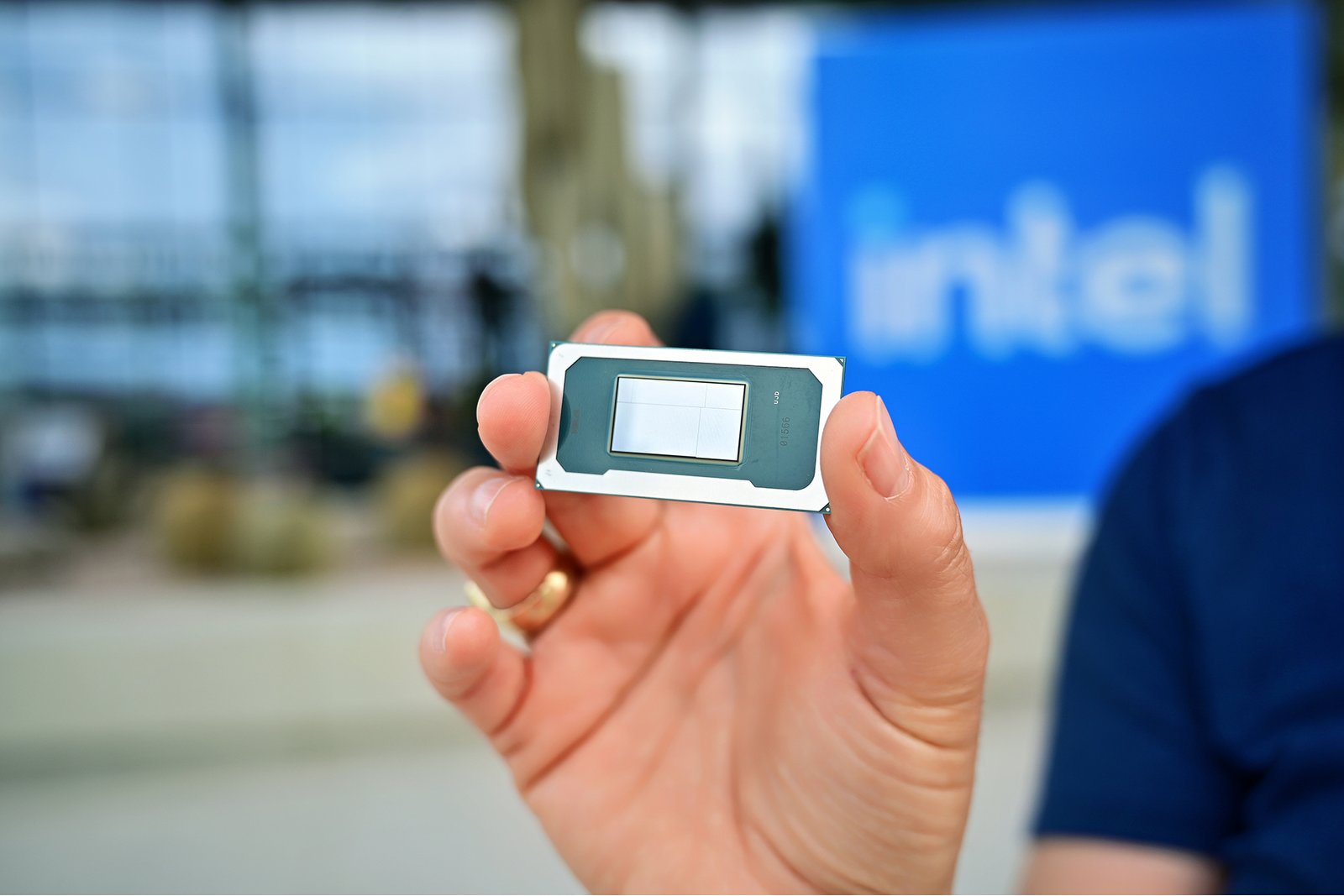
Intel officially launched its Core Ultra 3 series of mobile processors dubbed “Panther Lake” at CES 2026. The new chips build upon Lunar Lake and Arrow Lake-H to deliver scalable chips that combine compute, GPU, and NPU cores to create products that claim to offer generational improvements over Intel’s previous generation while besting the competition particularly in gaming and AI. The Panther Lake offerings span the Intel Core Ultra 5, Core Ultra 7, and Core Ultra 9 tiers as well as Core Ultra X7 and Core Ultra X9 with Intel Arc Xe3 graphics.
The new chips take advantage of a tiled architecture that allows Intel to mix and match CPU, GPU, NPU, and PCT modules into a single processor package connected via Intel’s Scalable Fabric. Intel is taking advantage of its latest 18A manufacturing process for its CPU cores (up to 8 Cougar Cove Performance Cores (P-Cores), 4 Darkmont Efficiency Cores (E-Cores), and 4 Low Power Efficiency Cores (LP E=Cores) and its Intel 3 process node for the smaller 4-Xe GPU. It is then utilizing TSMC and their N3E manufacturing process for the more powerful 12-Xe GPU and their N6 node to produce the Platform Control Tile that integrates PCI-E 5.0 (6 lanes), two Thunderbolt 4, two USB 3.2, 8 USB 2.0, Wi-Fi 7, and Bluetooth 6.0 connectivity. The new processors reportedly offer 60% more multithreaded performance at the same power versus the previous generation. Further, Intel claims battery life improvements for devices running the more efficient chips achieving up to 27 hours of battery life when streaming Netflix or up to 9 hours of Microsoft Teams video conferencing (3×3) with studio effects turned on.

In addition to the latest 18A manufacturing process, Intel is also packing the chips with the latest Intel Arc B390 Xe3 graphics. The GPUs feature up to 12 Xe cores, 12 ray tracing engines and 96 XMX units for accelerating AI workloads. The company claims up to a total of 180 TOPs for AI workloads with 50 TOPS coming from the NPU and 120 TOPS from the Arc graphics. The GPUs support Intel’s latest AI acceleration technologies including multi-frame generation and XeSS3. Intel is claiming 77% faster graphics and 53% faster AI performance versus the Core Ultra 9 288V and 73% better gaming performance on average vs AMD’s HX 370 processor. Additionally, Intel claims that the Panther Lake Core Ultra 3 chips offer twice the LLM performance of the Intel Core Ultra 200H and 4.3-times the LLM performance of the AMD HX 370.
