

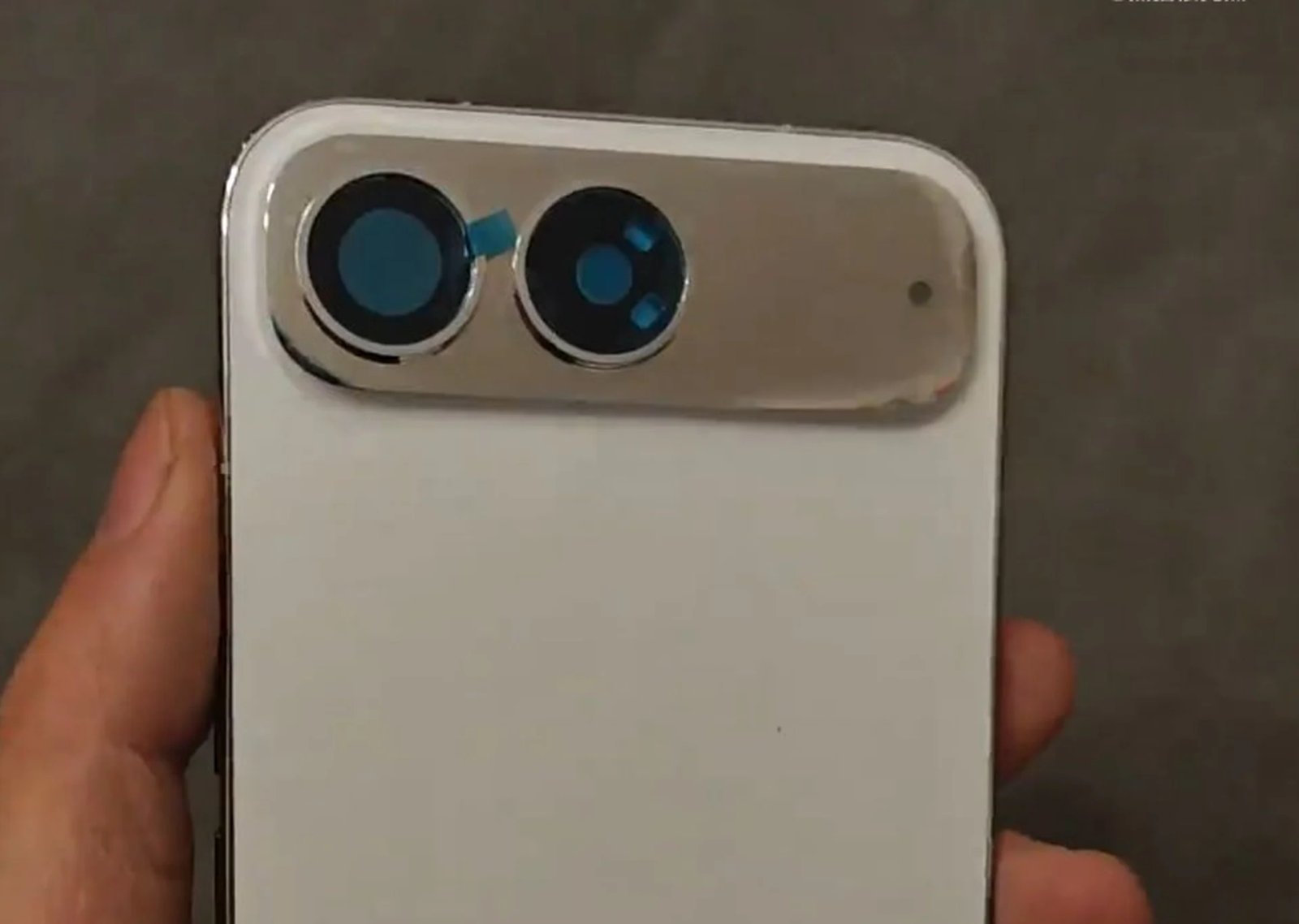
An early engineering mould of the Xiaomi 17 Air has surfaced on social media, offering a first look at a device that was once under development but never made it to launch. The leak hints at Xiaomi’s experimentation with ultra-thin smartphone designs, at a time when slim form factors are again drawing attention across the industry.
Xiaomi 17 Air early engineering mould leak surfaces online
A video shared by tipster Bald Panda shows the alleged Xiaomi 17 Air, which resembles a dual-camera version of the iPhone Air. The rear design features a horizontally aligned camera module, though Xiaomi appears to have added an extra camera compared to Apple’s approach.
The mould suggests an exceptionally slim body measuring just 5.5mm in thickness, making it even thinner than the iPhone Air, which is said to be around 5.6mm thick. The front is believed to house a 6.59-inch display, placing it firmly in the large-screen flagship category despite its compact profile.
However, this design never progressed beyond the prototype stage. Reports indicate that the Xiaomi 17 Air project was eventually cancelled, meaning the device is unlikely to reach commercial production. This makes the leaked mould more of a glimpse into Xiaomi’s internal design exploration rather than a preview of an upcoming launch.
Interestingly, an earlier leak from October 2025 by tipster Smart Pikachu suggested that Xiaomi was testing an ultra-thin flagship with a 6.6-inch display. While the official branding was not confirmed at the time, the device was widely expected to debut as the Xiaomi 17 Air. That leak also hinted at a rounded-corner display design and a cold-sculpted metallic body aimed at delivering a refined in-hand feel.
One of the more striking claims was the inclusion of a 200-megapixel main camera, which would have made it one of the thinnest smartphones to carry such a high-resolution sensor.
The Xiaomi 17 Air appears to have been cancelled due to the growing realisation that ultra-thin smartphones involve significant compromises. Limited battery capacity, thermal constraints, and camera trade-offs, combined with weak market demand for such devices, likely made the project commercially unviable.
For more daily updates, please visit our News Section.
Stay ahead in tech! Join our Telegram community and sign up for our daily newsletter of top stories.
