

You may be surprised to learn electricity only accounts for 21 percent of the world’s energy consumption. Fossil fuels and the rest all play their part to make the world go around, but their role is likely to diminish no matter what happens. The International Energy Agency believes electricity’s share of global energy consumption is going to double in the next decade alone. You all know the causes: Electrification, EVs, data centers and AI mean the planet needs to dramatically increase its power generation, transmission and storage capacity. It’s a shame, then, that the world is nowhere near ready to satisfy such an outrageous surge in demand.
Re-learning to love the atom
The US has certainly spent the year opening doors to dramatically increase domestic energy production. Part of that has to give the signal that the US will embrace nuclear power in ways it hasn’t for generations. This January, an executive order titled Unleashing American Energy included an instruction for the government to eliminate rules and regulations related to power generation. Its primary focus was to destroy environmental regulations limiting the extraction of oil, natural gas and coal, but also to remove roadblocks to the construction of new nuclear plants. Then, in May, a subsequent order declared a desire to ensure the deployment of “advanced nuclear technologies.”
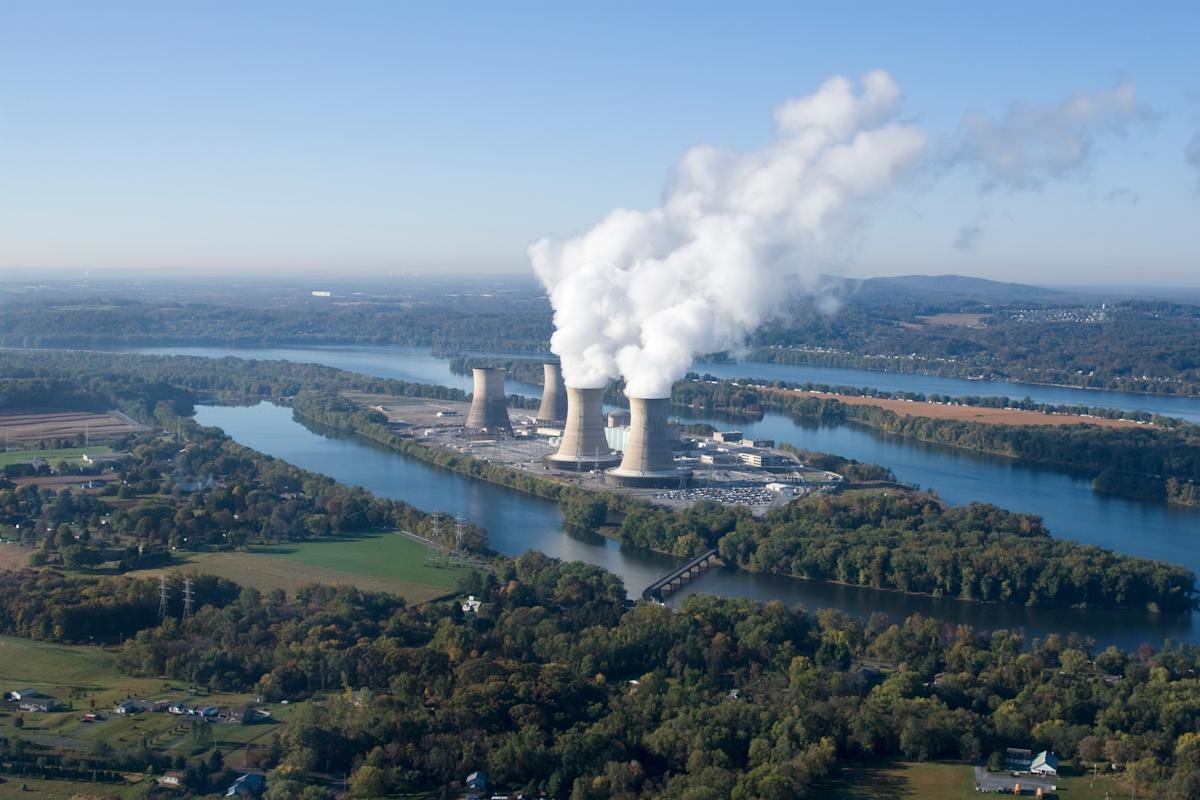
As the driving force behind the AI push, big tech has made some high profile moves to buy up extra generation capacity. Meta signed a 20-year deal with Constellation to own the output of the Clinton Power Station, preserving the 1.1GW facility once its state tax credit expires next year. Microsoft has its own 20-year deal with Constellation to own the power generated by reactor 1 at Three Mile Island, now renamed the Crane Clean Energy Center. On November 18, that project was also given the backing of the Department of Energy which authorized a $1 billion loan. But even without the backing of big tech, other mothballed reactors are being restarted, like the Palisades plant in Michigan. Earlier this year, the Department of Energy handed out a $1.52 billion loan to get the facility, capable of generating 800MW, back up and running.
Big tech is also betting on the future of nuclear power, signing deals with a number of startups looking to build out a new generation of reactors. Google, for instance, has backed Kairos Power and its plan to build a series of small, modular reactors. Amazon, meanwhile, invested in X-Energy and has published plans for its own buildout in Washington State.
It’s not just the US that is learning to fall back in love with nuclear power, as the rest of the world is also building out new capacity. The World Nuclear Association says there are 70 reactors currently under construction across 15 countries. Russia, India, Argentina, Turkey, South Korea, Japan, and Brazil, to name just a few, are all working on new reactors.
China on its own is presently building 33 reactors and, as Nuclear Business Platform reported earlier this year, greenlit a further 10 this April. That same report adds that China’s policy of producing multiple reactors at a time has seen costs crater. It says that while the UK’s two new reactors at Hinkley Point will cost in excess of $60 billion, each of these new reactors will cost $2.7 billion.
Bridging the nuclear gap

coal handling in a port (Indigo Division via Getty Images)
Building a nuclear reactor is not a swift process, and construction of a facility can take the better part of a decade. You can add on a few more years if you include the necessary procedural steps that need to be undertaken before a single piece of concrete is poured. Consequently, any major shift in the US’ power generation fleet will be measured in generations, rather than years. It’s a concern that, for all of the attention nuclear power is getting, it’s merely a smokescreen for a renewed push for fossil fuel extraction.
After all, one major casualty from the Big, Beautiful Bill was the eradication of subsidies for the US’ solar industry. As we reported back in July, the act has kicked the legs out from domestic solar panel manufacturing, handing renewable energy dominance to China. This goes hand in hand with the US Department of Energy setting up a $625 million funding stream to revive America’s coal industry and recommission old power plants. Or that it is also awarding contracts to grow America’s strategic petroleum reserve.
Back in September, Energy Secretary Chris Wright made the implausible claim to BBC News that fossil fuel extraction was nothing to worry about as fusion power would be on the grid in the next decade. Wright, himself the former CEO of fracking company Liberty Energy, was taken to task by a number of climate experts for publishing a report riddled with “misleading or fundamentally incorrect” assertions. Similarly, on November 20, the Department of Energy reshuffled its org chart to eliminate several departments responsible for renewable energy and energy efficiency while forming the Office of Fusion.
Solar’s unstoppable rise

This stunning aerial view captures an array of solar panels arranged in neat, parallel rows across the landscape. From above, the panels shimmer under the bright sunlight, creating a striking contrast against the natural terrain below. The organized rows of solar panels stretch across acres of land, symbolizing the growing global shift toward renewable energy. The grid-like pattern highlights the efficiency and scale of modern solar farms, contributing to sustainable energy production.This high-resolution image showcases the incredible reach and potential of solar power as a clean, renewable energy source. Whether situated in rural fields, expansive deserts, or atop rooftops, these solar panels represent a major step toward reducing carbon footprints and combating climate change. The solar farm’s orderly rows and reflective surfaces create a visually appealing scene, demonstrating both technological innovation and environmental responsibility. (Diane Keough via Getty Images)
The US may have kneecapped its domestic solar industry, but it may not be enough to defeat renewables’ momentum. In October, the International Energy Agency projected renewable energy will grow by 4.6 TW by 2030 — a figure equal to the combined generation capacity of China, the EU and Japan combined. 77 percent of that figure is expected to come from solar power alone, despite the loss of subsidies in the US and less favorable circumstances in China.
The domestic US forecast has been revised downward significantly as a consequence of its policy choices. But despite this, the obvious benefits of solar power haven’t gone away even if the price may be higher than it was at the start of the year. It remains the fastest and cheapest way to add new power in many countries, and can be installed on a grid or individual basis. Not to mention its utility in remote areas with poor generation resources, where it can reduce dependency on fossil fuels. This year, clean energy think-tank Ember reported on the growth of solar power in the last decade, and how it went from adding just one percent of global power generation in 2015 to 8.8 percent in the first half of 2025.
“AI demand for electricity is the macro driver of US made solar,” said Rob Gardner, VP at the Solar Manufacturers for America Coalition. “AI investments can’t deliver expected returns without quickly deployed power, and US solar is the fastest and cheapest to deploy,” he said. Gardner cited a recent FERC forecast which predicts that 92.6GW of solar will come online between now and July 2028.
The dream of fusion

Construction inside the reactor of ITER. (ITER)
The US is pinning a lot of its hopes on fusion power to wipe away the debt of our fossil fuel past. Earlier this year, the Department of Energy released a roadmap to get fusion out of the lab and into the world. It wants to coordinate the remaining resources of the federal government to close the fusion world’s “critical science, materials and technology gaps.” In the next three years, officials have been tasked with designing facilities for reactors and developing sources of fuel. Within the next decade, it’s hoped the government will be able to offer large-scale fuel cycle plants to help private sector plants start operations.
If fusion power can be harnessed, it has many of the same upsides as nuclear fission with a lot fewer downsides. If nuclear fission harnesses the energy released when an atom is broken apart, then fusion harnesses the energy released when two smaller atoms are smashed together to create a larger one. It harnesses the same principle as you’ll find inside our sun: Superheated hydrogen atoms fusing to create helium. And while nuclear fusion requires radioactive material, we can source deuterium and tritium from water and lithium.
ITER (International Thermonuclear Experimental Reactor) is a giant experimental fusion reactor under construction in France which, when operational, will be the world’s largest. It is backed by a coalition of nations, including the US, EU and China, and has the aim of both generating power and developing the technologies necessary to make Fusion a reality. The organization claims that there is enough of both materials available on the planet to run fusion plants for at least a thousand years, if not longer. There are also a raft of safety benefits, as there’s no creation of the sort of long-lived and dangerous waste associated with nuclear power, no risk of a meltdown, and its raw materials can’t be used to make weapons.
But while fusion is entirely possible, and on paper could be the salve to all of the world’s energy ills, it’s not yet a reality. There are a large number of engineering challenges sitting between us and a viable commercial reactor. The shift that has happened this year is that fusion is now being treated as a “strategic national priority,” according to the International Atomic Energy Agency. More than 160 fusion facilities are operational worldwide, each one looking to explore ways of solving the hard problems standing between us and limitless power.
But as well as ITER, there are other major nations working to build out their own fusion capacity. The biggest would likely be China’s Experimental Advanced Superconducting Tokamak (EAST) which has already set a record for energy generation. At the start of this year, it was able to produce a steady state for 1,066 seconds.
But what we are seeing now, which may offer some degree of hope, is the surge in interest from the private sector. Companies like Commonwealth Fusion, Type One Energy, Helion and Pacific Fusion are all working on their own fusion facilities. These projects have received billions in funding, but it’s likely all will need time to work out if their approaches are viable.
Stuart White is a spokesperson for Tokamak Energy, a British-Japanese startup spun out from the UK’s Atomic Energy Authority which is developing its own fusion technologies. In 2022, the company’s own reactor was able to reach a plasma temperature of 100 million degrees celsius. “It’s an incredible achievement but that isn’t going to power homes around the UK or anywhere,” he said. White believes the fusion world will spend the next decade “scaling up,” projects to find the right pathway to building commercial reactors. He cited national programs, like the UK’s STEP which is targeted to begin working in 2040, while the US’ plan for the mid-2030s he feels is “aggressive.”
White also explained that, as equally important as solving the key physics issues, is building out the supply chain to actually make the equipment. He cited the importance of manufacturing in Japan and China to produce the hardware necessary to build fusion reactors. And that this process, while time consuming now, will help accelerate the eventual development of the technology down the line. White added that another positive sign is that regulators aren’t likely to want to scrutinize fusion reactors with the same intensity as they do nuclear reactors. That will both speed up the construction of new facilities and reduce costs when they do eventually enter service.
What’s clear, however, is that Fusion is not going to be able to swoop in and decarbonize the world’s energy needs in the sort of time scale it’s likely to be required. (White said it is likely to arrive in time to complement other clean sources of energy over the next half century, rather than so quickly that every other power station gets mothballed instantly.) Consequently, the government of the world must keep prioritizing the rollout of renewables rather than hoping that fusion will simply bail everyone out in the next decade.
