

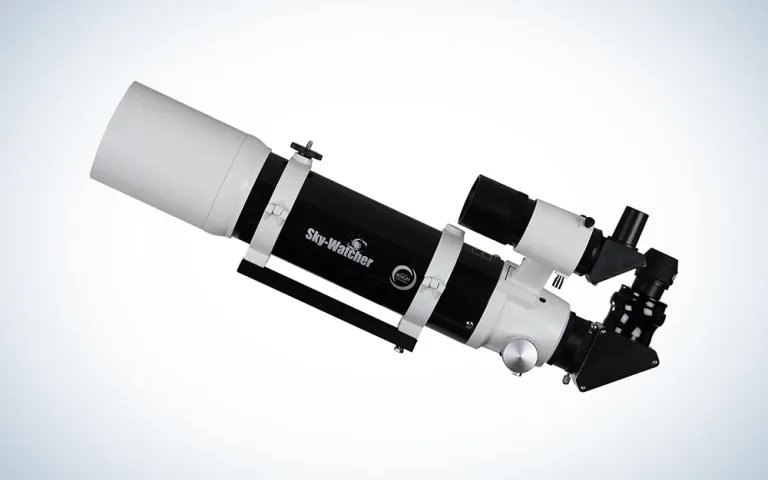
When you take up photography, there are lots of subjects you can photograph, but astrophotography requires a special breed. You need patience, skill, and a passion for observing the night sky. You also need the right gear. We’ve chosen the Sky-Watcher Skymax Maksutov-Cassegrain Reflector Telescope as our best overall telescope for astrophotography, but there are also more affordable versions that can help you create celestial masterpieces. Here are our picks.
How we chose the best telescopes for astrophotography
We’re camera nerds and into telescopes, so we know a thing or two about the “photography” part of “astrophotography.” We looked at critical reviews and user recommendations and conducted heavy research to ensure we got the “astro” part down.
We picked telescopes based on their build quality, optics, field of view, and focal ratio, with a few specific parameters in mind. We avoided models with plastic pieces and cheap housing, except when looking at budget models, as build quality can affect the ability of the telescope to stay aligned and with viewing quality. Everything from the aperture to the included eyepieces was factored into the optics. Field of view affects the kind of objects you can photograph, and we have those with a narrow field of view for closer objects and wider fields of view for deep-sky objects. Finally, we have models on both ends of the focal ratio spectrum, including middle-of-the-road options for those who want an all-purpose telescope for astrophotography.
The best telescopes for astrophotography: Reviews & Recommendations
Stars can move at 500,000 per hour. Thanks to modern tech, we can take incredibly detailed photos of them in the sky. One of our picks should make you feel like Galileo or Copernicus, minus the death threats from the Catholic Church.
Best overall: Sky-Watcher Skymax Maksutov-Cassegrain Reflector Telescope
Best overall
Sky-Watcher Skymax Maksutov-Cassegrain Reflector Telescope
See It
Pros
- Bright clear views of in-solar system objects
- Capable of deep-sky viewing and images
- Relatively compact for the viewing power
- Includes 1.25-inch adapter
Cons
- Doesn’t come with a mount
Specs
-
Focal ratio:
f/15 -
Weight:
17.1 pounds -
Optical design:
Maksutov-Cassegrain
The Sky-Watcher Skymax Reflector Telescope is a compound telescope that offers a long focal length in a relatively compact design. It weighs 17 pounds, and you get excellent, clear views of the moon, planets, and bright deep-sky objects.
A 1.25-inch adapter comes with the telescope, so you can directly attach a DSLR camera and get snapping once you’ve located the desired object. The f/15 focal ratio does mean it’s considered a slow telescope, so taking deep-sky shots is a little harder. However, as long as those objects are bright, this telescope can capture the images.
Keep in mind that this model doesn’t come with a mount. You’ll have to purchase one separately. Depending on the type you choose, they can be pricey.
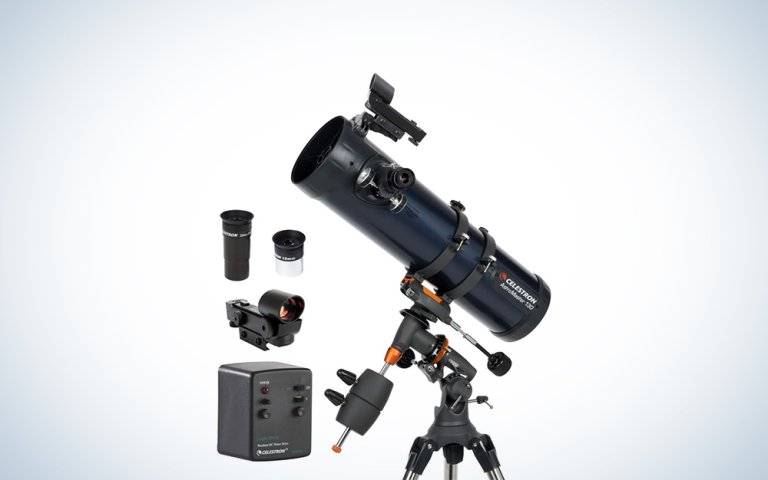
It’s harder but not impossible to find a telescope under $500 for astrophotography, and the Celestron AstroMaster 130EQ-MD Newtonian Telescope is one of the best below that price point. While the quality of the build and accessories can sometimes reflect the low price, users get excellent views of the moon and planets. That’s also where this telescope shines when it comes to astrophotography: closer objects. A red dot finder, which shines a red dot on the lens, helps users hone in on their target, too.
You can use this telescope for viewing deep-sky objects, but your chances of getting a good photo at those longer distances aren’t great with this model. However, this value pick is perfect if you’re just getting started.
Best portable: Sky-Watcher EvoStar 80 APO Doublet Refractor
Best portable
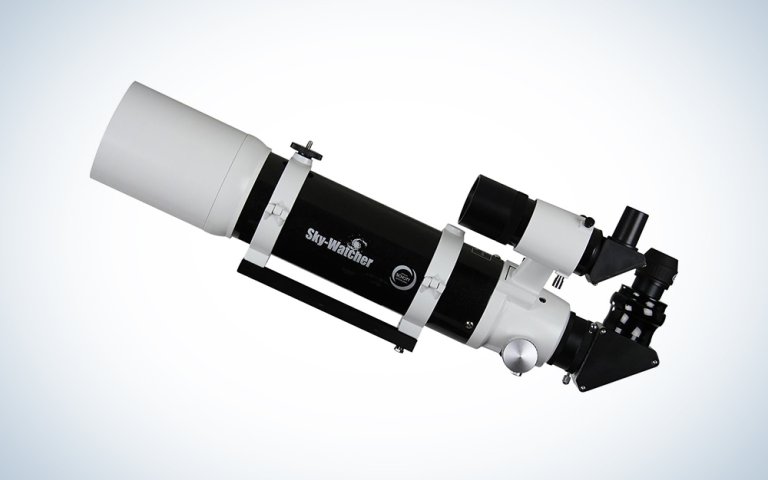
Sky-Watcher EvoStar 80 APO Doublet Refractor
See It
Pros
- Impressive optical image quality
- Lets you delve into professional-quality astrophotography
- CA stays controlled with the doublet and moderate focal ratio
Cons
- Not a good choice for beginners
- Expensive
- Includes only the tube with a few accessories
Specs
-
Focal ratio:
f/7.5 -
Weight:
7.3 pounds -
Optical design:
Refractor
The Sky-Watcher EvoStar 80 APO Doublet Refractor offers an impressive array of optics that create vivid detail and image quality. However, attaining that quality may require the purchase of a few extra accessories. Consequently, this isn’t a model for beginners.
However, for advanced beginners, intermediate, and even some advanced astrophotographers, the EvoStar 80 provides the quality and ability to travel with the telescope. At only 7.3 pounds, you can take it to the local mountaintop for a broader range of spectacular views as you escape light pollution. The optical specs—including a 1.45 Dawes limit, 1.75 Rayleigh limit, and 12 limiting magnitude—squeeze every last ounce of optical quality, especially in a tube this size.
If you know what you’re doing and you’re serious enough in astrophotography to know the difference between good and great optical quality, this is a portable telescope that will not disappoint.
Best for beginners: Celestron 114LCM Computerized Newtonian Telescope
Best for beginners
Celestron 114LCM Computerized Newtonian Telescope
See It
Pros
- Quick, straightforward assembly
- Computerized mount makes it easier to identify and target objects
- Includes Sky Tour button to get familiar with the night sky
Cons
- Cannot take deep-sky images
Specs
-
Focal ratio:
f/9 -
Weight:
13.2 pounds -
Optical design:
Newtonian Reflector
The Celestron 114LCM Computerized Newtonian Telescope not only lets beginners start taking photographs right away but also introduces them to the night sky. The included mount even has a Sky Tour button that takes users on a guided journey through the heavens. While it doesn’t have the optics to do deep-sky astrophotography, you can connect a webcam, astrophotography camera, or mobile phone to start taking photos.
You don’t have to be an expert to assemble the telescope and get started right away, which is key for beginners. This model is also relatively lightweight and portable.
Best budget: Celestron AstroMaster 130EQ-MD Newtonian Telescope
Best budget
Celestron AstroMaster 130EQ-MD Newtonian Telescope
See It
Pros
- Good views of solar system and moon for the price
- Red dot finder makes it easier to target
- Affordable price for a telescope that can be used for basic planetary and moon photography
Cons
- Mount can be difficult to adjust
- Parts feel cheap
Specs
-
Focal ratio:
f/5 -
Weight:
28 pounds -
Optical design:
Newtonian Reflector
What to consider when buying the best telescopes for astrophotography
You don’t have to wait for the moon to reach a certain phase to get a good look at the sky. Sometimes, you just want to capture the brief moment where Jupiter was in your view. Here are the features and specs you should look for when searching the galaxies of the internet for a telescope for astrophotography:
Mount type
Before you invest in a telescope, consider what type of mount you already have or the mount that comes with the telescope. The mount is especially important for taking long exposure (slow) images.
Mount importance comes down to the fact that the Earth is rotating, which alters the object’s location as you take a photo. Without the right mount, you can end up with blurred images or images with a visible trail.
One of the best options for astrophotography is the equatorial mount. These mounts require only one axis adjustment to follow the object. In comparison, an alt-azimuth mount requires adjusting two axes while you’re trying to track the object. Mounts can be manual or automatic. Automatic equatorial mounts are more expensive, but they leave you free to change eyepieces or take photos.
Remember that although a telescope may come with one kind of mount, you can buy a different mount separately.
Focal ratio
The focal ratio is the telescope’s focal length divided by the aperture. The resulting number is the f/number, such as f/4 or f/11. A smaller focal ratio, those below f/5, indicates a faster telescope in that it gathers light at a faster rate than a model with a slower focal rate. These models are fast and have a wider field of view, making them more suited to deep-sky photography. They have shorter focal lengths (the distance between the eyepiece and the lens), which also makes them lighter and easier to carry.
Slow telescopes have a focal ratio of f/8 or higher. Their longer focal lengths require slower shutter speeds to gather the same amount of light as a slow telescope. They have a narrower field of view but capture greater detail, making them a better choice for images within our solar system, like the moon or planets.
Optical design
There are many types of telescopes, but those most pertinent to astrophotography include:
Refractor telescopes: Refractor telescopes are one of the most popular astrophotography telescope types. They give you more ability to correct chromatic aberration. Chromatic aberration is when light rays focus at different points, creating different colors around the object’s borders. Refractor telescopes provide more adjustments to fix this problem. They come in APO (apochromatic) and semi-APO design, with APO offering the best chromatic aberration correction.
Reflecting telescopes: Newtonian and Gregorian telescopes fall into this category. They have mirrors instead of lenses. The Newtonian Dobsonian telescopes are among the most affordable and easiest telescopes to use, making them a good choice for beginners. However, depending on the targeted object, they don’t typically offer the best optical quality as some of the other types of telescopes.
Schmidt-Cassegrain and Maksutov-Cassegrain: Schmidt-Cassegrain and Maksutov-Cassegrain telescopes are both catadioptric (also called compound telescopes) models. They’re a hybrid between refractor and reflector telescopes, having both lenses and mirrors. These models offer great optical correction features like refractor telescopes and provide long focal lengths in a relatively short tube for greater detail (and photographs) with a smaller telescope.
FAQS
The Sky-Watcher Skymax provides a balance between size and weight, focal length and ratio, and price. This model’s f/15 focal ratio provides better views of the planets and the moon than deep-space objects. However, the design gives it a wider field of view than similar telescopes, allowing for impressive deep-space images for those with the skill to acquire their target. This telescope is a great option for someone who wants to dabble in both deep space and in-solar system astrophotography
You don’t necessarily need a special telescope for astrophotography. Many telescopes that aren’t designed specifically for astrophotography have connectors or accessories that connect the telescope to a DSLR camera or mobile phone for photography purposes. Several of the telescopes on our list fall into this category. However, other models are designed specifically for astrophotography. These models range from those that are basically a camera lens that acts like a telescope to telescopes that connect directly to a DSLR camera. You can go either route. Beginners typically begin with a general telescope that can be used for astrophotography, while astrophotography veterans opt for specialty equipment.
The Explore Scientific ED127 Triplet Refractor Telescope is the best telescope for seeing and photographing galaxies. The f/7.5 focal ratio, however, also makes it a great option if you want to take shots of closer objects too. It’s a large telescope that offers incredible views both near and far, but it’s hard to beat its deep-sky abilities.
The size of the telescope’s field of view, which you’ll find on models with small focal ratios, makes a bigger difference for photographing galaxies than the telescope’s overall size. A wide field of view makes it easier to track and find deep-sky objects like galaxies and nebulas. Having said that, a telescope with an eight-inch or higher aperture will help you see and photograph galaxies better, too.
You can use a Dobsonian telescope for astrophotography if the object is bright and clear. Dim, faint objects won’t produce very good photos with these telescopes. They’re better suited for photographing the moon on a bright night or for capturing bright planets.
Both the Celestron 114LCM Computerized Newtonian Telescope and the Celestron AstroMaster 130EQ-MD Newtonian Telescope are great starter telescopes. Celestron is also well known for its customer service, which can be helpful for beginners. These models will still take some getting used to, but the computerized 114LCM can help newbies find and track objects much faster than a manual mount. The AstroMaster offers good optics for the price, giving beginners a chance to decide if they want to invest in a more expensive telescope later on.
Final thoughts on the best telescopes for astrophotography
Maybe you got your first telescope as a kid and have been fascinated by the skies ever since. Or maybe you got a point-and-shoot camera and have slowly widened your exposure to celestial subjects. However you got here, here you are, scrolling through our top telescopes for astrophotography. The Sky-Watcher Skymax Reflector Telescope offers the best blend of quality with image quality. Its price makes it more feasible for experienced astrophotographers, but you’ll get images with quality that are well above the price. If you’re on a budget, the Celestron 114LCM Computerized Newtonian Telescope or Celestron AstroMaster 130EQ-MD Newtonian Telescope are great options. The 114LCM’s SkyTour and automatic mount make it a great choice for beginners.

2025 PopSci Outdoor Gift Guide
