1. Design and Display
Build Quality
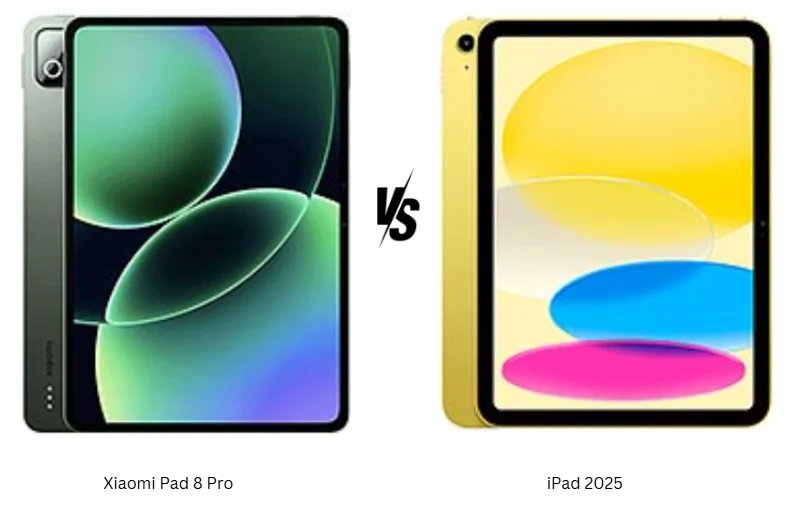
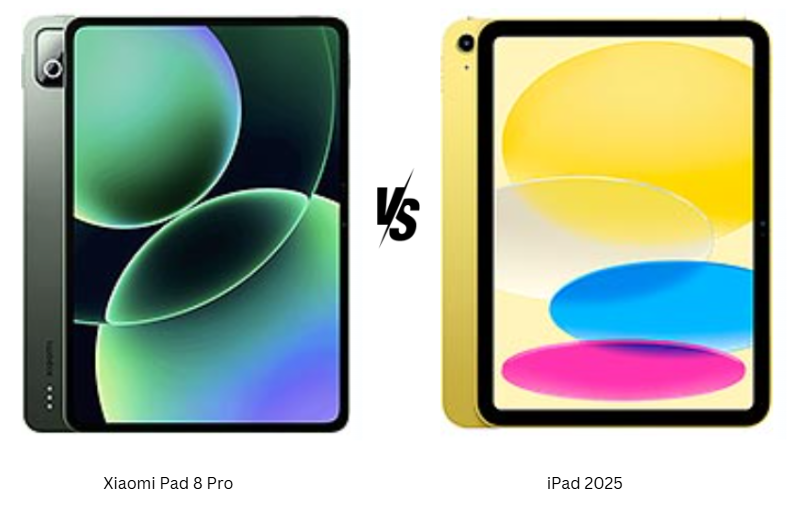
Xiaomi Pad 8 Pro carries a performance-focused aluminum build with a modern, utility-driven feel. The side fingerprint reader and sturdy frame make it suitable for professional and creator-centric workflows. Apple iPad 2025 keeps a cleaner, minimalist aluminum design that suits students and everyday users who prefer a lighter, friendlier aesthetic. Both support magnetic stylus accessories, but the Pad 8 Pro gives a more “power-user” impression, while the iPad emphasizes comfort and familiarity.
Display & Multimedia
The Pad 8 Pro delivers a sharper and more immersive experience with its 144Hz HDR display, Dolby Vision support, and higher peak brightness, making it excellent for gaming, reading, and media. The iPad 2025 uses a standard 60Hz Liquid Retina panel that focuses on accuracy and consistency, working well for streaming, browsing, and educational use. The difference feels more like enthusiast performance versus dependable everyday viewing.
Verdict
Design and display lean toward the Xiaomi Pad 8 Pro for premium visuals and immersion, while the iPad 2025 remains the better fit for simple, reliable day-to-day use.
2. Performance and Software
Processor & UI Smoothness
The Snapdragon 8 Elite gives the Xiaomi Pad 8 Pro a clear edge in raw performance, handling gaming, editing, and intensive multitasking with ease. HyperOS 3 feels fluid, especially with higher RAM options. The iPad 2025’s A16 Bionic remains fast and efficient for study tasks, productivity apps, and creative tools within Apple’s ecosystem, prioritizing stability over extreme compute power.
Productivity & Multitasking
The Pad 8 Pro benefits from faster storage, bigger memory options, and its high-refresh interface, making multi-window workflows feel more flexible. It suits creators and heavy users who work across multiple apps. The iPad focuses on polished app behavior, reliable split-screen tools, and ecosystem continuity, ideal for structured productivity and academic workflows.
Verdict
Performance favors the Xiaomi Pad 8 Pro for power and workload headroom, while the iPad 2025 excels in optimized, stable, and ecosystem-driven productivity.
3. Battery and Accessories
Battery Life
The Xiaomi Pad 8 Pro’s 9200 mAh battery and 67W fast charging make it well-suited for long usage sessions, media consumption, and study or work days, with reverse wired charging as a useful bonus. The iPad 2025 offers steady endurance with efficient power use and 45W charging, built more around consistent daily reliability than extended heavy use.
Stylus, Keyboard & Ecosystem
The Pad 8 Pro works well as a creative workstation when paired with stylus and keyboard accessories, appealing to productivity-focused and creator-centric users. The iPad benefits from better ecosystem maturity, strong accessory compatibility, and seamless sync for users already invested in Apple devices. The difference feels like versatility versus ecosystem polish.
Verdict
Battery strength and flexibility tilt toward the Xiaomi Pad 8 Pro, while the iPad 2025 stands out for accessory integration and ecosystem reliability.
4. Camera & Media
Rear and Front Camera
Xiaomi Pad 8 Pro’s 50MP rear camera and 32MP ultra-wide selfie setup suit users who occasionally rely on a tablet for photos, content capture, and video calls. The iPad 2025’s 12MP rear and 12MP ultra-wide front cameras focus more on practicality, ideal for classes, scanning, and meetings.
Video & Audio Quality
Both support 4K recording, but the Pad 8 Pro’s Dolby Atmos speakers and multimedia tuning make it better suited for entertainment, gaming, and immersive viewing. The iPad delivers balanced video stability and clear stereo sound, fitting learning environments, productivity calls, and casual streaming.
Verdict
Camera and media lean toward the Xiaomi Pad 8 Pro for creative and entertainment use, while the iPad 2025 fits communication and academic scenarios more effectively.
5. Pricing
At around ~$400, the Xiaomi Pad 8 Pro offers flagship-class performance, fast charging, and a high-end multimedia experience, making it a strong value for power users and creators. The Apple iPad 2025, at roughly ~$300, provides a more affordable entry point into a polished and reliable ecosystem, appealing to students and everyday buyers.
The iPad wins on price accessibility, while the Pad 8 Pro delivers stronger performance value per dollar.
Disclaimer:
Prices are approximate and may vary based on country, region, and applicable taxes.
6. Conclusion
The Xiaomi Pad 8 Pro stands out with its flagship processor, high-refresh HDR display, and creator-oriented hardware positioning. The Apple iPad 2025 shines through ecosystem depth, app optimization, and dependable everyday usability suited to study, work, and lifestyle workflows.
Verdict
If only one tablet were to be chosen overall, the Xiaomi Pad 8 Pro makes more sense for most users, especially if performance, display quality, battery life, and multimedia experiences matter. It offers significantly stronger hardware, a high-refresh HDR display, faster charging, and better multitasking headroom, making it a more future-proof choice for productivity, creativity, and entertainment.
Apple iPad 2025 is a solid and more affordable option with a polished ecosystem, but in a direct choice where power and versatility weigh heavier, the Xiaomi Pad 8 Pro stands out as the better all-around pick.
Read More: