

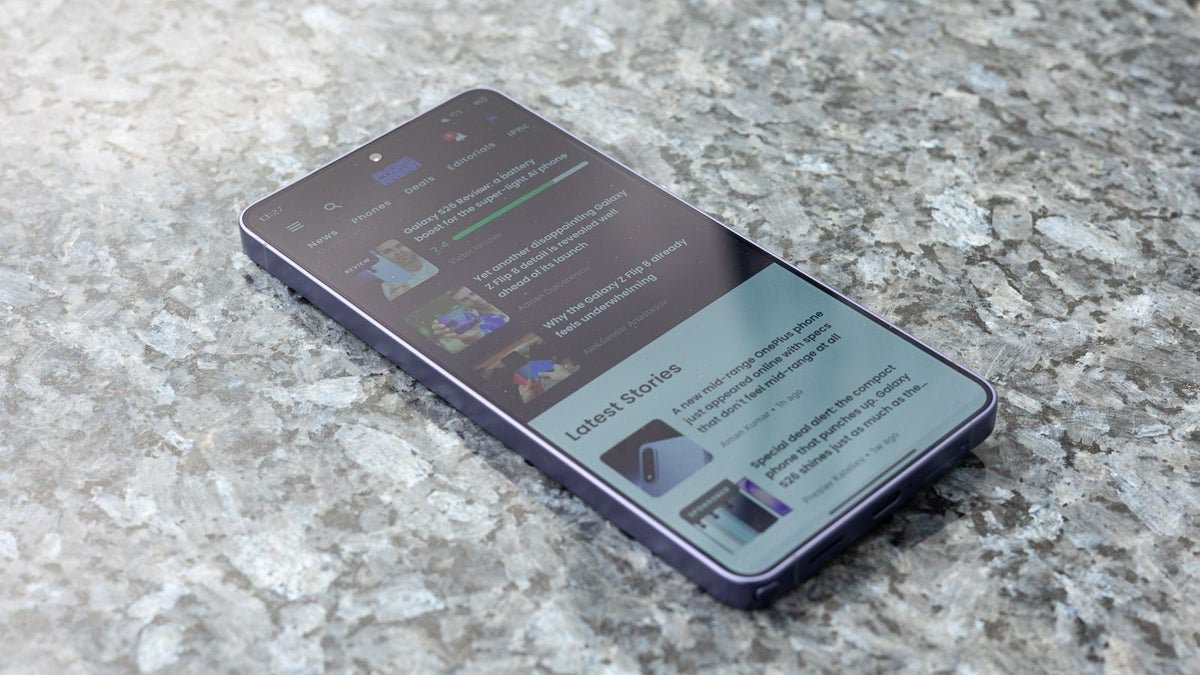
, has one feature that no one talks about, and yet, it’s one of the most useful quality-of-life improvements that you’re going to use every day. Outdoor brightness! Smartphone screens have come a long way, and Samsung is on the forefront of AMOLED display technology. The
is a prime example.
Galaxy S26 Ultra brightness test in our lab
Before moving on to the outdoor test, we measured the Galaxy S26 Ultra’s brightness in our lab. There were some concerns that the new Privacy Display[1] might impact brightness even when turned off, so we decided to investigate.
We measured the screen brightness at 100% APL (Average Picture Level), which corresponds to all the pixels inside the display firing up at full power, and also at 20% APL, a scenario that’s much closer to real-life usage.
The Galaxy S26 Ultra managed to output 2420 nits at 20% APL, which is an excellent result and also a tad higher than its predecessor. This goes to show that the new Privacy Display feature does not affect the screen brightness of the S26 Ultra in a negative way. But the max brightness measurements alone can’t do justice to the way the Galaxy S26 Ultra looks under the sun. Time to head outdoors.
Galaxy S26 Ultra visibility on a sunny day (real-life conditions)
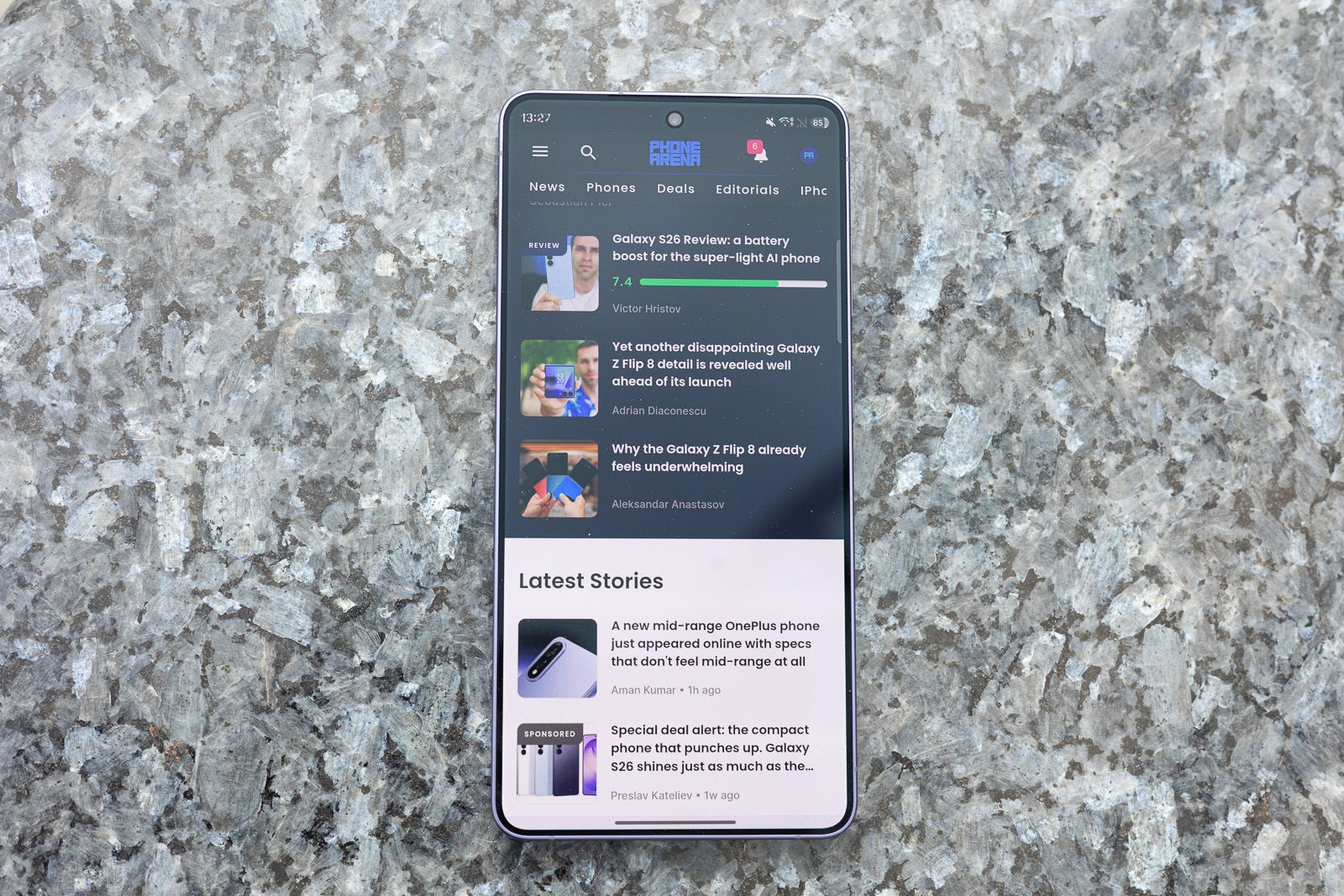
The Galaxy S26 Ultra outdoor visibility head-on. | Image by PhoneArena
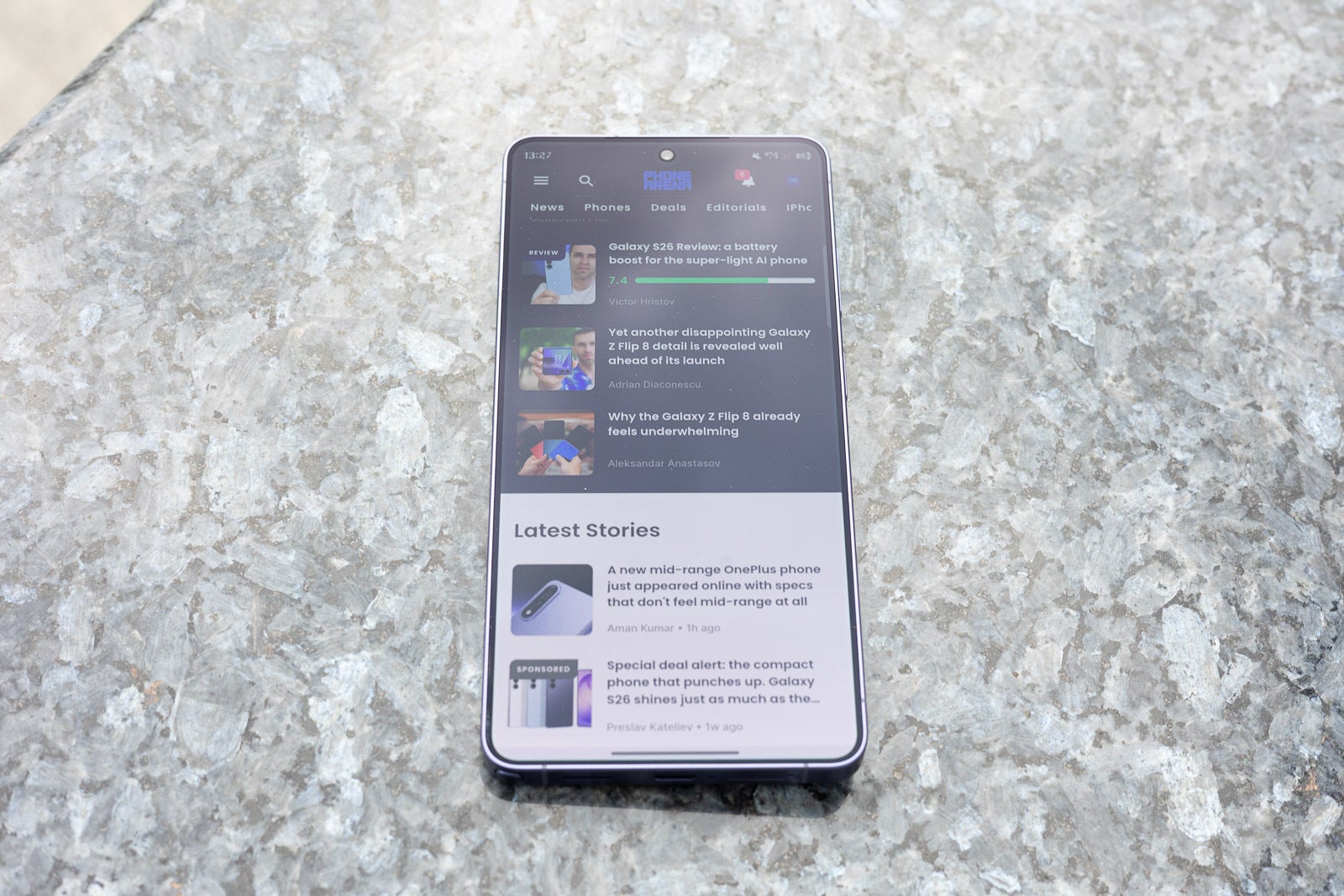
At approximately 15 degrees, the S26 Ultra remains perfectly legible. | Image by PhoneArena
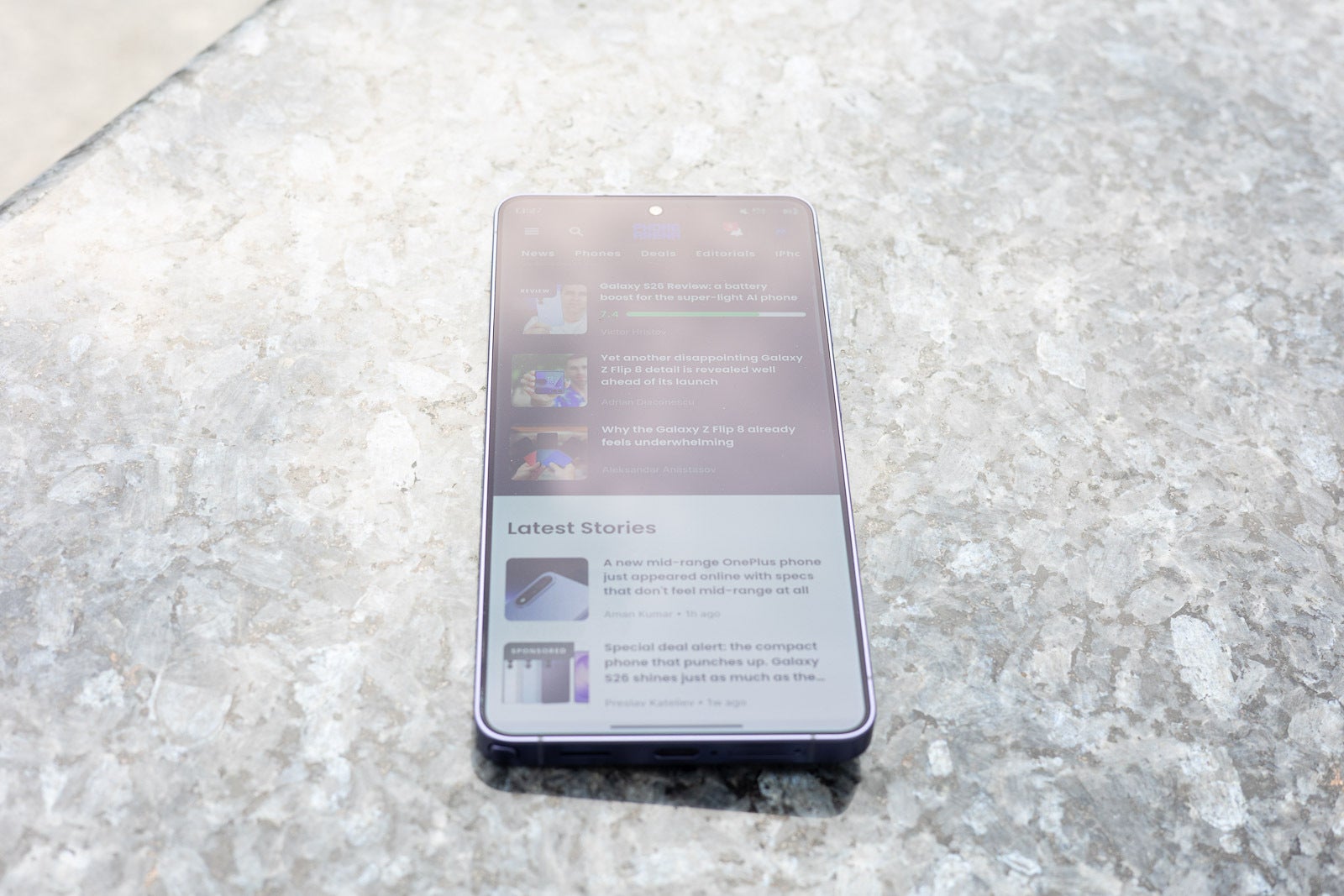
At approximately 45 degrees some reflections start to appear, but on-screen content is still readable. | Image by PhoneArena
Galaxy S26 Ultra manages to outshine the competition
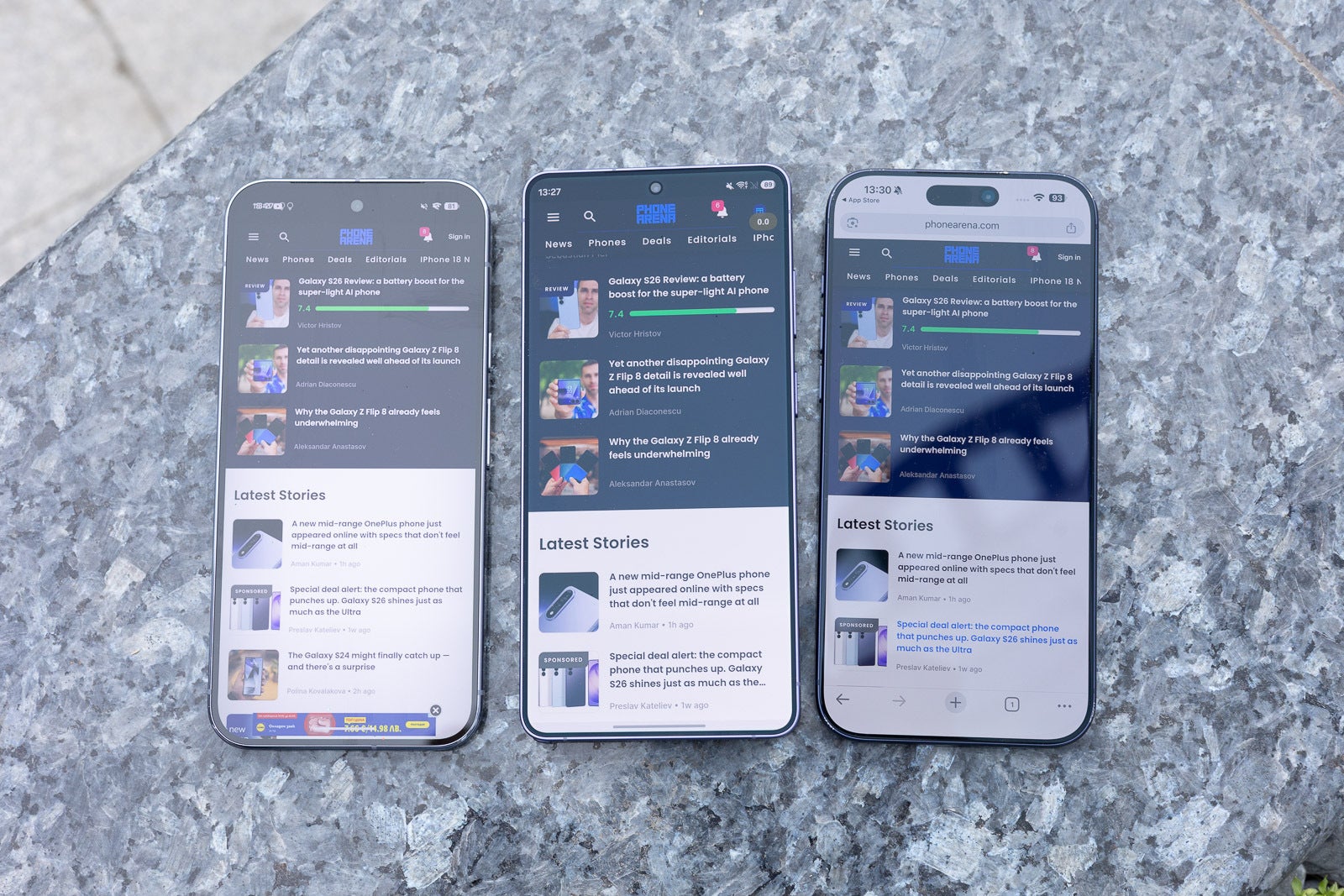
The Galaxy S26 Ultra (center) next to the Pixel 10 Pro XL (left) and the iPhone 17 Pro Max (right) | Image by PhoneArena
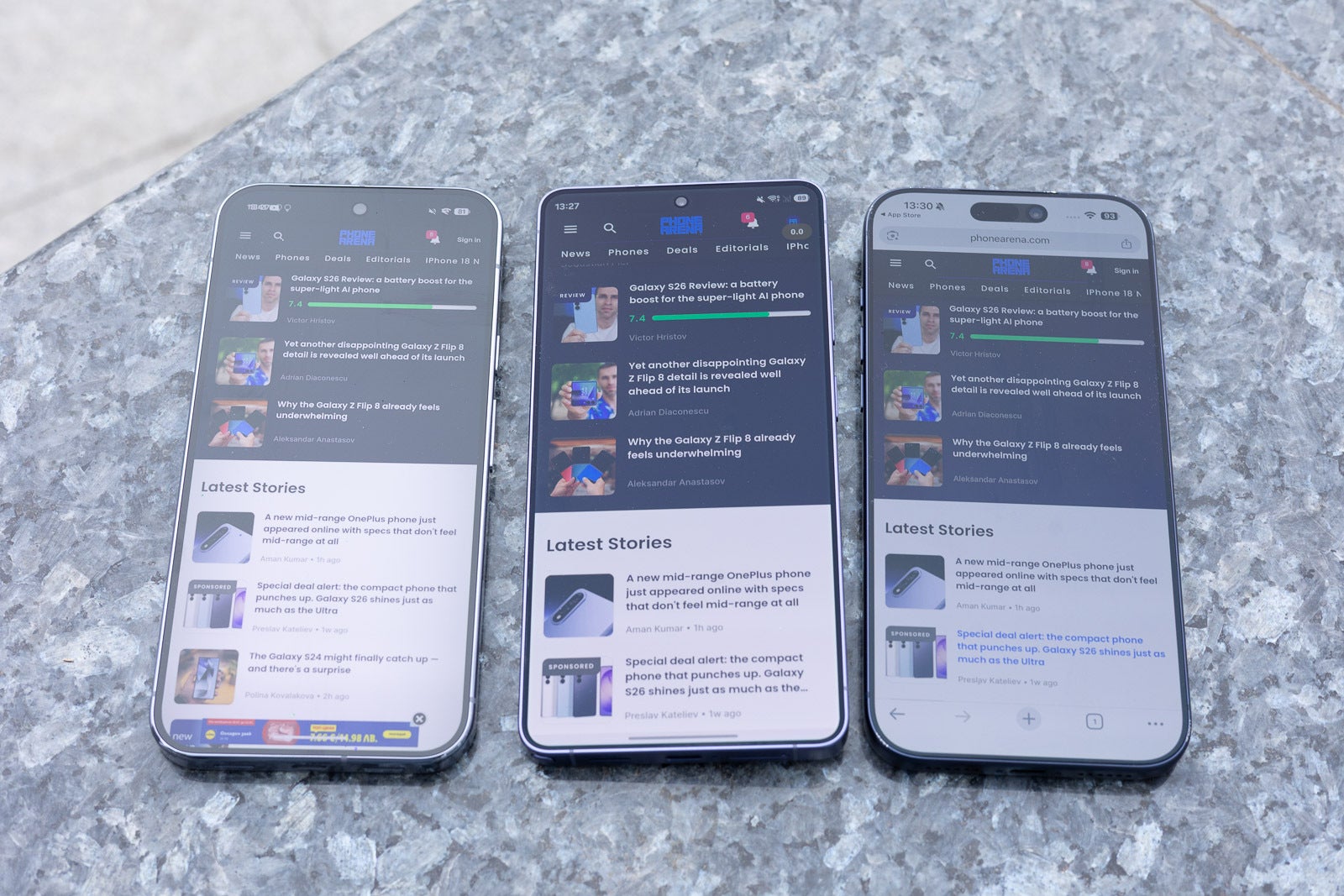
The difference in brightness becomes clearly visible at approximately 15 degrees. | Image by PhoneArena
The brightness gap between the S26 Ultra and its rivals became more noticeable when viewed at an angle. In the second test, with a moderate tilt, all three phones remained legible, but the content on the Galaxy S26 Ultra appeared more readable.
At the most extreme angle, the differences were even clearer. The Pixel 10 Pro XL began to lose legibility in the upper portion of the screen, while the iPhone 17 Pro Max also became difficult to read. The S26 Ultra, on the other hand, stayed perfectly legible, the anti-glare coating helping a lot in this extreme setting.
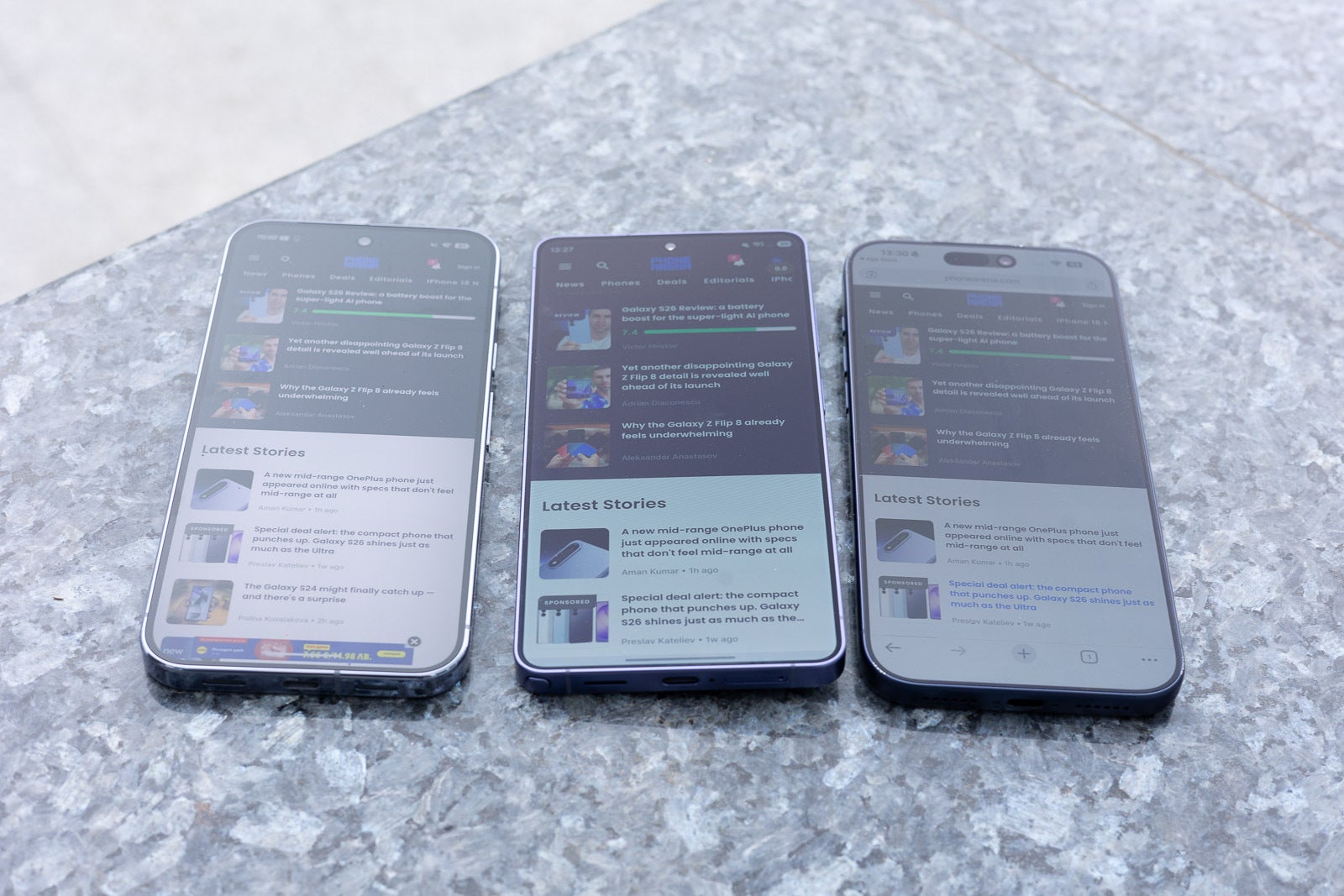
At approximately 45 degrees, the Pixel 10 Pro XL and the iPhone 17 Pro Max become quite hard to read too. | Image by PhoneArena
Overall, the Galaxy S26 Ultra performs impressively under direct sunlight, and its outdoor visibility is better than both its predecessor’s and also the competition’s. Samsung has managed to bake in the Privacy Display feature without sacrificing brightness and the anti-reflective coating also helps a lot outdoors. It’s a feature that shouldn’t be overlooked and one that your eyes will thank you for.
[1] Privacy Display – Requires manual activation in settings to function. Privacy Display feature is not AI-powered.
