

International calls will be twice as expensive soon
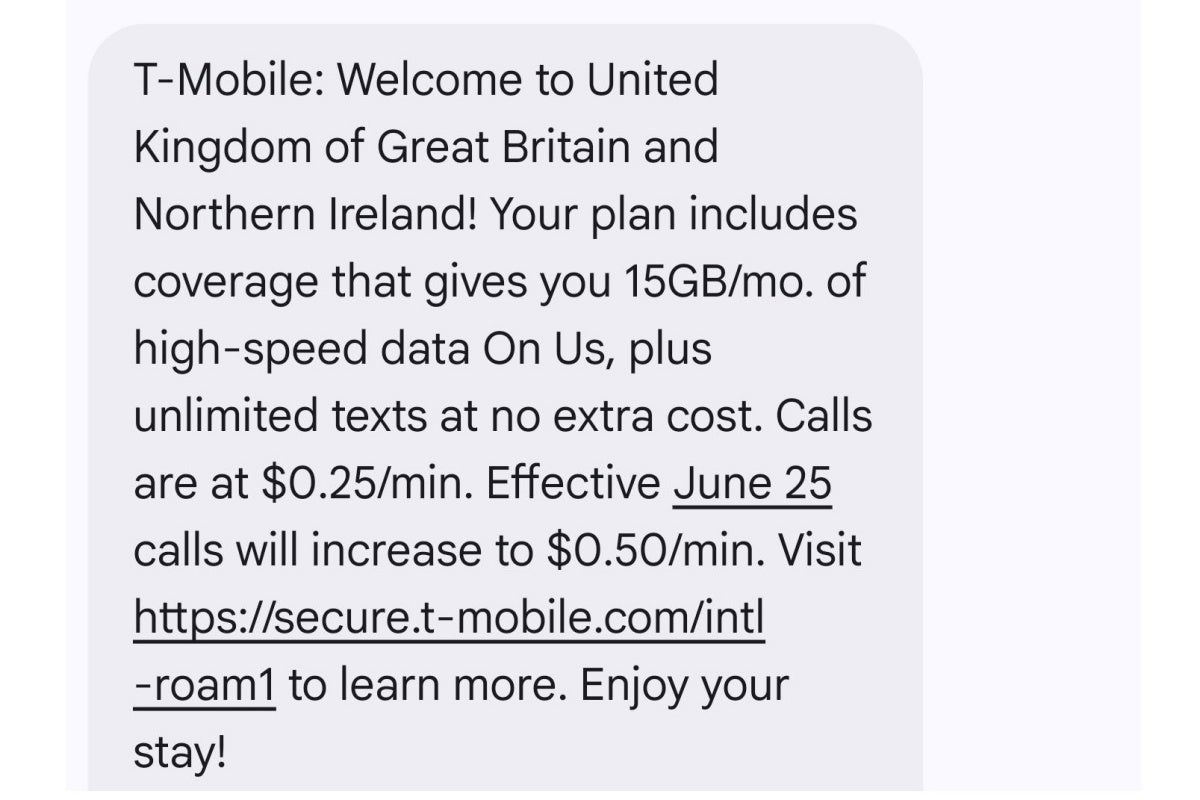
This is the only confirmation we have at this time for T-Mobile’s looming international talk price hike. | Image by ArtisticComplaint3 on Reddit
That’s right, you will soon pay $0.50 per minute if you travel to, say, the UK (or any other warmer place around the world you can think of) and want to hear the voice of a loved one from back home. That’s a whole buck for every two minutes of conversation, $15 for half an hour, and $30 for an hour, which can add up to an obscene amount of money for a one-week or two-week vacation if you’re not careful.
How can you dodge this charge?
That’s pretty easy, but it’s also not super-cheap. To get “free” calls on your trip, you need an International Pass, which starts at $10 a day (for now, at least) with 2GB of high-speed data also included. A 10 Day Pass, meanwhile, will set you back a grand total of $35 with 5 gigs of high-speed data (for the entire 10-day window), with a 30 Day Pass costing $50 and giving you access to T-Mobile‘s blazing fast network for up to 15GB in addition to granting you unlimited calling (and, of course, texting).
Texting, in case you’re wondering, is actually the easiest and cheapest way to avoid the “Un-carrier’s” international calling charges, at least on the Experience Beyond and Experience More plans. Those two options include unlimited texts in “215+ countries and destinations, as well as high-speed data allotments of 15 and 5 GB, respectively, in their standard monthly prices.
At $100 a month (plus taxes and fees) for a single line of service, however, you might expect the Experience Beyond plan to come with at least a few minutes of “free” international calls, which is unfortunately not the case.
How does T-Mobile compare to the competition in this department?

Even on T-Mobile’s costliest new plans, you’ll probably have to pay $0.50 a minute for international calling soon. | Image by T-Mobile
For customers on cheaper plans, both carriers offer international passes starting at $10 or $12 a day, while the pay-per-minute rates for international calls vary from country to country and are generally higher (or, in some cases, a lot higher) than 50 cents.
That would seem to suggest T-Mo’s June 25 change is at least partially justified, but it remains hard to explain (and understand) why Magenta isn’t looking to add free international calling at least to its top-of-the-line Experience Beyond plan.
