

Premium for a reason
Google’s new Gemini Intelligence features may require some steep minimum specs. A footnote reveals that to use the features, you may need a device with a “flagship chip,” at least 12GB of RAM, and support for AI Core and Gemini Nano v3 or higher.Besides that, the devices need to be getting a minimum of five Android OS upgrades and six years of at least quarterly security updates. There are also some quality requirements related to crash rates and other aspects of the devices.
A short list of supported device
The most telling item on the list is the requirement for Nano v3 support. Thanks to it, we can see what the existing Android devices capable of supporting Gemini Intelligence may be, and there aren’t that many.
A Google developer page lists the devices supporting Nano v3, and those mostly phones launched in 2026 and late 2025. Some notable devices are the Pixel 10 series and the Galaxy S26 devices, as well as the fact that even the Pixel 9 and the Galaxy Z Fold 7 don’t seem to meet the criteria for Gemini Intelligence.
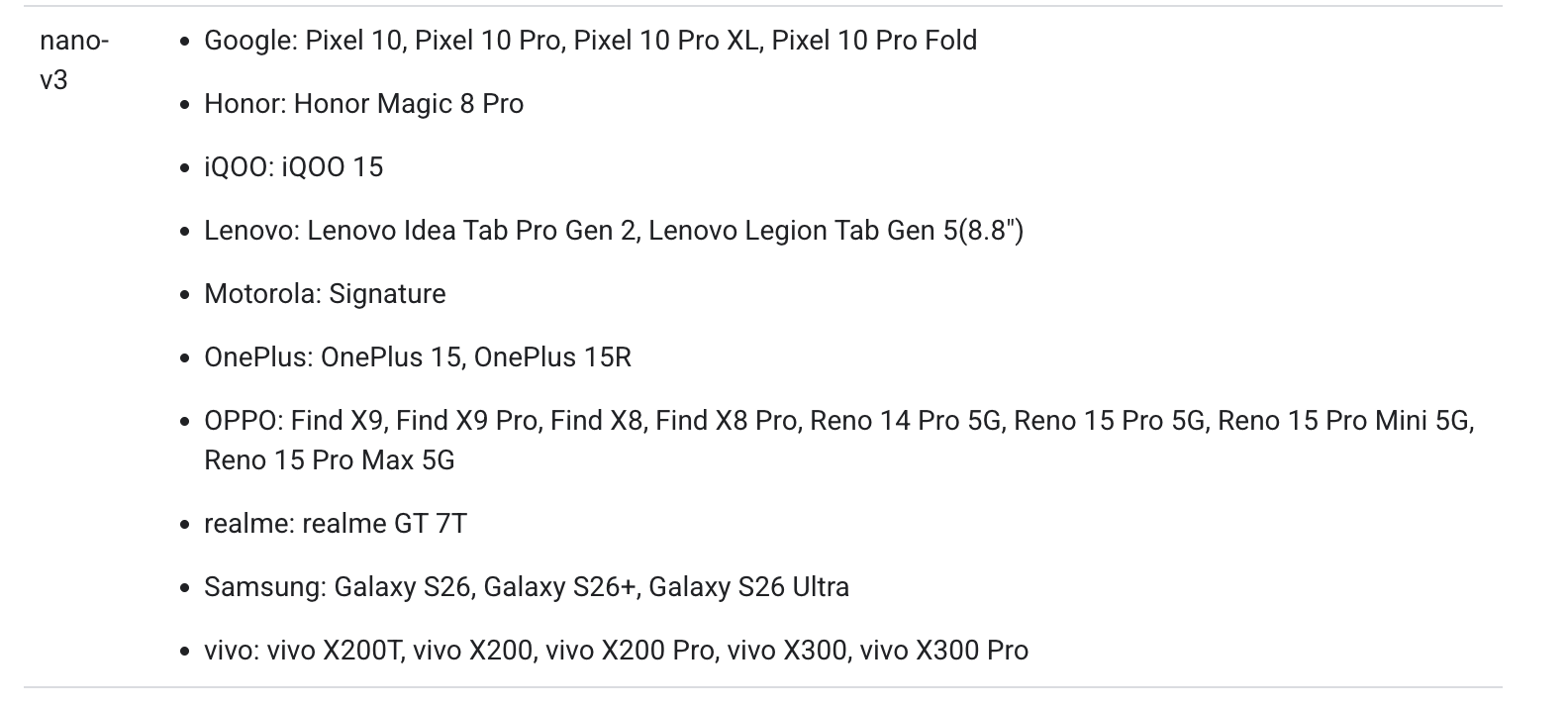
The list of devices supporting Nano v3 on Google’s help page. | Image by PhoneArena
An important caveat is that the page talks about an API support, not the Nano v3 model itself. That leaves a possibility that the features will be supported by more last-gen devices and even an option for added support through an OS upgrade.
Could this be a problem for the Pixel 11?
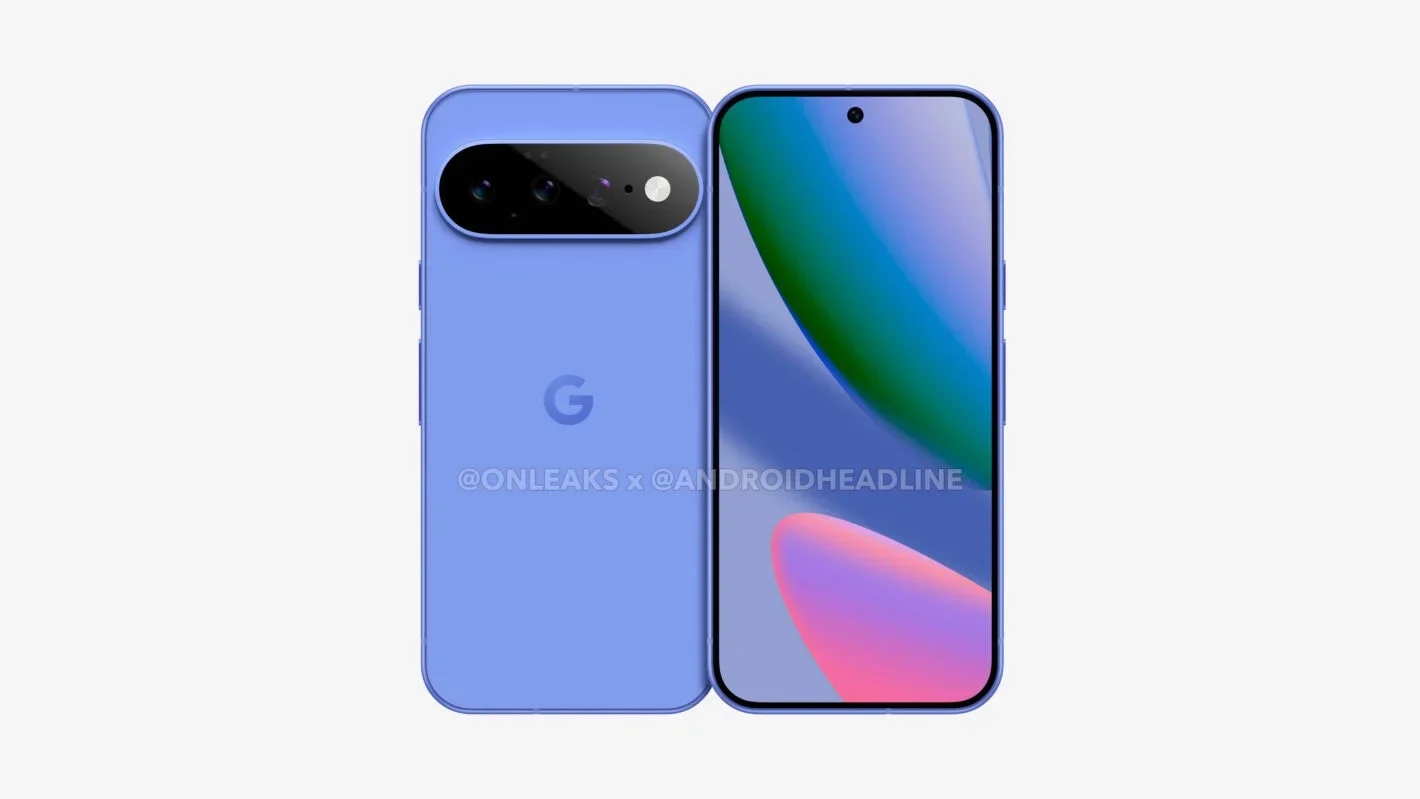
The Pixel 11 is rumored to get a RAM downgrade. | Image by Android Headlines
One intriguing detail in the requirements list is that Gemini Intelligence can only work on devices with 12GB of RAM or more. Some early leaks about the Pixel 11 series suggested that Google may cut the amount of RAM of the base model to 8GB as a cost-cutting measure.
If that’s the case, Google may have an entirely new hardware strategy for its upcoming phones, paired with a different approach to software. Gemini Intelligence could be a truly top-tier premium feature, available only on the Pixel 11 Pro devices, but not on the base model.
Such a move doesn’t really make sense, considering that Google already has the more budget-friendly A-series devices. Even without that context, it’s much more likely that the rumors about the Pixel 11 RAM are incorrect. It wouldn’t make sense for Google to make such a major step back with its flagship phone.
Gemini Intelligence may be worth it
Rambler is one of the highlight Gemini Intelligence features. | Images by Google
While Google’s claim that it’s switching from operating systems to intelligence systems with Gemini Intelligence sounds cheesy, the concept comes with several really exciting features. The Rambler feature that clears chaotic voice dictation to proper writing, including if you mix languages, is just one of the highlights.Thanks to AI, Android phones will also be able to fill out forms with information saved on your phone. For example, Gemini will be able to use your passport photo to fill out your flight details without you looking for the photo or the information. There’s also the option to “vibe code” custom widgets with whatever features and information you may need or want.All these features will debut first on Pixel and Samsung Galaxy devices later in 2026. It’s very likely to see them first on the upcoming Galaxy Z Fold 8, though we’ll need to wait and see.
That’s a high barrier
As much as I understand that advanced AI features require advanced phones, Gemini Intelligence may be a bit over the top. Even people who buy top-tier flagship smartphones rarely change them every year. I wouldn’t feel good if my year-old ultra flagship didn’t get the latest features at all, and I’m sure I’m not alone in this.
