

Gemini 3.5 models are free for all
Google started rolling out the different “thinking levels” around Google I/O 2026 last month. There are two options available — Standard and Extended. As the names suggest, one is simpler, while the other taps deeper into Gemini’s resources and allows for advanced reasoning and more complex responses.
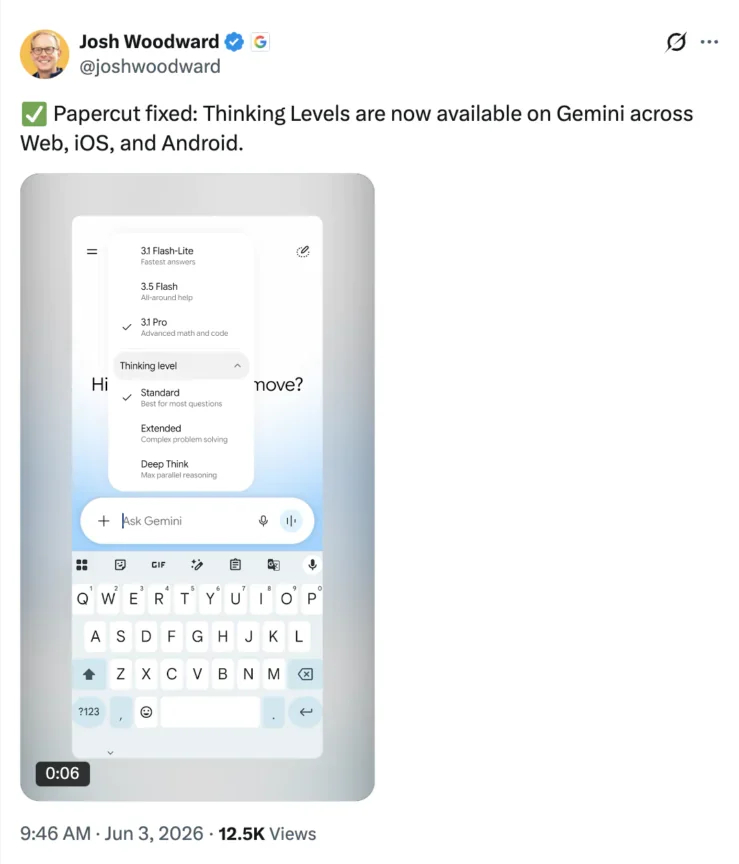
Josh Woodward, VP of Gemini at Google on X. | Image by X
According to Josh Woodward, VP of Gemini at Google, these two new “thinking levels” should now be available to all users on all platforms, including web, Android, and iOS.
You can choose the “thinking level” by heading over to the model settings in Gemini. The “Standard” and “Extended” thinking options are available across Gemini 3.5 Flash and Gemini 3.5 Flash Light.
Extended thinking is free, but there’s a catch
The new models are free in Gemini 3.5, but there’s sort of a catch. Using the Extended model uses tokens and will burn through them rather quickly.Google tweaked its model to use different amounts of tokens depending on the complexity of the task, creating a bit of a backlash from users and tons of reports of people strangely maxing out on their Gemini quota.
You should use this deeper and more complex mode responsibly or subscribe to a paid model.
Deep think is available to paying customers
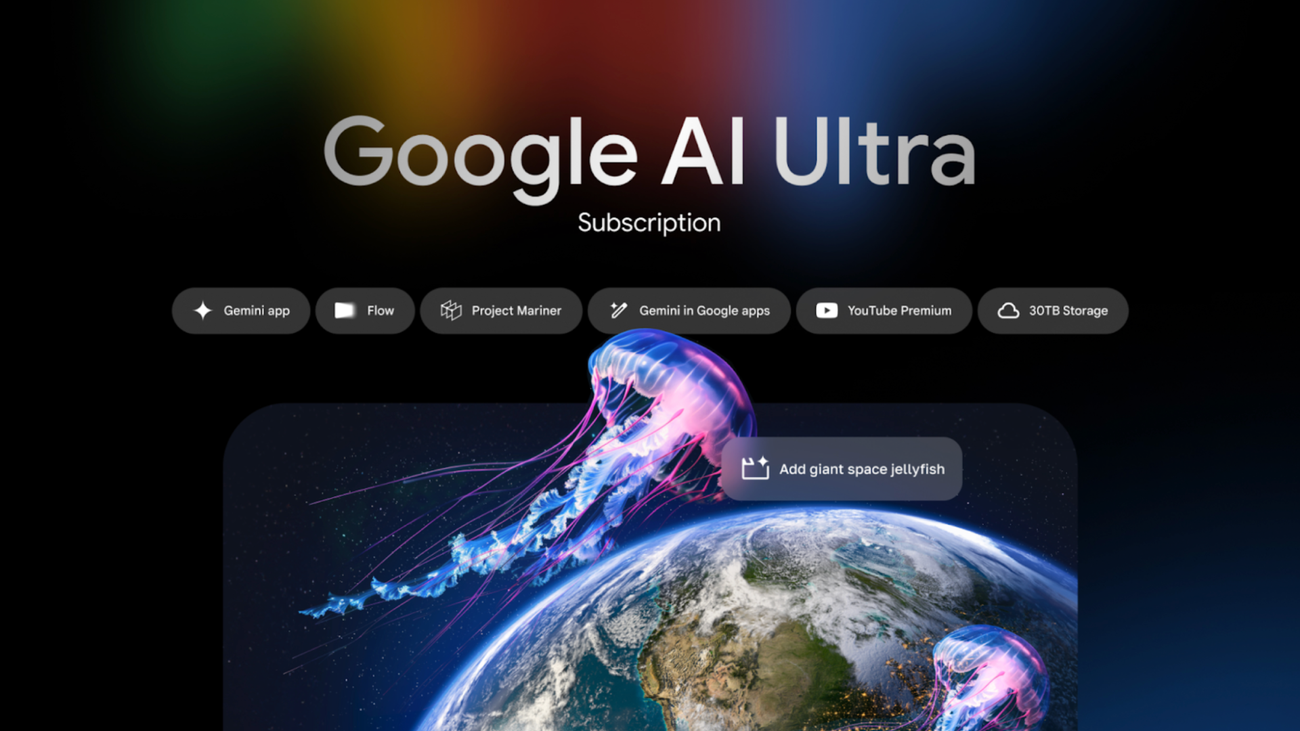
AI Ultra costs between $100 and $200. | Image by Google
Speaking of subscriptions, Gemini 3.1 Pro is getting a “Deep Think” option, which is kind of a next-level tier in addition to the aforementioned Standard and Extended modes.
This option is available only to AI Ultra users and should allow the deepest analysis and the best results to your queries, at least in theory.
With LLMs and AI agents, the result you get is tied to the prompt, so getting the question right is half the job.
Gemini is getting better, but at what cost?
In addition to the extra money (AI Ultra costs $100-200 per month), these new models — especially the extended ones built to handle millions of tokens worth of processing — are incredibly resource-heavy.
Google data centers dish out around 3.8 million cubic meters of carbon dioxide annually. For comparison, the carbon footprint of a small town is in the vicinity of 50 000 cubic meters.
