

Google’s answer to the deepfake scam call
The centerpiece of the June Android Drop is fake call detection, which Google is calling an industry-first protection built into Phone by Google.The way it works is clever. When someone in your contacts calls and you are both using Phone by Google, their device sends a silent, encrypted confirmation signal to yours in real time, proving the call really is coming from their phone.
If a scammer spoofs that trusted number, the confirmation signal goes missing. Your phone notices right away, pings your contact’s actual device to double-check, and if that real phone says it isn’t calling you, a warning pops up telling you to hang up.
Because the whole handshake runs on end-to-end encrypted RCS (Rich Communication Services), the verification stays private. It is on by default, runs automatically in the background, and you can switch it off in the Phone by Google settings anytime.
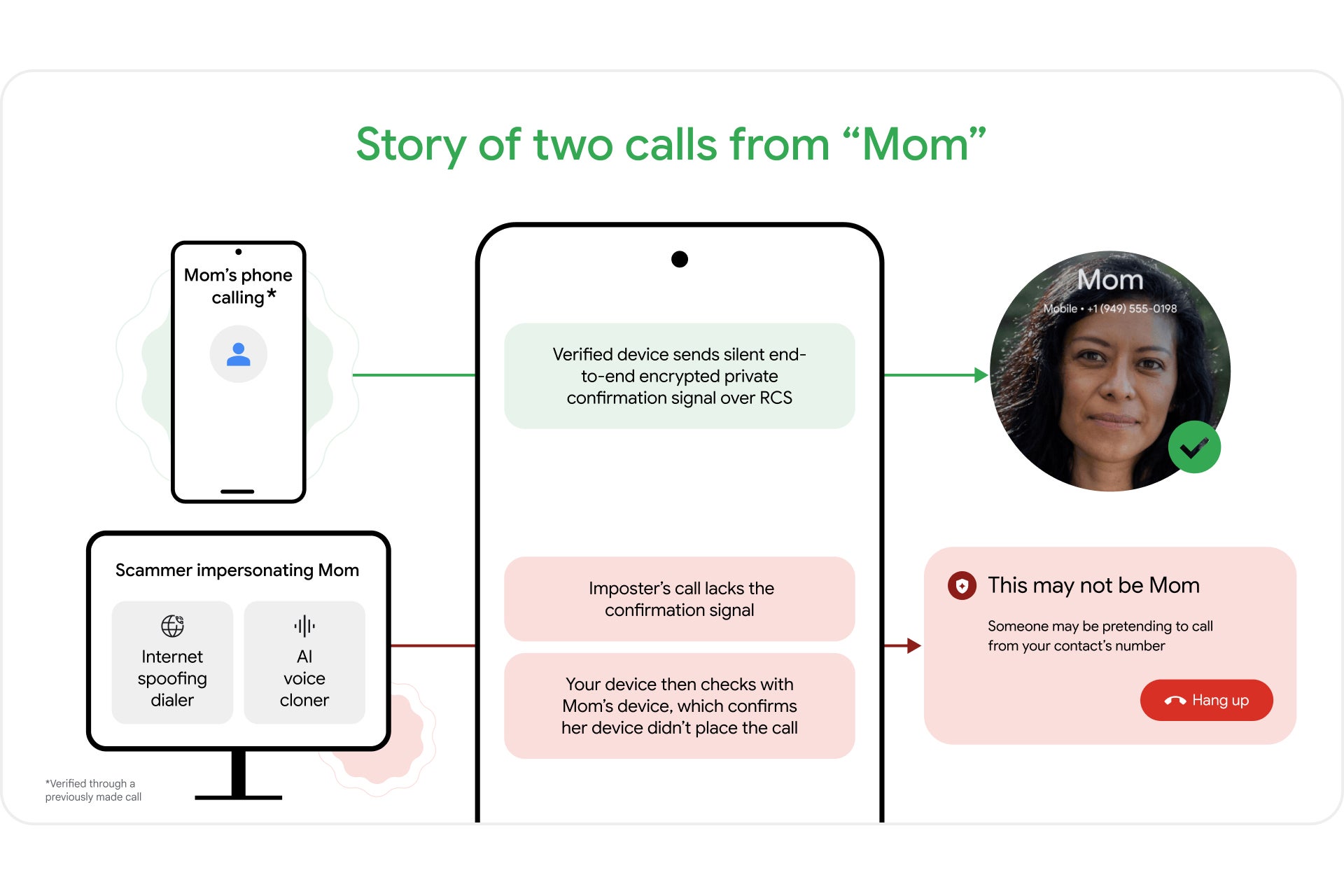
How fake call detection tells a real call from a spoofed one: a verified contact’s device sends a silent encrypted signal over RCS, while an imposter’s call lacks it and triggers a warning. | Image by Google
Fake call detection availability
Here is who gets it and when:
- Rolling out globally this month, starting with Pixel
- Works on Android 12 and newer devices
- Needs both people to use Phone by Google with RCS enabled in Google Messages
- Non-Pixel users can grab Phone by Google from the Play Store and set it as their default
Why this matters more than the usual scam filter
Caller ID has quietly stopped being a security tool, and the numbers back that up. INTERPOL’s March 2026 Global Financial Fraud Threat Assessment named impersonation fraud a leading driver of more than $400 billion in global losses, and the FTC logged $2.95 billion in US impersonation losses for 2024 alone.The reason is a one-two punch. Scammers spoof a trusted number to slip past people who ignore unknown callers, then layer on AI voice cloning that is now realistic enough that most people cannot tell it from a real human voice. That is the exact threat we flagged when Google rolled out its conversational scam protection, where on-device AI started watching for scam patterns mid-call.This is where Google’s structural lead over Apple gets hard to argue with. We already made the case that Google is winning the scam war, pointing to Counterpoint research that found Android offered AI-driven safeguards across nine key areas to iOS’s two. Apple’s iOS 26 added Call Screening, and Samsung has been testing its own voice-phishing alerts, but those tools mostly listen in and guess. Fake call detection verifies the caller’s device before you even pick up, which beats analyzing a conversation that is already happening.It should be noted that this scam-fighting capability is spreading across Android, not staying locked to Pixel. We recently covered Google bringing scam detection to the Galaxy S26 line through Samsung’s own phone app, and because fake call detection sits on the open RCS standard, other manufacturers can adopt it too.
The rest of the June Android Drop
Fake call detection headlines the Drop, but six more features are landing right alongside it.
Circle to Search finds the whole outfit
Circle to Search can now spot an entire outfit in one pass, from tops to footwear, without making you track down each piece separately or jump between apps. It is available now on all Android 14 and newer devices that have Circle to Search.
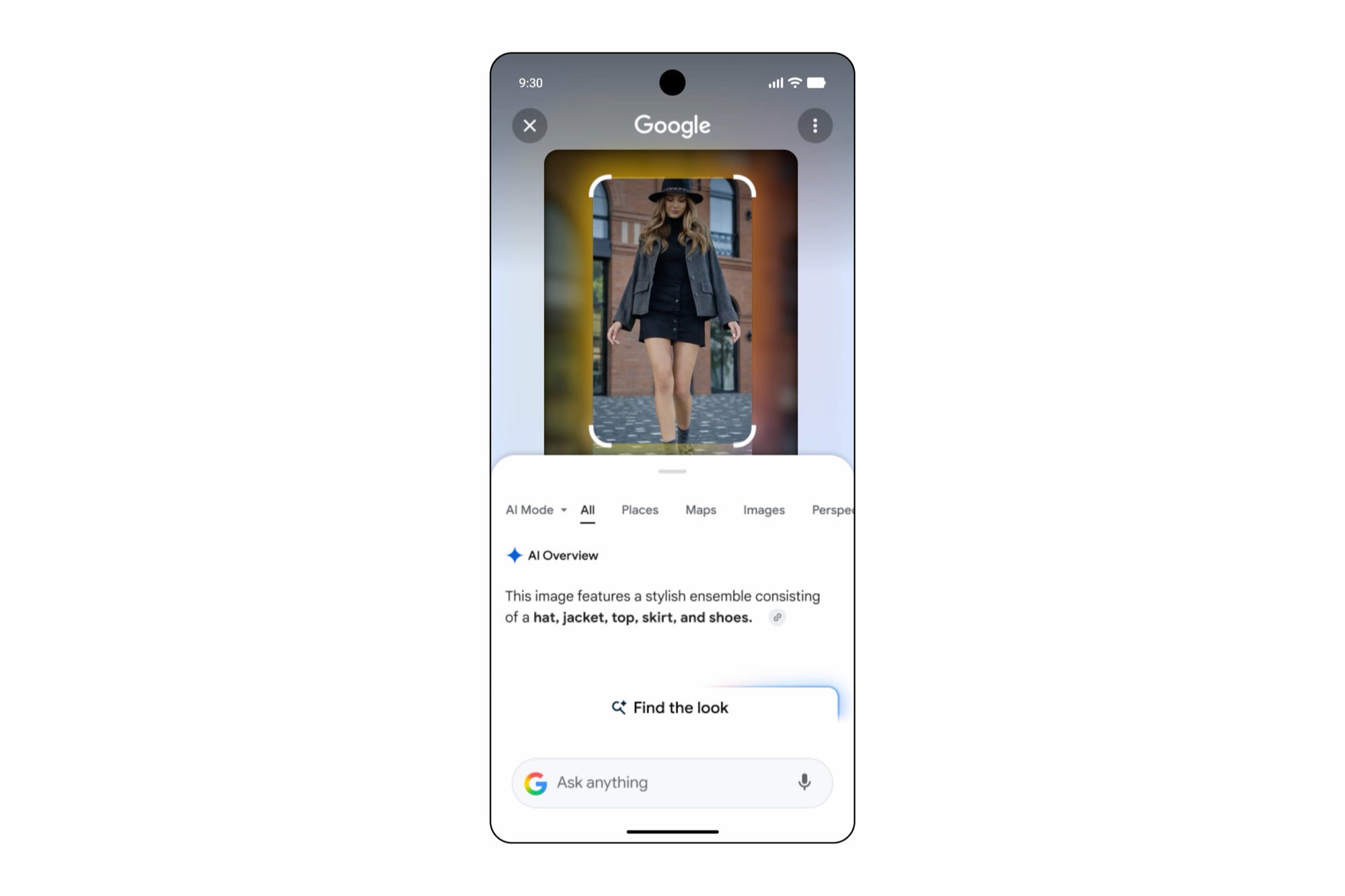
Circle to Search now breaks a full outfit into individual items, here pulling a hat, jacket, top, skirt, and shoes from one image. | Image by Google
Google Photos builds you a digital wardrobe
Coming soon, Google Photos will catalog the clothes you wear across your photo library into a browsable digital closet, so you can mix, match, and virtually try on outfits. The rollout starts next week for eligible users in the US, India, and Brazil on Android 10 and up.
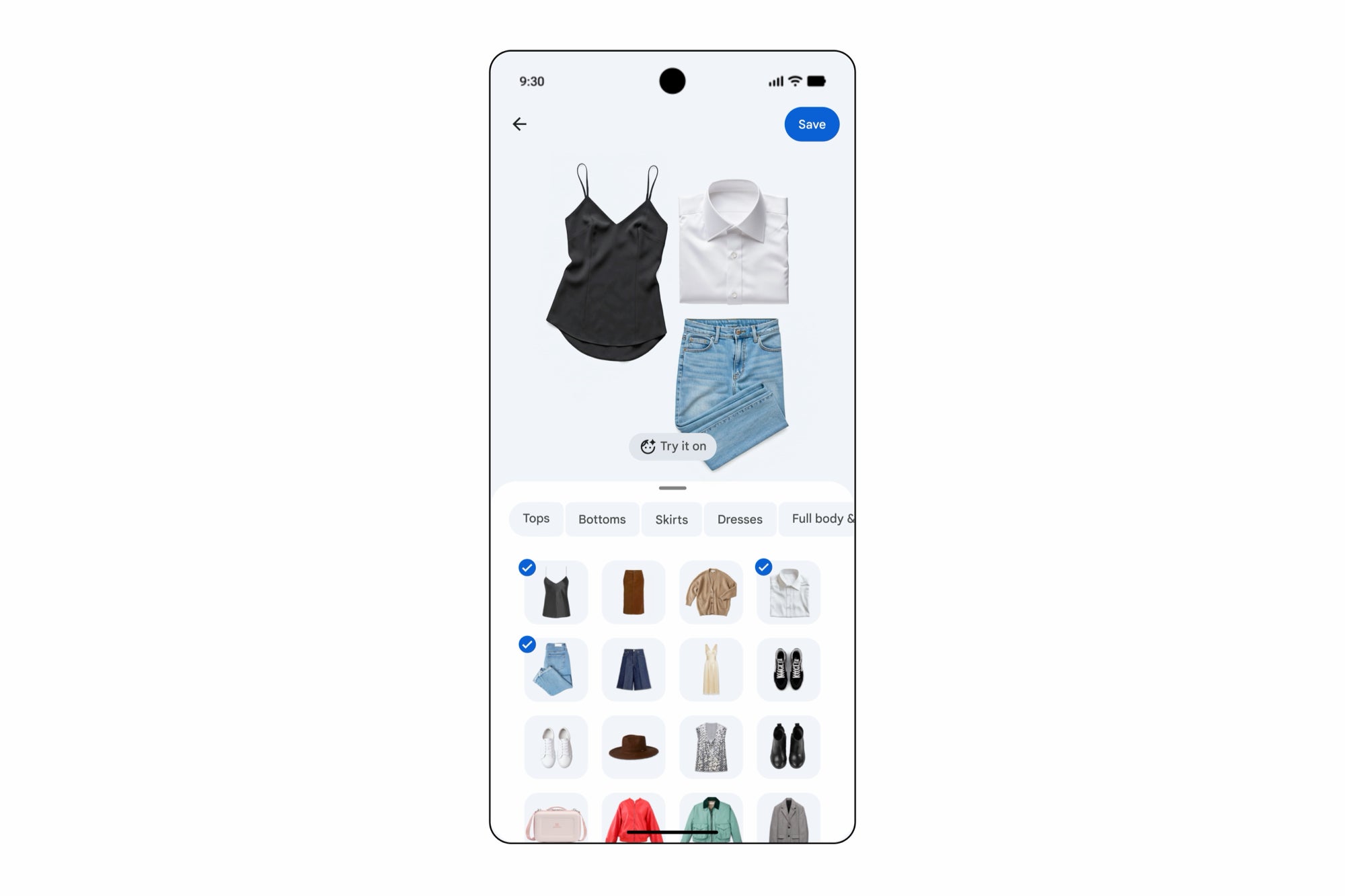
The Google Photos wardrobe lets you mix and match catalogued clothes and virtually try the outfit on. | Image by Google
Personal Safety app adds protections for kids
Kids under 13 will get lock-screen medical info and emergency contacts, plus car crash detection that automatically calls emergency services and texts contacts after an accident. Teens also gain Safety Check and real-time location sharing, and the Personal Safety app is available globally.
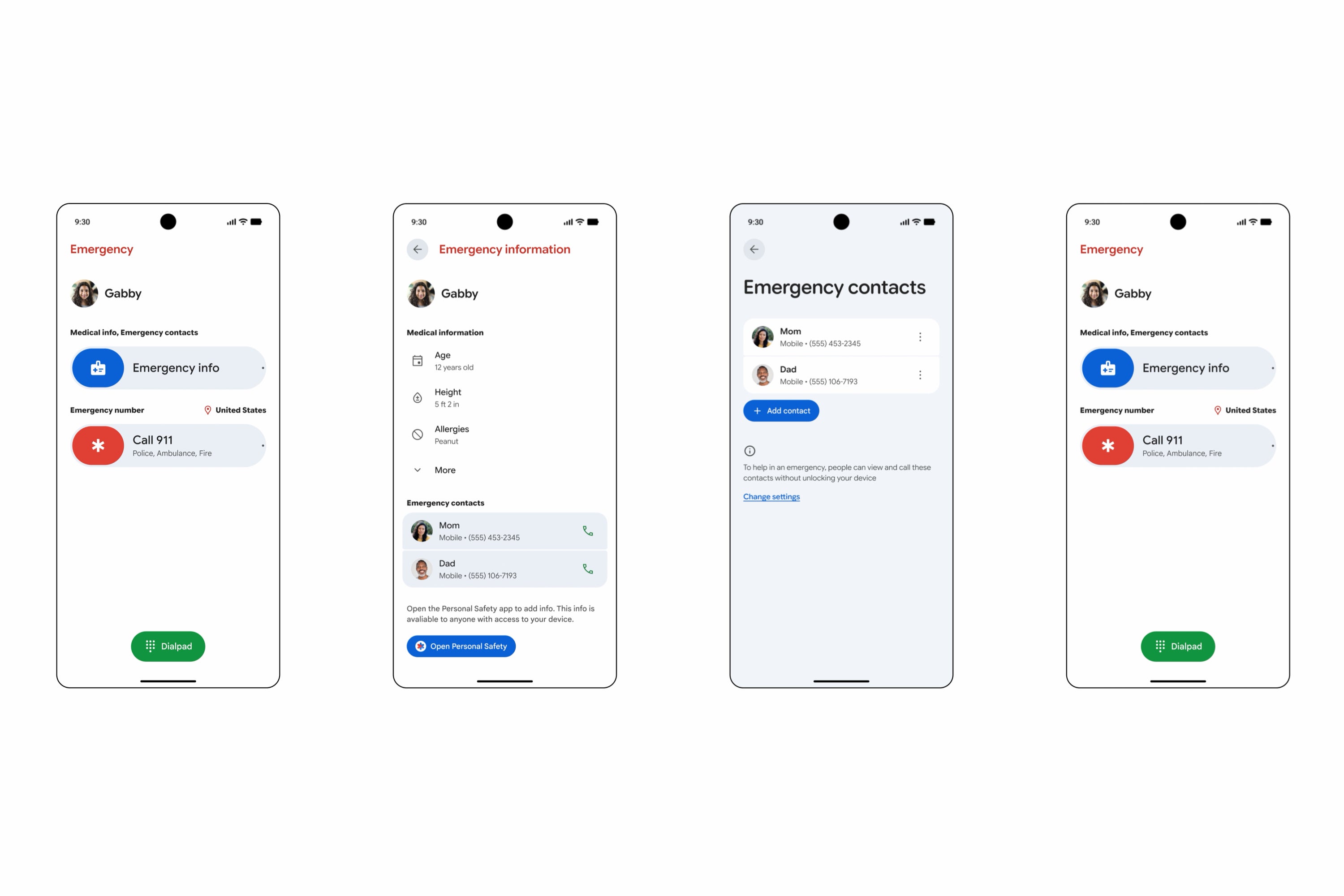
The Personal Safety app puts a child’s medical details and emergency contacts on the lock screen, reachable without unlocking the phone. | Image by Google
Play Books gets a reading companion
A new Book insights feature lets you tap “Catch me up” for a recap of what you have read, or highlight a passage to ask about its themes, context, or characters. It starts rolling out today for select English titles, including thousands you can read at no charge.
Quick Share now talks to AirDrop
Quick Share now works with AirDrop on more Android devices, so you can send photos, videos, and documents to iPhone friends with or without an internet connection. This continues the cross-platform sharing push we have tracked since its earlier Pixel debut.
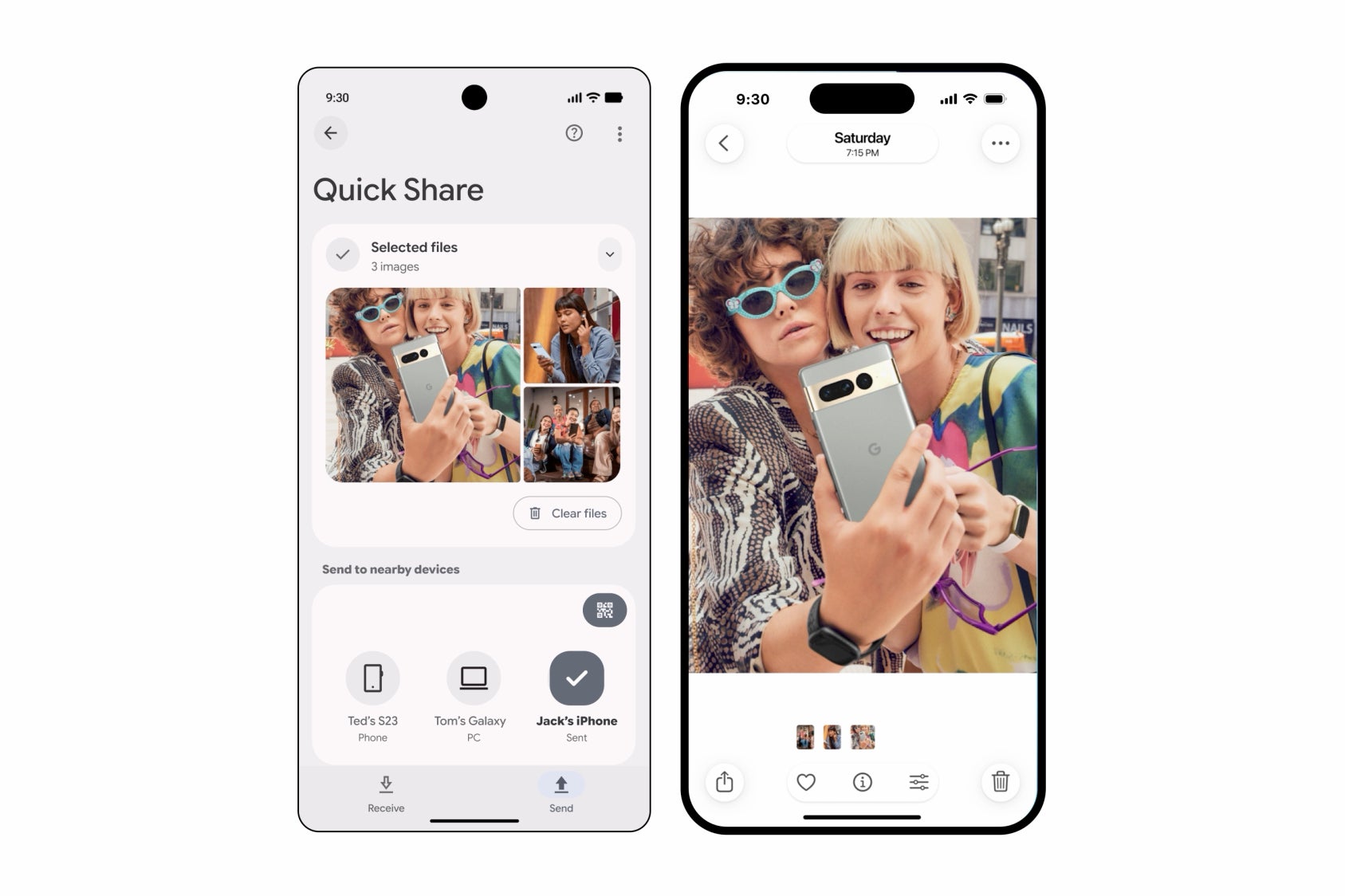
Quick Share sends photos straight to an iPhone, with the files landing in the recipient’s gallery through AirDrop. | Image by Google
Emoji Kitchen adds new combos
Gboard’s Emoji Kitchen has fresh combinations to remix, from cute critters to a bee paired with a ring.
Software backup for the people who need it
I like to think that I am pretty good at spotting scam calls. The trouble is, being good at it myself does nothing for the people I worry about, and I regularly walk my own parents through what to watch for so they are ready when a spoofed call eventually comes through.That is why fake call detection lands differently for me than the usual scam filter. A warning on the screen that says the caller is not who they claim to be does the coaching for them in the moment, when it counts, and it does not depend on anyone staying calm enough to catch a cloned voice on their own.
The real catch is the both-people-need-Phone-by-Google requirement, which limits coverage out of the gate. But building it on open RCS instead of fencing it off to Pixel tells me Google actually wants this everywhere, and that is the right instinct for a problem this big.
If you want more hot takes, opinion pieces, and behind-the-scenes coverage of stuff like this, come follow me. I am on X at @jojothetechie and on Threads at @jojothetechie.
