

I previously stated that the last anime season, winter 2026, was one of the most stacked lineups in anime history. Frieren: Beyond Journey’s End, Ikoku Nikki, Hell’s Paradise, You And I Are Polar Opposites, Jujutsu Kaisen, Fate/Strange Fake, Golden Kamuy, Sentenced To Be A Hero–every day of every week for a solid three months, a new episode of an incredible anime dropped. It was honestly exhausting to keep up with. My steak was so juicy, and my lobster was so buttery that it was giving me heartburn.
But if winter 2026’s lineup was the equivalent of heartburn, spring 2026 might be more on par with a straight-up heart attack, because while it lacks a series with the same level of popularity as a Frieren or a Jujutsu Kaisen, I think it might, somehow, be better overall.
However, I do think that the burnout from keeping up with the winter 2026 lineup may have put some people off trying out many of the newer anime that have dropped in spring 2026. That’s why, for this list, I’m going to forgo mentioning any of the popular continuing series, such as Dorohedoro or Re: Zero, because I know you’re already watching them. Instead, I want to focus on what I consider to be the best ten new anime of spring 2026. And trust me when I say that cutting this down to just ten was no easy task, because there are just so many bangers out right now and they all deserve your time.
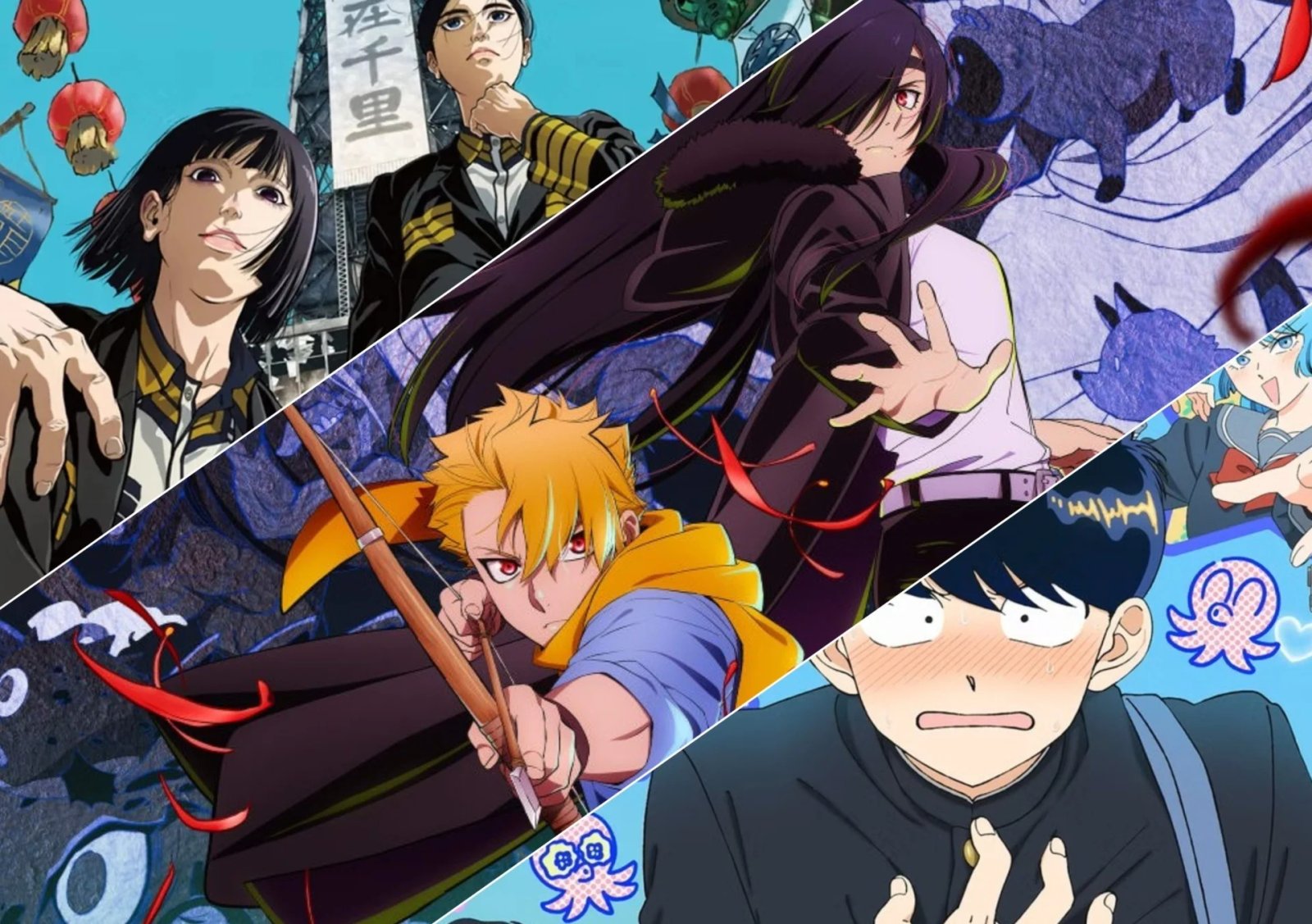
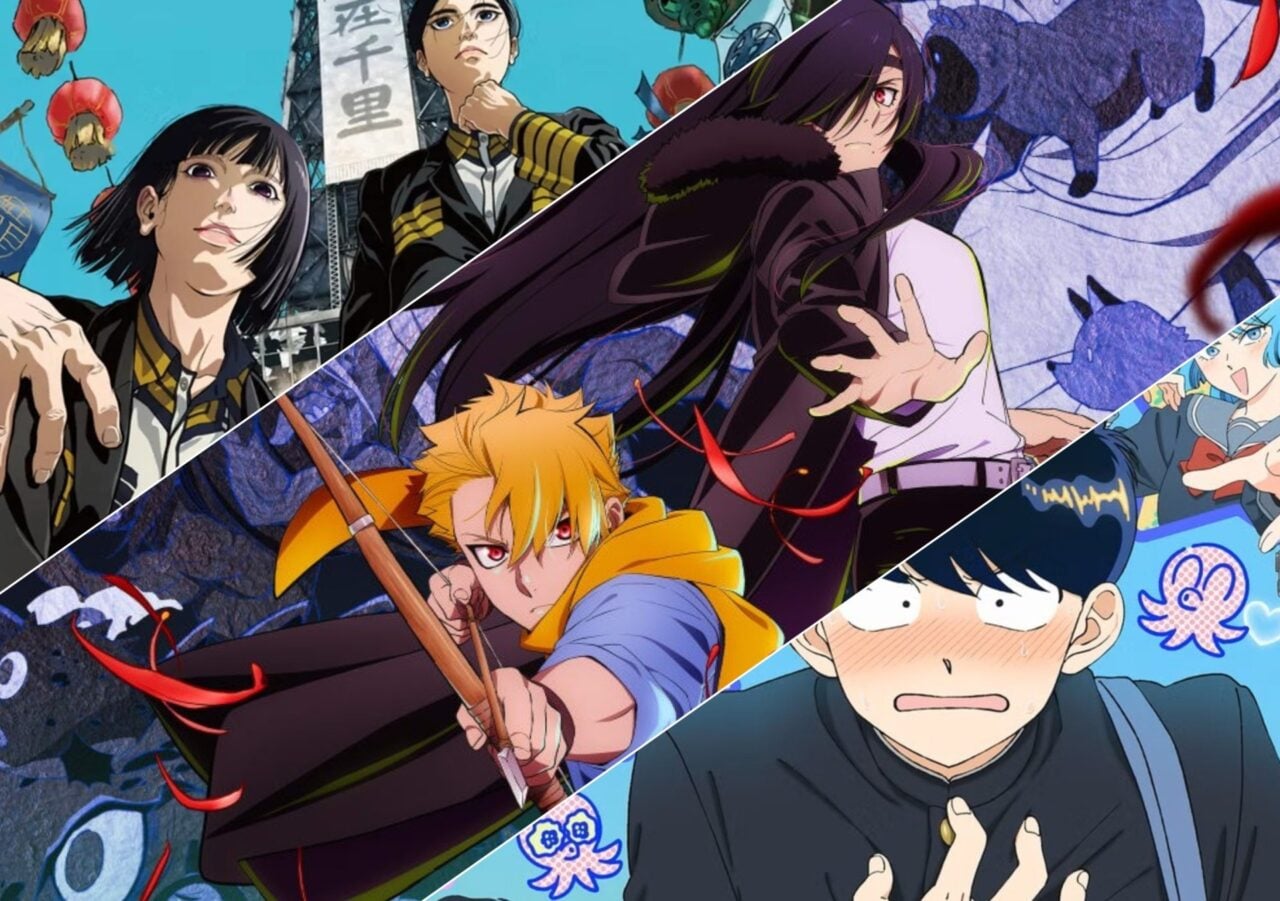
Nippon Sangoku
Nippon Sangoku was absolutely not on my radar this season. I heard the manga was good, but that’s all I knew. Although I consider myself a bit of an anime nerd, the animation studio behind it, Studio Kafka, was also a blind spot for me–and for good reason. Other than animating one episode of the Tatsuki Fujimoto 17–26 compilation, Studio Kafka is only known for working on season two of The Ancient Magus’ Bride.
And yet, the algorithm decided I simply had to watch Nippon Sangoku. I’ve been getting barraged with clips from this anime wherever I go, to the point that I eventually relented and decided to give it a go. And oh boy, am I glad I did.
If I had to compare it to another anime, I’d say that Nippon Sangoku vaguely reminds me of Vinland Saga…and if you’ve seen Vinland Saga, you’d know that’s a huge compliment. It’s a touch grimdark at times, but there’s a hopeful underlying feeling to the story that compels you to keep watching. It’s also absolutely batshit in a borderline absurdist way, which definitely helps to keep you engaged–and it’s all bolstered by the unique woodblock print animation style. Nippon Sangoku may not have been on my radar, but Studio Kafka definitely will be moving forward.
Snowball Earth (Sunoubōru Āsu)
I’d only heard of Snowball Earth once before watching it, and that’s because Hideo Kojima has a quote on the back of the second volume of the manga, which roughly translates to “If this is the apocalypse, I’d rather welcome it!”
And hey, what can I say except…the man has great taste in manga. Thankfully, clearly so do Studio Kai, because the last anime they worked on was one of the previous season’s best: Sentenced to Be a Hero.
It’s pretty easy to recommend this one to anyone, because it’s just a nice, wholesome, feel-good time–uh, mostly anyway. There’s an occasional burst of gore now and again that feels out of place, but in a surprisingly good way. The author likes to sporadically remind you that this story about a guy trying to make friends during an ice apocalypse actually has some stakes, and I respect that.
Scenes from Awajima (Awajima Hyakkei)
Back in February, I proclaimed that Ikoku Nikki was the best anime of last season–and I stand by that take. Now, I don’t think Scenes from Awajima is this season’s best, but I do think it’s the first anime I’ve seen since Ikoku Nikki that manages to capture the same fleeting, ethereal feeling of looking back on your early teenage years.
There’s an almost hallucinatory vibe to Scenes from Awajima. The story constantly jumps from character to character without warning, and scenes often feel kind of disconnected from each other–sort of like how dreams rarely have a beginning or end, but rather just kick off halfway through some indiscernible plot.
To clarify, this isn’t a critique; it’s intentional, because I think the author wants you to feel as if you’re experiencing the plot as if it were recounted from someone else’s memory. The legendary anime studio Madhouse, the folks behind Frieren: Beyond Journey’s End and the one good season of One Punch Man, is doing a lot of the work here, too, because the animation has this very delicate, watercolor-style that’s accentuated by a focus on blank and empty spaces that makes the visuals really pop. It’s difficult to describe, but Scenes from Awajima is the perfect kind of anime to watch on a rainy day. It just has a comfy vibe to it, as if it were designed to be watched while you’re drinking a cup of hot chocolate in your pajamas.
Kill Blue (Kill Ao)
If I were a betting man, I’d wager that Kill Blue is probably the anime on this list that the least amount of people have heard of, let alone watched. The author of the manga, Tadatoshi Fujimaki, isn’t a complete unknown by any stretch of the imagination, as he wrote the sports parody manga Kuroko’s Basketball…which ended in 2014. Then he wrote the seven-volume-long manga Robot × LaserBeam…which ended in 2018.
This is weirdly kind of abnormal for a mangaka, as a lot of them tend to really pump out work at a frankly inhuman rate. And the fact that Fujimaki took a five-year-long break in between finishing Robot × LaserBeam and starting Kill Blue? Borderline unheard of. Speaking of, have you ever heard of the animation studio Cue? Because I sure haven’t, but they’re the studio behind Kill Blue’s anime adaptation.
This waffle is a preamble to me telling you that even if you haven’t heard of this one, you have to give it a try. The animation is good, but not ridiculously good, and yeah, the premise is ridiculous–a 39-year-old hitman is accidentally turned into a 13-year-old boy, and, as a result, has to act as a bodyguard at a high school–but trust me, it’s worth a shot solely due to how funny it is.
Mao
Have you ever randomly caught a whiff of a scent and suddenly been ferried back to an ancient memory? That’s what watching Mao feels like for me. I knew absolutely nothing about Mao going into the first episode, and yet, within the space of a minute, I immediately knew that Rumiko Takahashi must have been behind the manga. If you’ve read or watched any of her other works, such as Urusei Yatsura, Inuyasha, or Ranma ½, you’ll know what I mean straight away. Everyone in Mao has really soft yet unmistakable features, and there’s a dreamlike vibe to the story–both figuratively and literally.
But really, Sunrise, the legendary 1970s animation studio behind Mobile Suit Gundam, City Hunter, The Vision of Escaflowne, and Cowboy Bebop, is the main reason it was so easy for me to recognize Takahashi’s distinct art style, because watching Mao feels like overhearing two 50-something high school buddies catching up after years apart, yet not missing a beat.
The story of Mao is honestly secondary to the oddly transportive sensation that I felt watching it. You could slap a CRT filter over it and tell me this used to run on Toonami in the 90s, and I’d believe you. It sent me back to the days when I used to record shows like Outlaw Star and Yu Yu Hakusho on VHS tapes because I had no idea where else to find anime. It’s not the best written or most well-animated anime on this list by a long shot, and yet, in spite of that–or, perhaps, because of it–Mao ended up leaving a very strong impression on me.
Marriagetoxin
I’d be the first to admit that, at a glance, something about Marriagetoxin just didn’t appeal to me when it was first announced. I’m very picky when it comes to romance anime, and the edgy-looking protagonist that graced all of Marriagetoxin’s promo art immediately put me off.
However, as soon as I found out that Bones was the animation studio behind it, I knew I had to at least try watching it, because in the last decade alone, they’ve produced Mob Psycho 100, My Hero Academia: Vigilantes, Gachiakuta, and Carole & Tuesday. That’s a generational run, man. What are the folks at head office putting in the animators’ coffee, and where can I get some?
Unsurprisingly, Marriagetoxin has, once again, proved that Bones has a knack for picking incredible stories to adapt. Whatever I expected going into it was definitely not what I ended up getting, because Marriagetoxin is arguably more of a comedy than a romance, but also kind of a seinen anime, too? Look, whatever you’d categorize it as, it’s really good, and surprisingly heartfelt in places too. Bones is clearly incapable of missing. Oh, and it easily has the best ending song this season. What a banger.
The Ramparts of Ice (Koori no Jouheki)
Hey, would you look at that? Another Studio Kai production finds its way onto the list. There was a good reason I was skeptical of the report that the animation studio was on the verge of insolvency back in April, because it’s baffling to think that a team capable of pumping out so many back-to-back bangers isn’t absolutely raking it in right now.
Speaking of bangers, during the first couple of episodes of The Ramparts of Ice, I found myself constantly comparing it to one of the previous season’s best new anime: You and I Are Polar Opposites. At first, I thought I was just being reductive, because they’re both rom-coms set in high schools, but nope; Koucha Agasawa is the author of both. In fact, from what I understand, these are the only two manga she’s written so far.
However, while You and I Are Polar Opposites is a rom-com about successful relationships, The Ramparts of Ice is a rom-com about a love triangle. The Ramparts of Ice feels a lot more grounded as a result, but it still plays to Agasawa’s clearly defined strength, creating well-rounded, easily likable, and believably modern teenagers. I don’t care if Agasawa just keeps writing high school romance manga for the rest of her career, because her work in the genre is unparalleled.
Daemons of the Shadow Realm (Yomi no Tsugai)
I know saying Fullmetal Alchemist is incredible is the anime equivalent of saying water is wet, but, c’mon–there’s a reason that the manga was so nice they adapted it twice. For me, Hiromu Arakawa’s Fullmetal Alchemist is comfortably in my top 3 manga of all time, and her body of work as a whole is ridiculously consistent. I’m pretty sure she’s physically incapable of writing a bad story.
Obviously, this is a lead-in to me saying that I was, naturally, quite excited for the anime adaptation of Daemons of the Shadow Realm–doubly so when it was announced that Bones, the same studio behind both Fullmetal Alchemist and Fullmetal Alchemist: Brotherhood, would be handling the animation.
So is it good? Is it everything I wanted and more? Yeah. The pacing is just right, the voice cast is killing it, and, much like with Fullmetal Alchemist, Bones has adapted Arakawa’s art perfectly. I know you’re all currently obsessed with Witch Hat Atelier, but do not sleep on Daemons of the Shadow Realm, because if I had to pick a favorite on this list…I think it would be a straightforward choice.
Go for It, Nakamura! (Ganbare! Nakamura-kun!!)
Ok, so I don’t tend to watch a lot of BL (Boys Love) or GL (Girls Love) stuff. Now, before you ask, that’s not for prejudicial reasons, but rather because I’ve been unfortunate enough to watch a lot of crap BL anime. However, due to the hype, I still tried Go for It, Nakamura!–and hey, turns out the hype was onto something.
This one is animated by Drive, the studio behind season three of KonoSuba and the latest two seasons of To Your Eternity, but it looks nothing like anything else out there at the moment. In fact, the pop-art style makes it look more like a Rumiko Takahashi manga than even Mao does, because it often felt like I was just watching an animated John Hughes film.
But the thing that really compelled me to keep watching Go for It, Nakamura! was the writing. It’s funny, yes, but it’s also just content to let things simmer. It’s a story about a young guy figuring things out at his own pace, and it doesn’t feel like it’s rushing to the finish line. Plus, much like Nakamura, I also think octopusses are cute, so the protagonist won me over pretty quickly.
Witch Hat Atelier (Tongari Boushi no Atelier)
Alright, yeah, I saved what everyone considers to be the best for last. And, yeah…it’s obviously really good. I’m not trying to be contrarian when I say that I only watched Witch Hat Atelier in preparation for writing this article. That’s not because I hate popular things, simply because they’re popular–quite the opposite, actually. I was waiting to watch it because I knew it would be good, and I wanted to wait until every episode of the first season was out so I didn’t have to longingly wait for it to be released week by week.
But now, instead, I’m six episodes in and absolutely obsessed, which is exactly the outcome I was trying to avoid. So what is it about Witch Hat Atelier that’s got everyone so enraptured? Why are so many people saying this is the best new anime since Frieren: Beyond Journey’s End? There’s no single answer I can give you, because it’s a sum of its parts, and every individual part is just perfect.
As far as animation studios go, Bug Films is relatively young. It was founded in late 2021, and the only anime it’s produced since then (outside of collaborative projects) is Zom 100: Bucket List of the Dead. However, there’s a good reason Bug Films has only produced one season of one anime in the past five years, and that’s because Witch Hat Atelier took them almost four years to animate. And y’know, after watching the first six episodes, I’m surprised this didn’t take them an entire decade.
Yet, as much as it seems everyone, including myself, only seems to focus on the quality of the animation when they talk about Witch Hat Atelier, I could spend just as much time waffling about the sound design, the voice acting, and, of course, the story. Much in the same way that the Marvel and DC inspirations behind My Hero Academia resulted in a unique take on Western superhero comics, Kamome Shirahama’s obsession with fantasy classics like The NeverEnding Story and The Lord of the Rings is what makes Witch Hat Atelier feel truly special. It’s simultaneously directly influenced by Western fantasy and yet somehow stands on its own as something truly singular. I just hope it doesn’t take Bug Films another 4 years to finish the second season, because I’m already losing it waiting for episode seven.
