


Lenovo rumored to be increasing prices again
The Idea Tab is one of the cheapest Lenovo tablets, but will it become pricier soon? | Image by Lenovo
Chinese outlet Blue Whale News claims (source in Chinese) that Lenovo could soon raise prices on its products in China once again. According to the source, the company may introduce a uniform adjustment on its entire portfolio, maintaining the earlier increase pattern. The source additionally specifies that Lenovo might implement the changes after the Chinese 618 shopping festival, which should last until the end of June. At this stage, Lenovo hasn’t publicly announced a price hike.
But if the report is correct, users could very soon have to dig deeper into their pockets to get a new Lenovo tablet, laptop, or PC. Will the same happen in the US?
Coming to your region soon?
If China sees another Lenovo product hike, what could this mean for the rest of the world? It’s a bit early to say.
On the one hand, brands usually launch price adjustments in their home market before announcing a global increase. In fact, sometimes the hike comes without warning.
With that in mind, it’s actually plausible that the US and European consumers could end up paying more in the coming months.
On the other hand, given that the Chinese price adjustment hasn’t been launched or officially confirmed yet, this could ultimately turn out to be a speculation.
Not the only one

The Tab S11 Ultra now sits at $1,299.99. | Image by PhoneArena
Raising prices on existing products is never welcome, especially when it’s done twice in the same year. However, Lenovo isn’t the only company to adjust prices in 2026. Notably, Samsung increased prices for its latest tablets by $50-$100 earlier this year. That said, Apple is still holding off for now, keeping prices for its iPad models unchanged.
Market trends show some brands may be in trouble
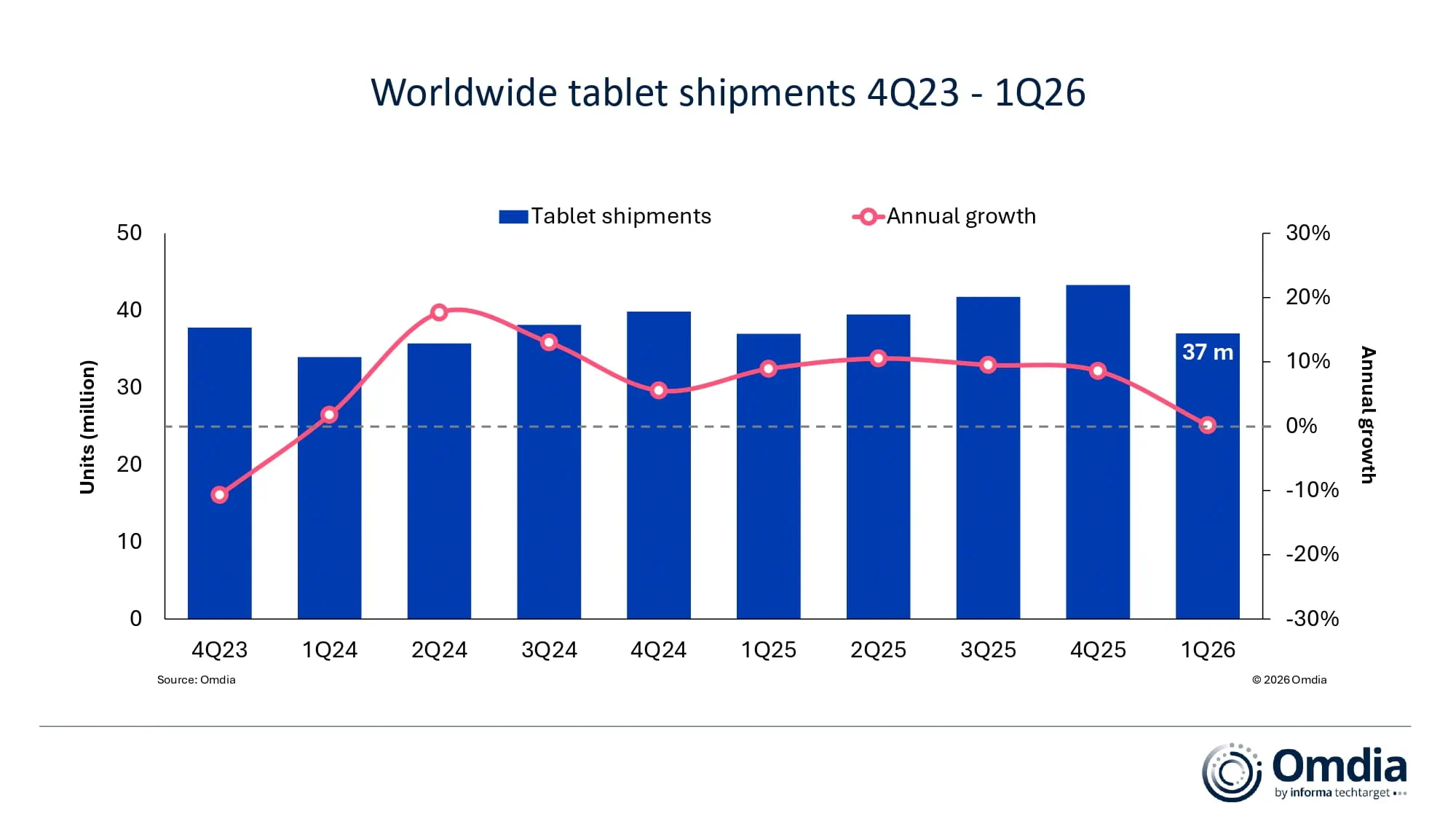
Global tablet market analysis shows growth will be modest in 2026. | Image by Omdia
Recent Omdia research points out that the tablet segment is in a tough spot in 2026. While premium tablets retain a strong user demand, mid-range and low-end options are expected to face difficulties.
Users who buy high-end models will likely continue to do so even if prices go up. The situation is very different at the other end of the market, where consumers are far more sensitive to price increases.
As a result, brands offering mid-range and affordable models are expected to face a declining shipment volume and lower profits.
2026 is a tough year for everyone
My first instinct is to put the blame on brands. After all, the end user isn’t responsible for the RAMpocalypse, so why should they have to pay the price?
It’s easy to point fingers, but the situation is far more complex. Many brands are facing unprecedented costs this year, forcing them to prioritize and rethink their product strategies.
Looking at things from this perspective, it’s clear that users aren’t the only ones suffering. In fact, brands are feeling the pressure as well. Bottom line: if current trends continue, the affordable tablet segment could become increasingly difficult for major brands to sustain.
