

Current setup works
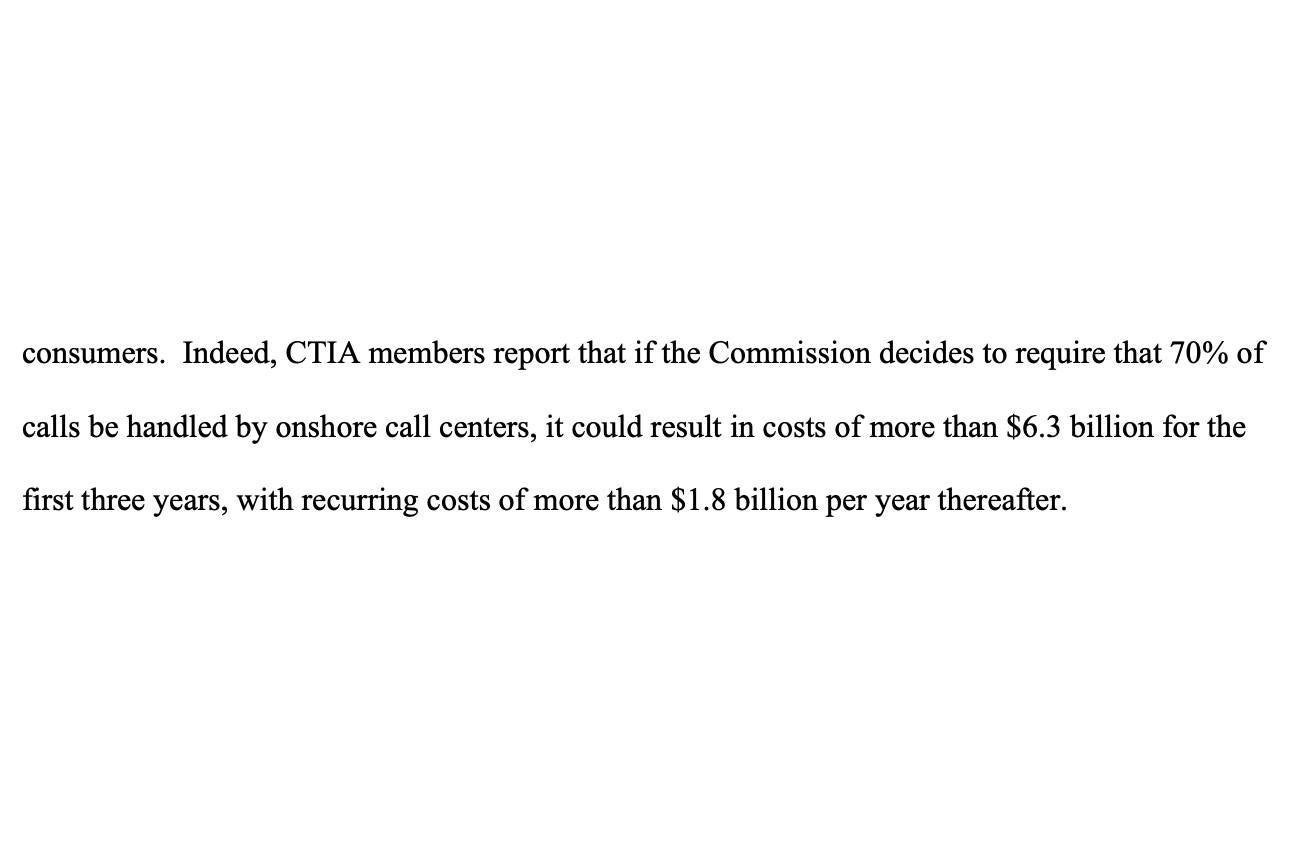
CTIA claims that US-based call centers would drive up costs. | Image by CTIA
CTIA has taken issue with every single one of the FCC’s assertions. The association notes that providing quality customer service is essential for carriers to retain customers in the hyper-competitive wireless market, and as such, they are already motivated to provide high-quality support. The group fears that the FCC’s unnecessary intervention, which it claims falls outside of its legal purview, would disrupt a customer care model that currently prioritizes immediate resolution. CTIA argued that no actual evidence supports the need for these new rules.
According to the coalition, the proposed steps would undermine service quality, spike wait times, and drive up operational costs that would eventually trickle down to customers’ bills.
The mandates would also divert resources away from network improvements and technological innovation just to ensure compliance.
Customer data and language proficiency
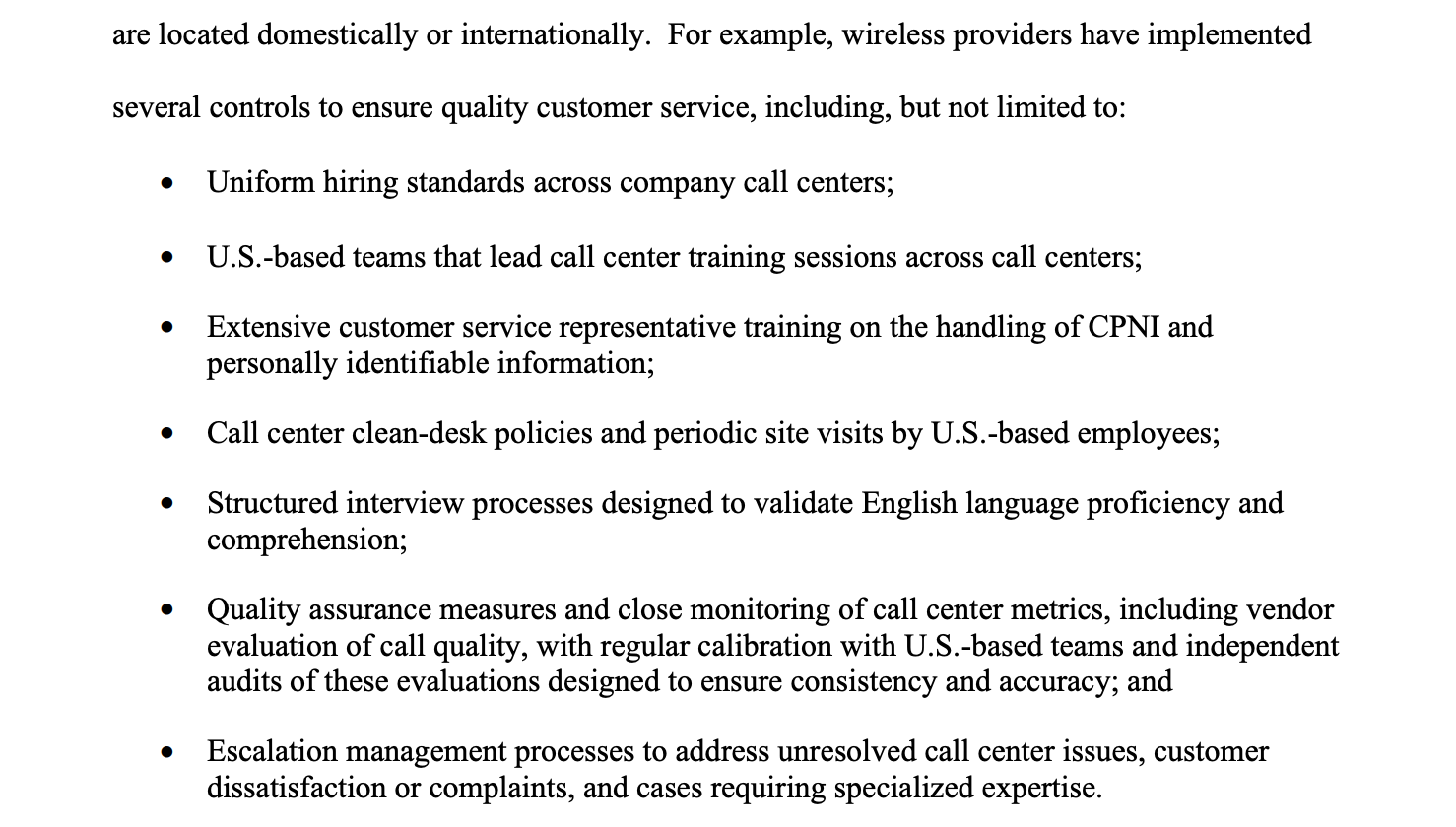
Wireless carriers are motivated to provide quality service. | Image by CTIA
CTIA also countered allegations that international call centers pose a threat to data security. It assured the FCC that carriers invest heavily to protect customers through various measures such as masking sensitive data, conducting staff background checks, and prohibiting representatives from copying customer information.
While the FCC suggested that carriers should at least inform customers when a call is handled outside of the US, CTIA argued that this would only fuel customer frustration and prolong wait times. Similarly, letting customers choose to transfer to a US-based agent could backfire on service quality.
CTIA members already enforce English proficiency standards, and they have asked the FCC to back off from a vague new mandate.
Interestingly, the filing even claims that some CTIA members report higher customer resolution rates at their offshore hubs.
Turning a blind eye to customer issues
Of course, anyone who has ever scrolled through an online forum knows that actual AT&T, T-Mobile, and Verizon subscribers find customer care service severely lacking. It’s an uphill battle to get constructive help.
While CTIA hypes up the use of AI to streamline the process, subscribers regularly report how utterly inept these bots are.
Getting a human agent on the line feels like a stroke of luck as it is, but customers often find themselves back at square one when routed offshore, where a language barrier prevents the two sides from understanding each other.
The price tactic
Whether it’s shorter phone unlocking windows or US-based call centers, carriers love using the threats of price hikes to get regulators off their backs. While some of CTIA’s points have merit, broadly rejecting every single one of the FCC’s proposals suggests an unwillingness to acknowledge and resolve problems that customers are facing.
CTIA loves to talk about competition, but with the Big Three being the only facilities-based providers, all MVNOs and cable companies depend on them to provide wireless service.
