

SpaceX is taking note
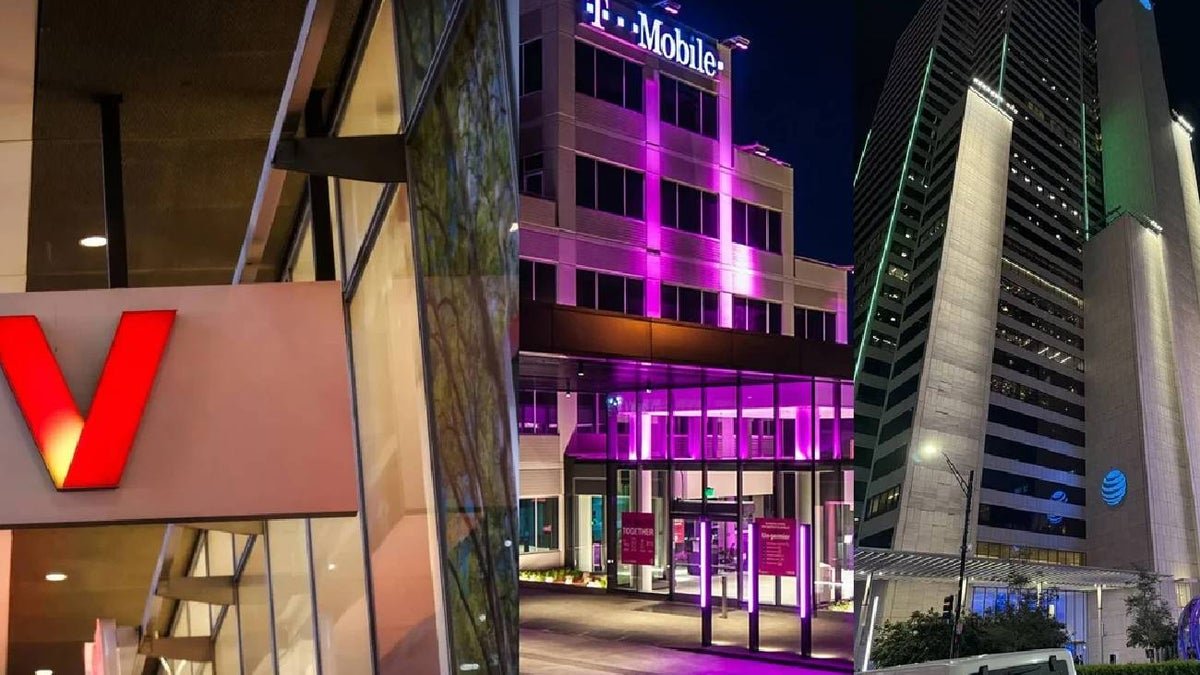
Do the Big Three want to corner SpaceX? | Image by David Goldman
While SpaceX hasn’t officially commented, company execs couldn’t help reacting to the news online, as PCMag first noted.
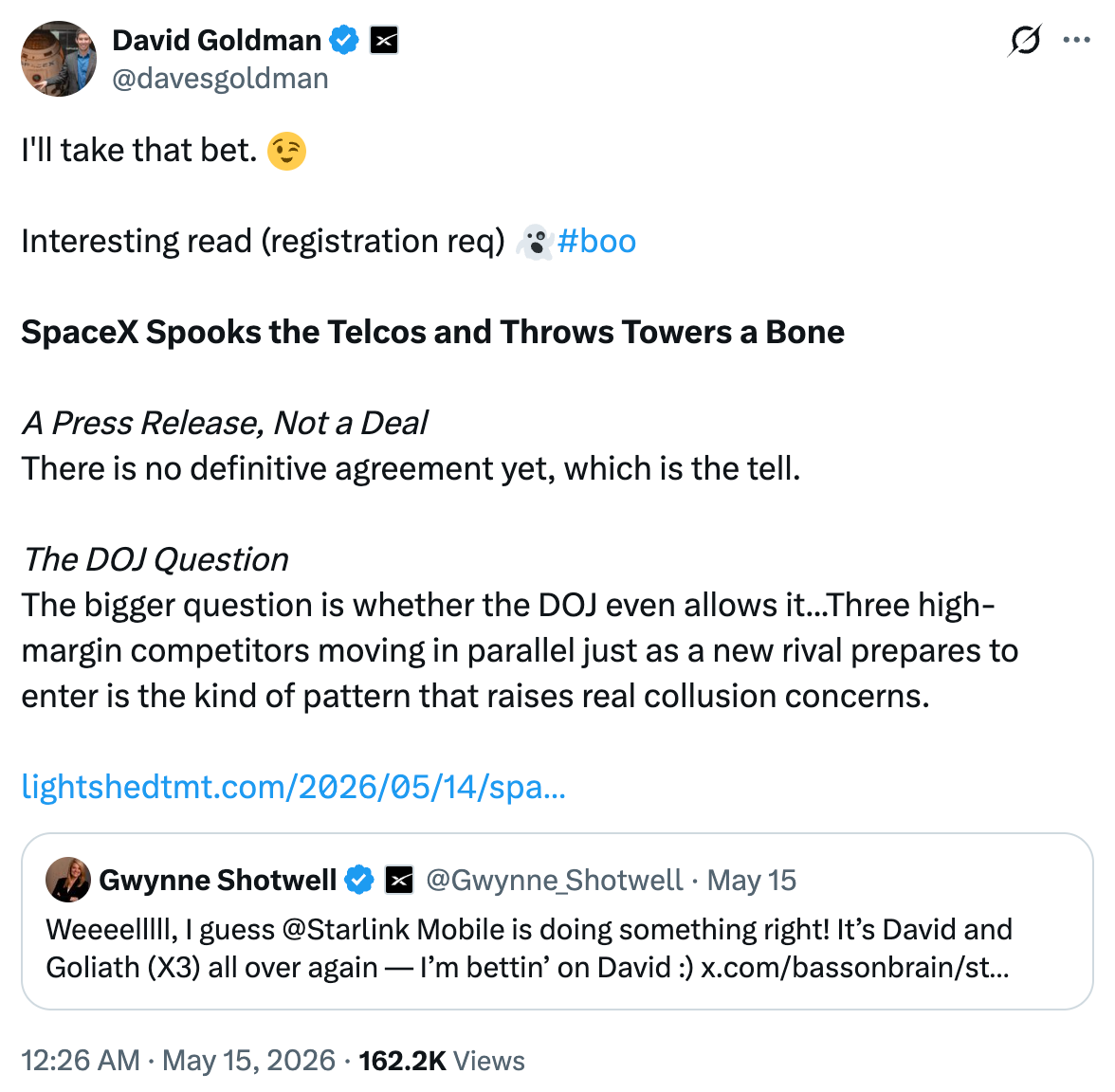
Gwynne Shotwell, SpaceX’s President and Chief Operating Officer, framed the joint venture as a calculated move by established telecom players to suppress SpaceX.
David Goldman, Vice President of Satellite Policy, implied that legal action is very much on the table by sharing an article highlighting potential Department of Justice (DOJ) intervention to block the anti-competitive move.
The case for the Big Three
T-Mobile‘s exclusivity deal with SpaceX is reportedly expiring in a few months. Meanwhile, SpaceX has secured spectrum assets that allow it to provide satellite service to smartphone customers without T-Mobile as the middleman. With the Federal Communications Commission (FCC) becoming a proponent of satellite features, the stakes are massive.
SpaceX, with its technological lead, could come out the big winner.
But let’s not paint SpaceX as the ultimate savior, or the Big Three as the pariahs just yet. It’s a little more nuanced than that.
For instance, SpaceX recently raised Starlink internet prices, sparking consumer backlash and underscoring why its monopoly on space is a bad idea.
According to Recon Analytics founder Roger Entner, AT&T, T-Mobile, and Verizon’s partnership should be approved because it aims to tear down the fragmentation currently holding space-based connectivity back.
This is life-saving tech, and making it universal should be the top priority.
GSM roaming and 911 Phase II are two examples of carriers collaborating for the greater good of the public. Satellite connectivity deserves the same unified approach.
Stepping back
In the grand scheme of things, most smartphone users rarely need a satellite connection. Heck, this might not even be a very lucrative business.
The data backs this up: the average user is disconnected from a carrier network just 2.79% of the time, and most customers are only willing to fork over about $5 a month for satellite backup.
Spectrum is power
The Big Three’s tentative deal feels more like a symbolic announcement than an operational one. Dropping this announcement right after SpaceX acquired spectrum and right before its rumored initial public offering sends a clear signal meant to intimidate.
But a little corporate posturing shouldn’t be reason enough for regulators to dissolve a venture that could benefit the public.
