

What Google just did
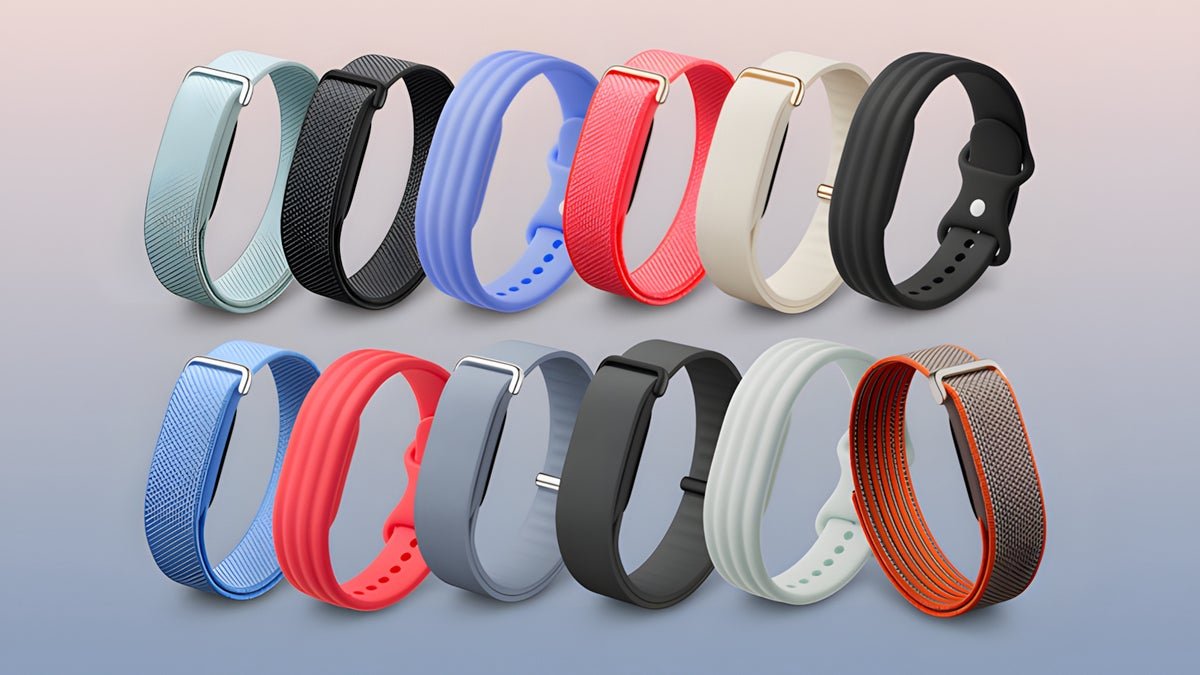
Google has published the full hardware specs and accessory design guidelines for the Fitbit Air, so anyone can now build bands for the screenless tracker. The company spelled it out in an announcement on its Google Health Community forum, framing it as a direct answer to fans who were already getting creative in the days after launch.The release includes 2D CAD drawings of the sensor (the “pebble”) and the sleeve that holds it, with exact dimensions, tolerances, and the attach and detach forces you need to make a band that actually fits. Google says it opened things up because the Fitbit Air was built to be its most versatile tracker, and the band is the main way to make it your own.
There’s an official lane too. Brands can run their accessories through the Made for Google certification process to earn the badge and formal compatibility, and certified partners even get early access to upcoming devices.
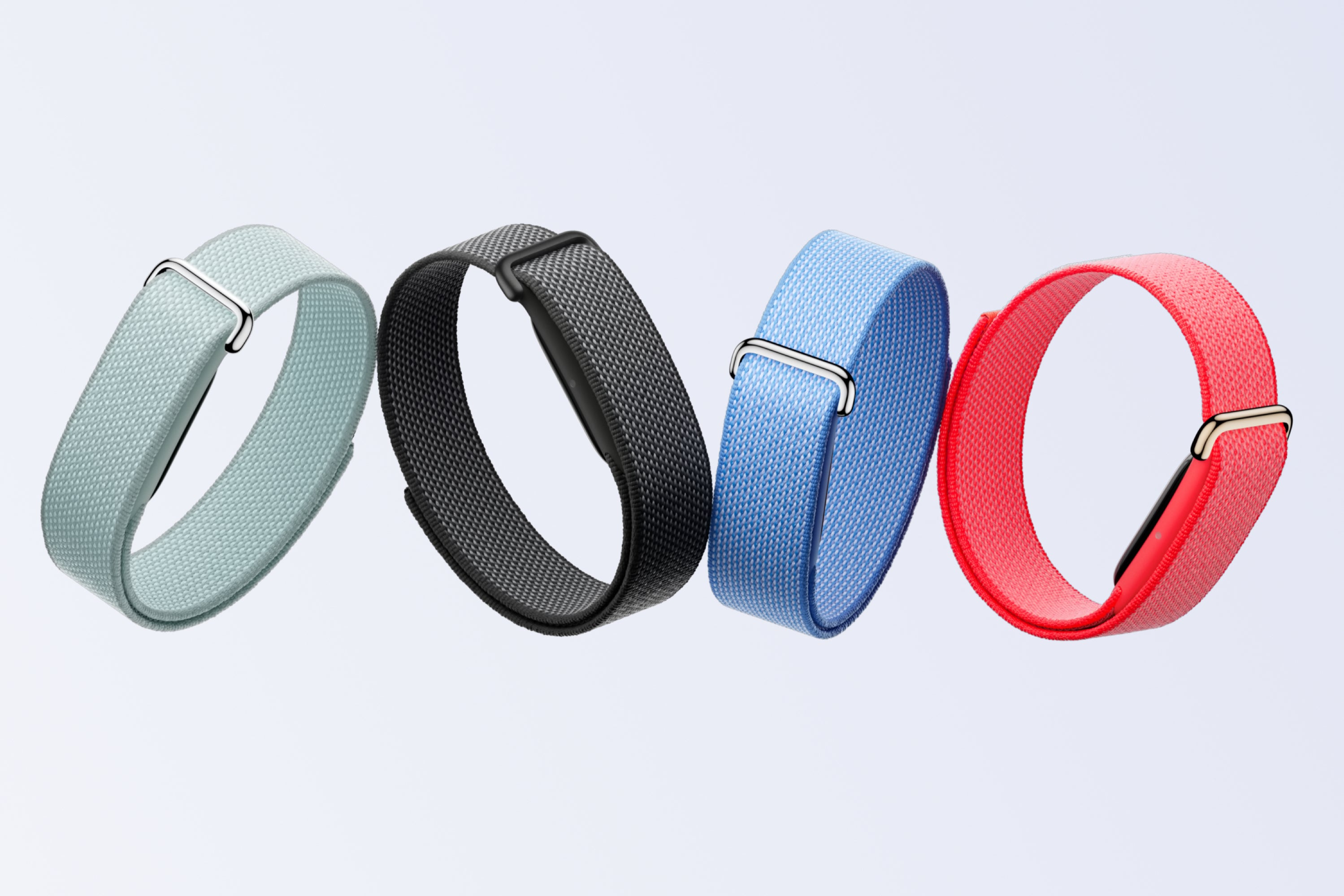
Google Fitbit Air Performance Loop bands. | Image by Google
The design rules Google set
Google provided some guidelines that band designers/printers should stick to. These are:
- The optical heart rate and SpO2 sensors on the base have to stay completely unobstructed and flush against the skin
- Bands should keep a steady, gentle pressure in the sensing area, with at least 35 mmHg (0.68 psi) recommended for accurate readings
- Materials need to be skin-safe, which rules out things like certain nickel finishes and natural latex that can trigger irritation
Why it’s important
Here’s the part worth being straight about. This is not Google open-sourcing the hardware. The pebble still uses a proprietary magnetic charging mechanism, so what’s actually open is the band and sleeve around it. Google opened the accessory ecosystem, not the device.That distinction matters, but it doesn’t make the move small. Screenless trackers usually lock you into whatever the maker sells, and Whoop is the obvious example, since it has historically gone after rivals instead of inviting them in. Google publishing real specs plus a certification path is a far more open stance, and it’s the right one for an accessory market.
People did not wait for permission, either. One Fitbit user on Reddit got fed up with the stock wristband and designed a 3D-printed adapter to slot the pebble into a Coros armband, even cutting holes so the status light stays visible.
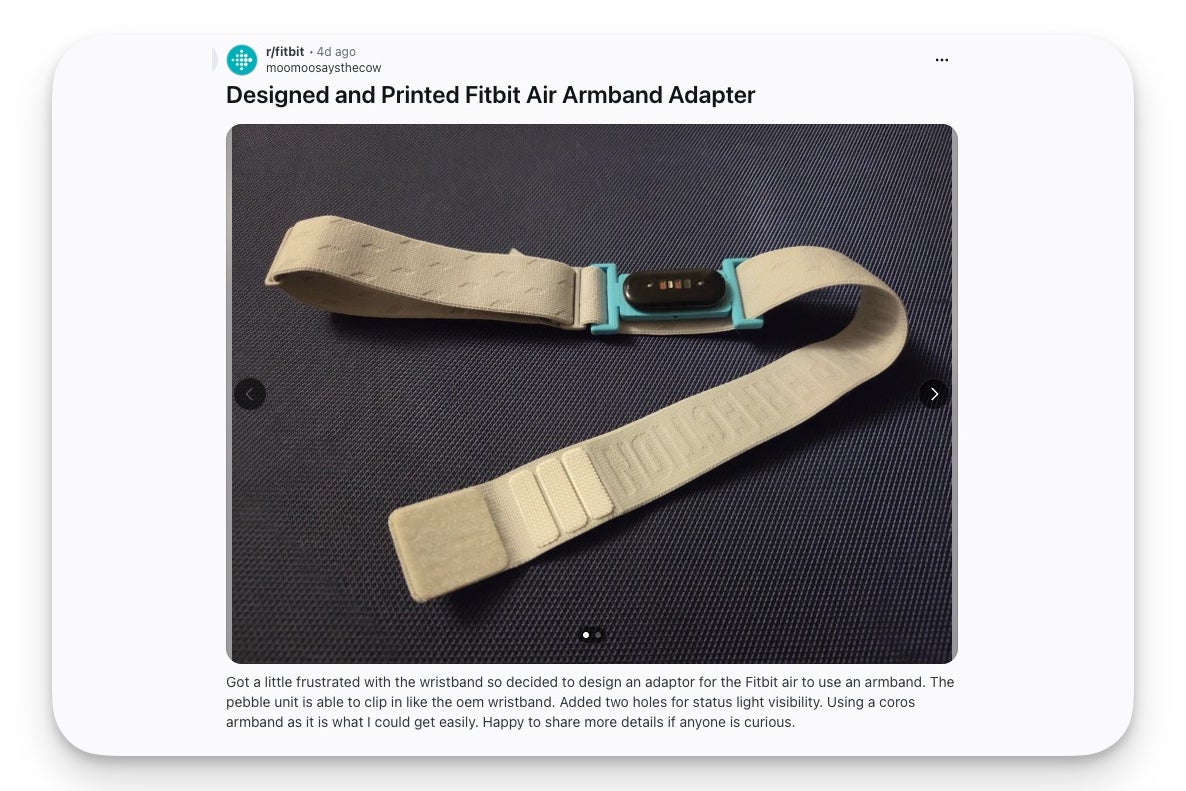
A Reddit user’s 3D-printed adapter lets the Fitbit Air’s pebble clip into a Coros armband. | Image by Reddit u/moomoosaysthecow
For the everyday owner, this is simpler than it sounds: more band choices, more styles, and eventually third-party options that cost less than buying direct from Google. The Air already impressed us when we wore Google’s screenless tracker for two weeks, and opening the bands removes one of the few real limits on a $99.99 device that landed back in May.
Where this goes next
I’m excited to see what the community does with this. The official bands by Google, although not bad-looking at all, can be considered pretty plain. However, now that the spec is public, I fully expect Etsy to fill up with options that have actual personality.
That’s the quiet win here. A screenless tracker lives or dies on whether it disappears into your routine, and the band is the only thing you ever really see or feel, so letting people own that choice beats another locked-down accessory store.
