

What the report actually claims
A new report out of South Korea says Apple will skip tandem OLED on the iPhone 18 Pro and focus on thermal management upgrades first.Tandem OLED stacks two layers of organic light-emitting material instead of one. The payoff is higher peak brightness and a much longer lifespan, since each layer runs cooler and works less hard to hit the same brightness.
Apple already ships this tech in the M4 iPad Pro, so it clearly believes in it. The report claims the next product to get it will be the M6 MacBook Pro, with phones potentially waiting until 2028.
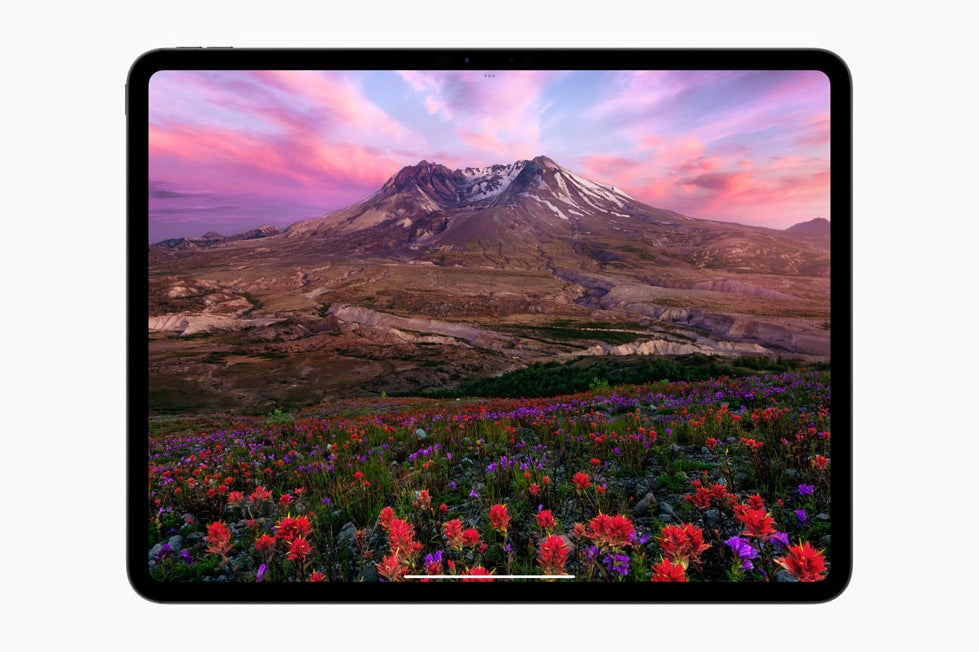
Apple already ships tandem OLED on the M4 iPad Pro, just not on its phones yet. | Image by Apple
Why OPPO is suddenly the one to watch
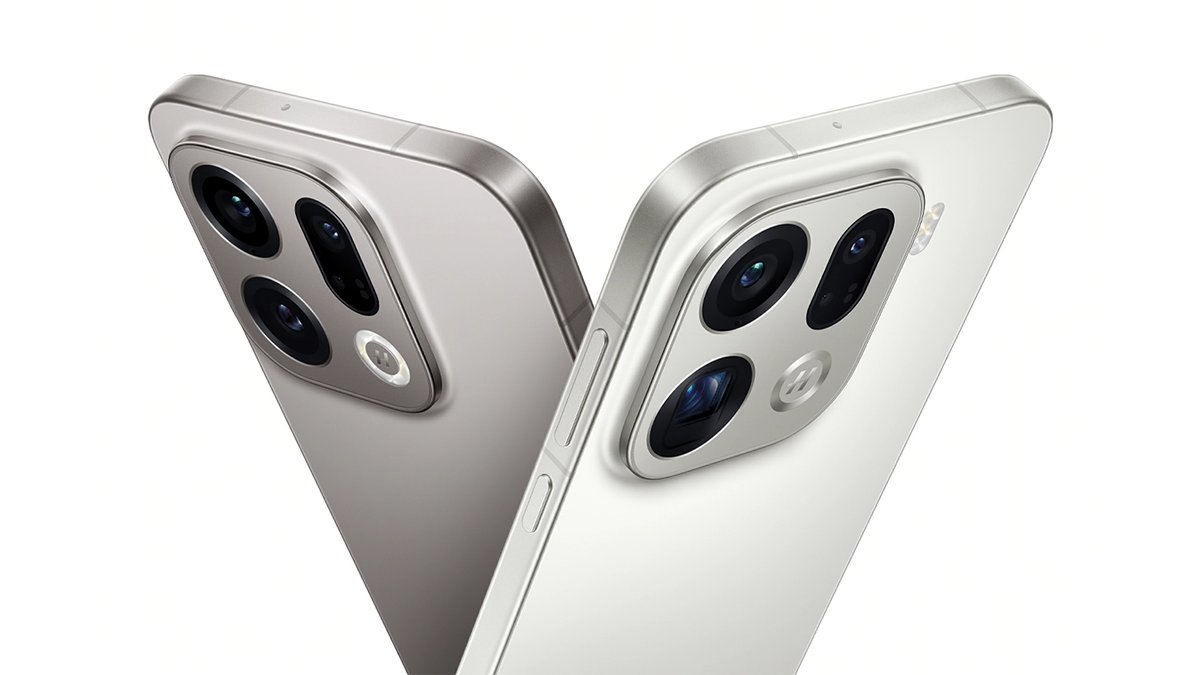
Here is where it gets interesting. The same report points to panel maker BOE producing tandem OLED screens, with OPPO lined up as one of its first customers. That would put a Chinese flagship years ahead of Apple on a display upgrade Apple itself pioneered on tablets.
This is not a fluke pairing either. OPPO has quietly been winning the brightness wars for a while now, and we made that case ourselves in our deep look at the Find X9 Pro.
Our in-house testing clocked the Find X9 Pro at 3,545 nits of measured peak brightness, matching OPPO’s own claims almost exactly. That is not marketing fluff, that is a brand that takes screens seriously and has the receipts.
What this means for your phone
Tandem OLED is not just a spec-sheet flex, so here is the plain version of why it matters. Two layers sharing the load means the panel runs cooler, which gives you a screen that stays brighter outdoors and degrades slower over years of use.
That durability angle is exactly what came up when I went looking at how people talk about the tech.
One Redditor put it well, noting in this Reddit comment that tandem panels resist burn-in far better because lower current per layer means less heat, and heat is what wears OLED down. It should be noted that this take comes from the monitor crowd, where static elements sit on screen for hours, so whether phone owners still need to worry much about burn-in in 2026 is a fair question.
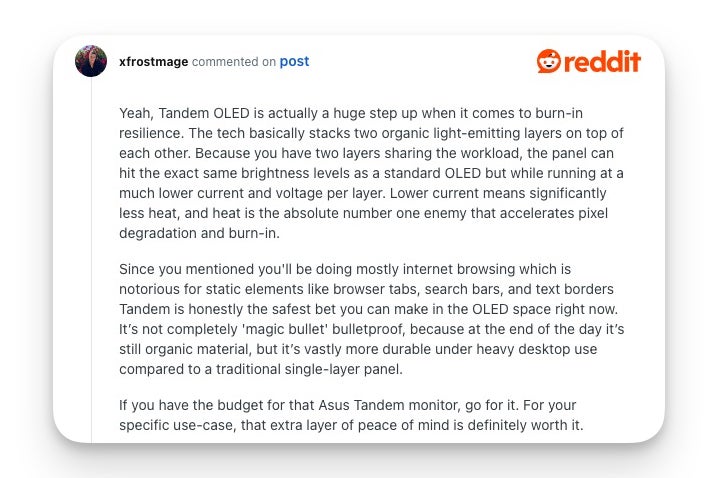
A Redditor breaks down why tandem OLED resists burn-in better than standard panels. | Image by Reddit
If you want the deeper breakdown of how the dual-layer approach works, we got into the weeds on it back when the tandem OLED iPad Pro launched.
The part Apple fans won’t want to hear
Let me be clear about my stance. Apple’s caution is defensible, but the optics are rough. This is the company whose whole display reputation is built on waiting and then doing it best, and it is about to get beaten to its own punch by a brand most Americans have never held.
The counterargument is real. New tech is expensive, we are in the middle of a memory price crunch, and current iPhone screens are already excellent, so a delay could keep costs down and let Apple refine the implementation.
But a 2028 timeline is a hard sell when the iPhone 18 Pro is already expected to carry premium panels, as we covered in our look at the iPhone 18 Pro’s advanced display. OPPO shipping tandem OLED first does not make the iPhone bad, it just punctures the myth that Apple always sets the pace.
For most buyers this changes nothing today. But if you care about a screen that stays bright and lasts, the most exciting display on the horizon might not have a fruit logo on the back, and that is a sentence I did not expect to write.
I will be posting my hot takes on this OPPO versus Apple display saga as it develops, so come find me on X and Threads for the opinion stuff and behind-the-scenes bits.
