

It’s not yet another app to find your soulmate (or get rejected every time you log on) – it’s probably Google’s upcoming update to the Find Hub.
People and Devices
Last year, Google introduced the People tab to the Find Hub. While the Devices tab shows all the Android, Wear OS, and other Google-related devices that are linked to you, the People tab is about location sharing with your friends and family.Currently, the system can show where those People are on a map, similar to location sharing in Google Maps. There’s a new APK teardown that suggests Google wants to go beyond simple map pins and help users physically locate nearby people with directional guidance. Like Apple’s Precision Finding.
Keep in mind that these early APK teardowns might not materialize, or could be delayed significantly. An APK teardown is basically peeling the layers off an app’s code and closely inspecting lines of text, image assets, or flags that hint at upcoming changes.
Special phrases
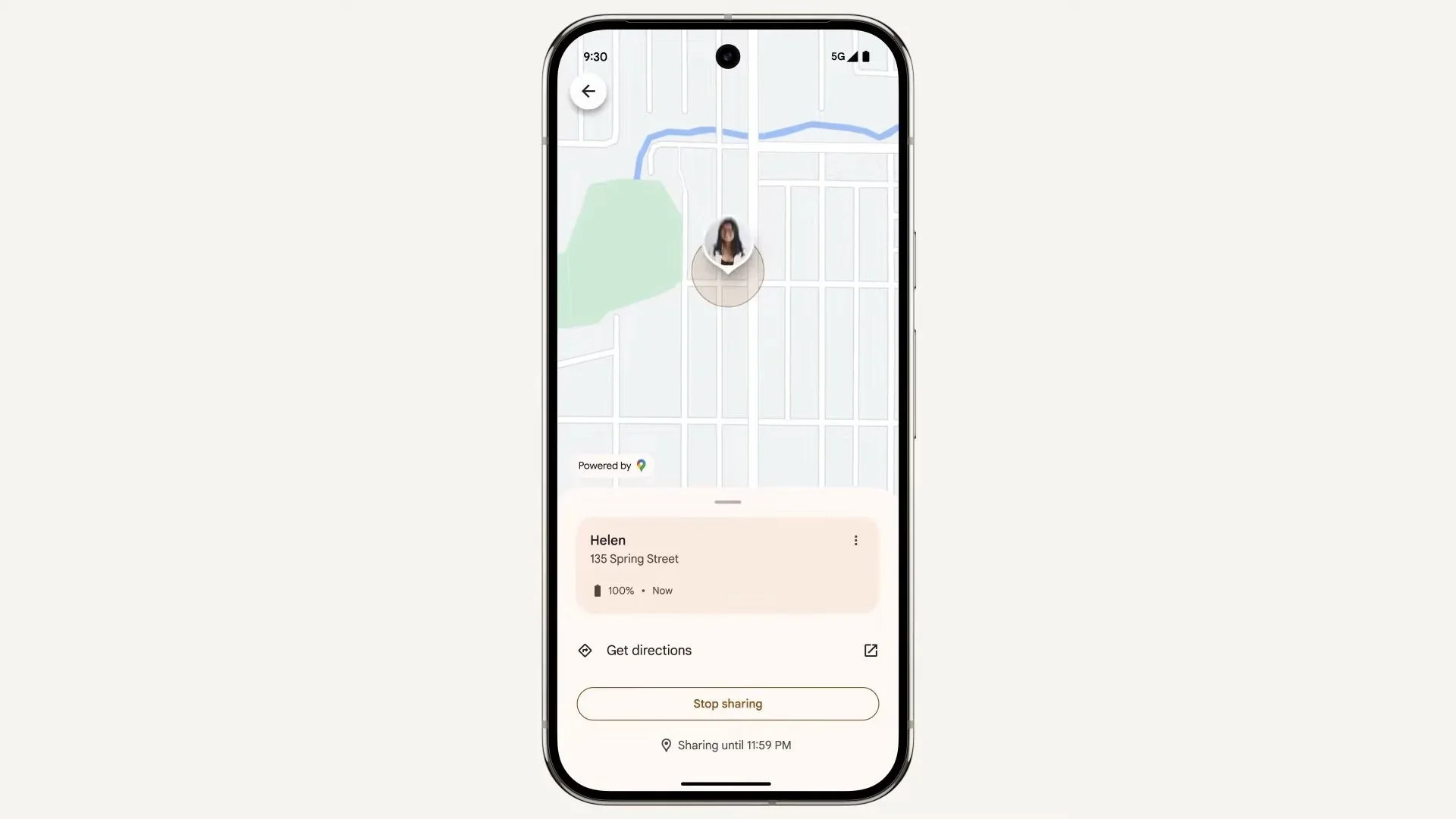
The People tab in Google’s Find Hub. | Image by Google
The key clue in this APK teardown is the wording found in the app code, especially phrases like “Your friend is nearby and searching for you”.
That’s not much like a normal GPS location-sharing feature; it sounds more like a short-range tracking system that activates when two people are close to each other. Instead of only seeing someone on a map, you may eventually get an arrow, distance meter or get (useful) live directional guidance leading you toward them.
Cool for finding one another at crowded parties or big stores while abroad.
Catching up with Apple
All of this sounds very similar to what Find My already does on newer iPhones through Apple’s Precision Finding feature. If both users have supported iPhones with Ultra Wideband (UWB) chips, the interface can show an animated arrow pointing toward the other person with highly accurate distance measurements, sometimes within a few feet.
The major question is what technology Google will rely on.
There are two likely possibilities – Bluetooth or UWB.
Virtually all Android phones support Bluetooth. However, this approach is much less precise. Google could estimate direction and distance, but the experience would probably feel rougher and less accurate than Apple’s.
UWB (Ultra Wideband), on the other hand, allows very accurate short-range positioning and directional awareness. The problem is that UWB hardware only exists on higher-end Android phones like devices from Samsung, Google and some premium brands from across the Pacific.
The references to terms like “Ranging” and “precision-finding” strongly suggest Google is at least experimenting with UWB support. Fingers crossed.
