

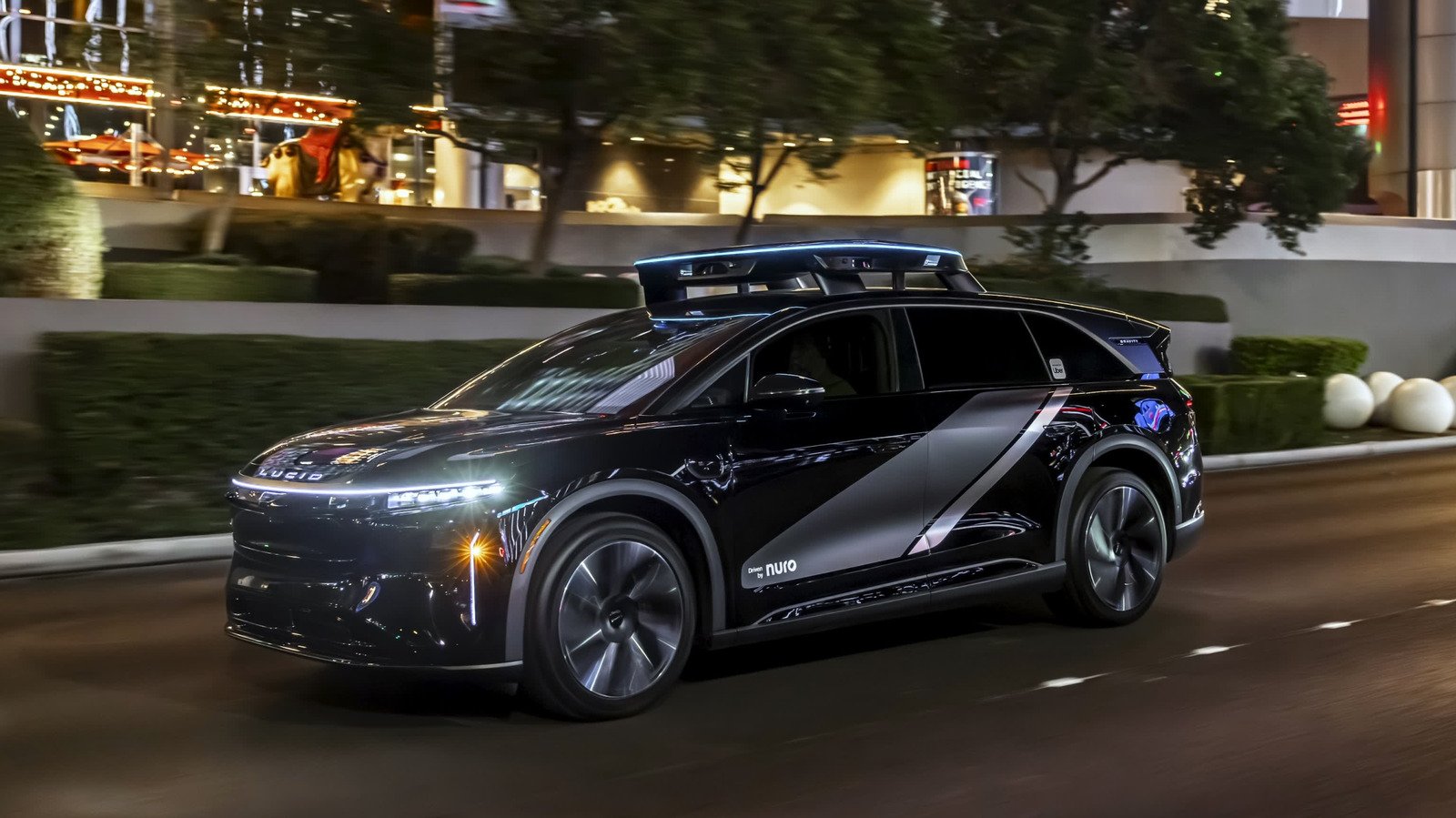
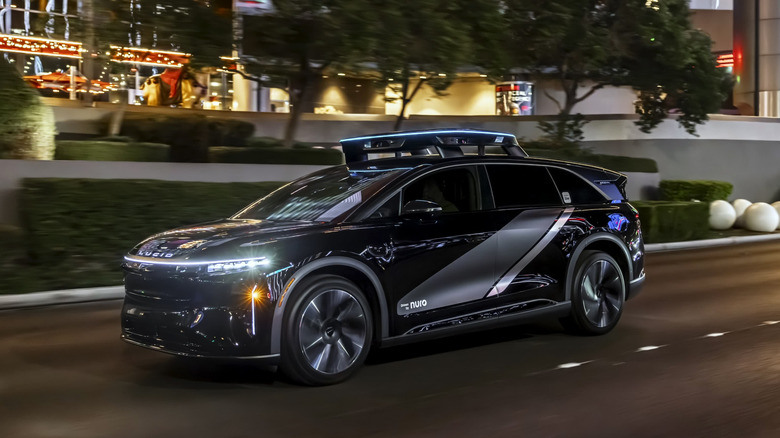
Uber-backed Nuro has received an updated permit to test its Lucid Gravity robotaxis on California streets, according to recent DMV documents. It’s a key step in Uber’s plan to deploy 100,000 driverless vehicles in the US, including up to 35,000 powered by Nuro’s self-driving technology. The companies expect to begin fully-autonomous testing later this year, a spokesperson told TechCrunch.
Nuro, backed by NVIDIA, Toyota and Uber, has become a key player in the robotaxi and autonomous vehicle arena, having already received a California DMV permit for driverless deliveries with its R3 Nuro Robot vehicle. At CES 2026 in January, Nuro and Uber unveiled their robotaxi design based on the three-row Lucid Gravity electric crossover. It will feature a multi-pronged sensor system, including high-res cameras, lidar sensors, and radar, along with a roof-mounted LED display. The interior will offer luxuries like rider-controlled heated seats.
So far, Uber and Nuro have only operated the Lucid Gravity EVs in autonomous mode with a human safety driver and limited those rides to Uber employees. However, the new permit will allow the companies to test the vehicles without human operators at speeds up to 45 mph, day or night, in Santa Clara and San Mateo counties. Nuro has also been testing its Lucid robotaxis in Tokyo with human drivers as a backup.
Yesterday as part of its earnings release, Lucid said that it planned to launch the robotaxi service “later this year.” The EV maker also revealed that Uber had boosted its funding in the company to $500 million and increased its order from 20,000 to 35,000 vehicles. Before commercial services start, Nuro and Uber will require permits for ride-hailing permit as well as a DMV deployment permit.
