

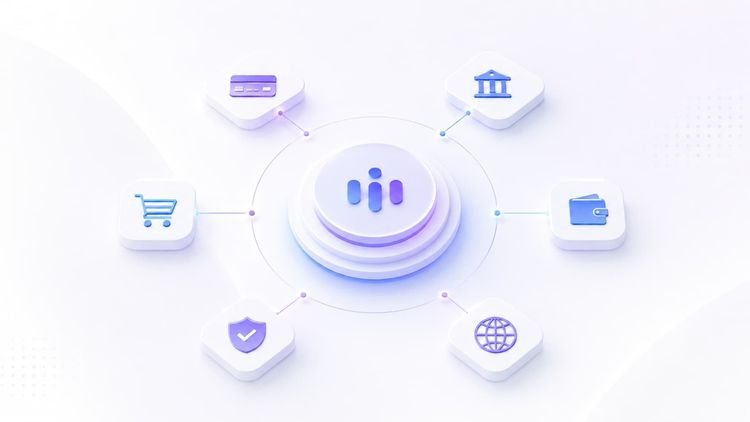
Payments used to be simpler from a developer’s point of view. You connected a gateway, sent a transaction, waited for the response, and handled the result. That model does not scale very well in 2026.
Modern online businesses often operate across several countries, currencies, payment methods, acquirers, fraud tools, customer segments, and reporting systems. A single payment flow might involve cards, digital wallets, local payment methods, 3DS, fraud screening, retries, routing rules, settlement logic, and reconciliation. Managing all of that through one provider is rarely practical.
That is where payment orchestration becomes useful.
A payment orchestration platform sits between your checkout and the wider payment ecosystem. Instead of integrating every payment service provider, acquirer, fraud tool, and local payment method one by one, businesses can manage them through a central layer. That layer can route transactions, trigger retries, apply rules, tokenize payment data, and consolidate reporting.
But not every orchestration platform solves the same problem. Some are built mainly for merchant checkout optimization. Some focus on token portability and gateway independence. Others go deeper and help PSPs, acquirers, fintechs, and enterprises build branded payment infrastructure. That difference matters when choosing the right platform.
In this guide, we’ll compare some of the top payment orchestration platforms in 2026, what each one is best suited for, and how to think about the trade-offs before choosing one.
What is payment orchestration?
Payment orchestration is a control layer for payments. It helps businesses connect and manage multiple payment providers, gateways, acquirers, wallets, fraud tools, and local payment methods through one system.
In practice, payment orchestration can help a business:
- connect multiple PSPs through one integration
- route transactions based on market, currency, card type, amount, provider performance, or cost
- retry failed transactions through another provider
- manage payment tokens more consistently
- add local payment methods faster
- consolidate payment reporting
- reduce dependency on a single provider
- improve operational visibility across payment flows
For developers, the main benefit is abstraction. Instead of building and maintaining a separate integration for every provider, the orchestration layer gives the application a more stable payment interface. Product and payment teams can then adjust providers, rules, and routing logic without every change requiring a new deployment.
For payment companies, orchestration can go even further. If the business is a PSP, acquirer, marketplace, bank, or fintech platform, orchestration is not only about improving checkout performance. It can become part of the infrastructure used to launch payment services, manage merchants, configure payment flows, and operate branded payment products.
How we selected these platforms
There is no single “best” payment orchestration platform for every business. A global enterprise merchant, a PSP, a travel company, a marketplace, and a SaaS platform may all need different things.
For this comparison, we focused on platforms that are relevant in 2026 based on:
- payment provider and payment method connectivity
- routing and cascading capabilities
- developer experience and API-first architecture
- tokenization and compliance support
- reporting, reconciliation, and payment analytics
- workflow flexibility
- deployment and infrastructure options
- suitability for merchants, PSPs, acquirers, fintechs, banks, or vertical-specific use cases
Quick comparison: top payment orchestration platforms in 2026
| Platform | Best for |
|---|---|
| Akurateco | PSPs, acquirers, fintechs, banks, and enterprises building branded payment infrastructure |
| Spreedly | Gateway-agnostic payments, tokenization, and provider portability |
| Primer | No-code payment workflows and commerce teams that want operational flexibility |
| Gr4vy | Cloud-native orchestration and infrastructure-first payment architecture |
| Yuno | Global merchants looking for orchestration, routing, and fast market expansion |
| CellPoint Digital | Airlines, travel companies, and complex travel payment flows |
| BR-DGE | Merchants and payment businesses needing modular payment connectivity |
| Paydock | Banks and merchants looking for low-code orchestration across payment, fraud, and identity |
| IXOPAY | Enterprise orchestration, tokenization, and payment intelligence |
| APEXX | Enterprise merchants looking for global acquiring and payment method access |
1. Akurateco
Best for: PSPs, acquirers, fintechs, banks, and enterprise merchants that want to build or modernize branded payment infrastructure.
Akurateco is a white-label payment orchestration and payment gateway platform for businesses that need more than a basic gateway connection. Its platform combines payment orchestration with merchant management, routing, fraud prevention, billing, tokenization, reporting, analytics, and branded payment pages.
That makes Akurateco especially relevant when payments are not just a checkout function, but part of the business model. A PSP may need to onboard merchants, manage transaction flows, configure routing rules, monitor performance, and offer services under its own brand. A bank or acquirer may need infrastructure to launch or modernize digital payment products. An enterprise merchant may want to internalize more of its payment operations without building the technical stack from scratch.
From a developer and architecture perspective, Akurateco is useful because it can act as a broader payment operating layer. The platform is not only about connecting more providers. It can support merchant-facing infrastructure, branded payment pages, routing configuration, fraud tools, reporting, tokenization, and billing in one place.
This is the key distinction: many orchestration platforms help a merchant improve an existing payment stack. Akurateco is better suited for companies that want to own more of the payment layer itself.
Why it stands out
Akurateco sits between payment orchestration and payment business infrastructure. That makes it a strong fit for PSPs, acquirers, fintechs, banks, marketplaces, and larger merchants that want to build, brand, and control their payment setup without developing the entire technical stack from scratch.
What to consider
Akurateco will be most valuable for teams that need a deeper infrastructure layer. If you only need a lightweight payment button or one gateway integration, it may be more platform than you need. But if your business model depends on managing payments as a product, not just accepting payments at checkout, Akurateco belongs on your shortlist.
2. Spreedly
Best for: Businesses that want gateway independence, payment method portability, and a strong tokenization layer.
Spreedly is one of the most established names in payment orchestration. The platform lets businesses connect to payment services in over 100 countries through a single API connection.
Spreedly is particularly useful for companies that want to avoid being locked into one payment provider. Its value is strongest when a business needs to keep payment credentials, provider routing, and gateway relationships more portable.
For example, a marketplace or SaaS platform may need to use different gateways in different regions. A travel company may need to route transactions based on geography, card type, or provider performance. A merchant may want to test a new acquirer without rebuilding its checkout logic. Spreedly helps abstract those decisions away from the application layer.
Why it stands out
Spreedly is strong where portability is the priority. It helps businesses avoid tying payment data and payment logic too tightly to a single processor.
What to consider
Spreedly is more infrastructure-oriented than checkout-experience-oriented. Teams looking for broader white-label payment business functionality, merchant management, or branded gateway infrastructure may want to compare it with platforms such as Akurateco.
3. Primer
Best for: Product and operations teams that want to build and adjust payment workflows without relying on engineering for every change.
Primer focuses heavily on payment workflows. Its platform includes no-code workflows that let teams drag and drop services, apply conditions, experiment with payment logic, and scale payment operations without touching code.
That makes Primer useful for businesses where payment operations change frequently. A merchant may want to route transactions differently during a provider outage, test a new fraud service, add a local payment method, or adjust 3DS logic for a particular market. Instead of asking developers to hard-code those changes, Primer lets operations teams handle them visually.
Primer also emphasizes payment visibility. Its workflows and reporting are designed to help teams see how providers perform and react faster when payment issues appear.
Why it stands out
Primer is strong for operational flexibility. It is a good fit for commerce teams that want payment logic to be configurable rather than locked inside code.
What to consider
Primer is best suited for merchants and commerce teams optimizing payment flows. If the goal is to build a branded payment gateway or launch payment services as a PSP, a more infrastructure-focused option may be a better fit.
4. Gr4vy
Best for: Businesses that want cloud-native payment orchestration with flexible provider management.
Gr4vy positions itself as a payment orchestration platform that connects PSPs, payment methods, and payment tools in one layer. Its broader architecture is often described around cloud-native payment infrastructure and a modern approach to managing payment ecosystems.
This can be attractive for merchants that want to reduce the amount of payment logic embedded directly inside their application. Instead of building separate integrations and rules for every provider, teams can use Gr4vy as a more flexible orchestration layer.
Gr4vy is also relevant for companies that care about infrastructure design. If the payment stack needs to be resilient, modular, and easier to update, a cloud-native orchestration model may be useful.
Why it stands out
Gr4vy is a strong fit for teams that think about payments as infrastructure. Its cloud-native approach makes it appealing for merchants with complex or fast-changing payment setups.
What to consider
Gr4vy may be best suited for businesses with enough payment volume and operational complexity to justify a dedicated orchestration layer.
5. Yuno
Best for: Global merchants that need payment orchestration, routing, and faster market expansion.
Yuno provides a payment orchestration layer that centralizes payment infrastructure through a single API. Its official positioning describes orchestration as a way to connect payment providers, methods, fraud tools, and acquirers through one layer, helping businesses route transactions, reduce technical overhead, and expand into new markets more efficiently.
This is useful for merchants expanding across regions where payment preferences vary widely. A provider that performs well in one country may not perform as well in another. A payment method that is common in one region may be irrelevant elsewhere. Orchestration helps businesses manage that variation without rebuilding payment logic for each market.
Yuno is a good fit for teams that want to move faster across regions and payment methods while keeping payment integrations more centralized.
Why it stands out
Yuno is strong for global payment expansion and operational flexibility across markets.
What to consider
Businesses should evaluate how Yuno’s provider coverage, routing logic, and workflows fit their target regions and internal payment operations.
6. CellPoint Digital
Best for: Airlines, travel companies, and merchants with complex travel-specific payment flows.
CellPoint Digital is a payment orchestration provider with a strong focus on travel. The company offers payment and digital commerce platforms for airlines, travel companies, retailers, and other merchants.
Travel payments are unusually complex. Airlines and travel companies deal with cross-border payments, multiple currencies, refunds, itinerary changes, ancillary sales, fraud risk, and industry-specific systems. CellPoint Digital’s platform is designed around these requirements, including payment orchestration tailored for travel workflows.
Why it stands out
CellPoint Digital is one of the strongest vertical-specific orchestration options. If your business is in travel, it may offer a more relevant feature set than a general-purpose payment orchestrator.
What to consider
For non-travel merchants, some of CellPoint Digital’s strongest capabilities may be less relevant. General e-commerce businesses should compare it with broader orchestration platforms.
7. BR-DGE
Best for: Merchants, acquirers, PSPs, and payment businesses that need modular payment connectivity and routing.
BR-DGE provides a payment orchestration platform with real-time data reporting, routing capabilities, network tokenization services, and access to over 400 connections across the payments ecosystem. Its developer documentation describes BR-DGE as a unified orchestration abstraction layer that enables businesses to connect, manage, and optimize payments more flexibly.
This makes BR-DGE useful for businesses that want to modernize payment connectivity without replacing every part of their existing setup at once. It can also be relevant for payment providers and larger merchants that need modular control over routing, services, and payment connections.
Why it stands out
BR-DGE is strong in modularity. It can help businesses plug gaps in their payment stack while keeping flexibility over providers, services, and routing decisions.
What to consider
Teams should evaluate whether BR-DGE’s ecosystem and strongest regional coverage match their target markets.
8. Paydock
Best for: Banks, merchants, and organizations that want low-code orchestration across payments, fraud, and identity.
Paydock is a low-code, API-first orchestration platform that unifies payment, fraud, and identity services through a single solution.
This broader scope is useful for organizations that want to simplify more than payment routing. Fraud checks, identity verification, compliance requirements, and back-office payment operations often sit close together. Managing them through one orchestration layer can reduce technical clutter and operational complexity.
Paydock is particularly relevant for banks and merchants that want to connect modern fintech services without completely disrupting existing infrastructure.
Why it stands out
Paydock combines payment orchestration with fraud and identity, which makes it useful for teams looking at the wider payment operations stack.
What to consider
If your main need is advanced payment routing between PSPs, you may want to compare Paydock with platforms that specialize more deeply in routing, cascading, and payment performance optimization.
9. IXOPAY
Best for: Enterprise merchants and platforms that need orchestration, tokenization, payment intelligence, and provider flexibility.
IXOPAY is an enterprise-grade payment orchestration platform focused on helping businesses control their payment infrastructure, payment data, and provider relationships. Its official positioning highlights merchant-owned tokenization, AI-driven payments intelligence, and enterprise-grade orchestration.
IXOPAY is a strong fit for businesses that have already outgrown a single-provider setup. For example, an enterprise merchant may need to process transactions across different acquirers, geographies, card schemes, and local payment methods while keeping token ownership and reporting more consistent.
IXOPAY also puts notable emphasis on tokenization and payment intelligence. That matters because orchestration is not only about deciding where a transaction goes. It is also about keeping payment data portable, understanding provider performance, and making better routing decisions over time.
Why it stands out
IXOPAY is strong where payment orchestration, token ownership, and payment analytics need to work together.
What to consider
IXOPAY is likely to be most useful for businesses with enterprise-level complexity. Smaller merchants that only need basic payment acceptance may not need this level of infrastructure.
10. APEXX
Best for: Enterprise merchants that want access to global acquiring, gateways, and alternative payment methods.
APEXX Global provides a payment orchestration platform that connects enterprise merchants to the global payments ecosystem through a single API. Its services include intelligent routing designed to direct transactions to the best-performing acquirer or payment provider.
APEXX is especially relevant for large merchants that need to manage global acquiring, gateway relationships, and payment method access across markets. Its orchestration model helps businesses centralize payment connectivity while keeping more control over provider selection.
Why it stands out
APEXX is a strong option for enterprise merchants that want access to a broad payments ecosystem and optimization layer.
What to consider
Smaller businesses may find APEXX more enterprise-focused than they need at an early stage.
How to choose the right payment orchestration platform
Choosing a payment orchestration platform is not just a payments decision. It is also an architecture decision.
Before selecting a platform, teams should ask a few practical questions.
Are you optimizing checkout, or building payment infrastructure?
This is one of the most important distinctions.
If you are a merchant trying to improve checkout performance, reduce failed payments, or add more providers, platforms like Spreedly, Primer, Gr4vy, Yuno, BR-DGE, IXOPAY, Paydock, and APEXX may all be relevant depending on your market and technical needs.
If you are a PSP, acquirer, bank, fintech, marketplace, or enterprise building payment capabilities as part of your own product, you may need more than routing. You may need branded infrastructure, merchant management, payment pages, reporting, billing, fraud tools, tokenization, and operational control. That is where platforms like Akurateco become more relevant.
How many payment providers do you need?
If you only work with one PSP and do not plan to expand, orchestration may be unnecessary. But if you already use multiple providers, or you plan to expand across markets, orchestration can reduce integration and maintenance work.
How much control should non-developers have?
Some platforms are designed for developer-led infrastructure teams. Others give payment operations teams visual workflows and dashboards to manage rules. The right choice depends on who will control payment logic day to day.
Which markets matter most?
Payment method coverage and provider performance vary by region. A strong orchestration setup should match your actual geographic expansion plans, not just offer a long list of theoretical connections.
Do you need token portability?
Tokenization becomes important when you want to reduce dependency on individual processors. If long-term data portability matters, look closely at each platform’s token strategy.
Do you need a branded or white-label model?
This matters for PSPs, acquirers, fintechs, banks, and marketplaces. A standard orchestration layer may help you manage providers, but it may not be enough if you want to offer payment services under your own brand. In that case, Akurateco’s white-label infrastructure angle can be a better starting point.
What happens when a provider fails?
One of the strongest reasons to use orchestration is resilience. Look at how each platform handles failover, retries, cascading, and provider outages. The more payment volume you process, the more important this becomes.
Final thoughts
Payment orchestration has become important because payment stacks are no longer simple.
For developers, orchestration reduces the need to rebuild integrations every time the business adds a new provider, market, or payment method. For product and operations teams, it creates more room to optimize payment performance without waiting on engineering for every rule change. For payment businesses, it can be the foundation for launching or scaling services.
The right platform depends on what role payments play in your business.
If payments are mainly a checkout function, you may prioritize provider connectivity, workflow flexibility, tokenization, or payment analytics. In that case, platforms like Spreedly, Primer, Gr4vy, Yuno, BR-DGE, Paydock, IXOPAY, and APEXX all bring different strengths. If you operate in travel, CellPoint Digital may offer the most relevant feature set.
If payments are part of the product you sell, the decision changes. PSPs, acquirers, fintechs, banks, marketplaces, and enterprise merchants may need a platform that supports more than routing. They may need branded payment infrastructure, merchant management, payment operations, fraud tools, reporting, billing, and tokenization in one place.
That is where Akurateco deserves particular attention. It does not sit only in the “connect more providers” category. It is better understood as a payment infrastructure layer for businesses that want to build, brand, and control payment services without developing the entire stack internally.
In 2026, the best payment orchestration platform is not simply the one with the longest list of integrations. It is the one that matches your architecture, business model, operational complexity, and long-term payment strategy.
